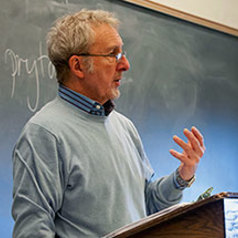
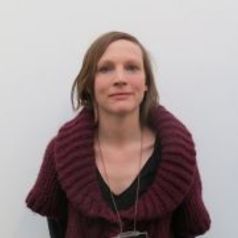
Robert Kelchen's research interests focus on higher education finance and accountability policies, including areas such as student financial aid, college rankings, and program evaluation. His teaching interests include financial administration, research methods, institutional research and planning, and organization and governance. His research has recently been published in The Journal of Higher Education, Journal of Education Finance, and Journal of Student Financial Aid. Kelchen’s research and commentary has been covered by outlets including The Wall Street Journal, The Washington Post, NPR, Politico, and Newsweek, in addition to appearances on MSNBC, Al Jazeera America, and KABC radio. His work as the methodologist for Washington Monthly magazine’s annual college rankings recently won an award for best data journalism from the Education Writers Association.
Robert is a Research Fellow at Australian National University, College of Asia and the Pacific and a Visiting Research Fellow in the School of Geography at the University of Leeds. He obtained his doctorate from Leeds’ with the Thesis “Ideology and the Production of Landscape in the Democratic People’s Republic of Korea”. Rowman and Littlefield’s Lexington Press published Robert’s monograph “Environment, Politics and Ideology in North Korea: Landscape as Political Project” in November 2014. Robert's new monograph "New Goddesses of Mt Paektu: Gender, Violence, Myth and Transformation in Korean Landscapes" co-authored with Victoria Ten will be published in winter 2016/2017 with Lexington Press. Robert is currently researching the Historical Geographies of Korean forestry, Colonial Mineralogical landscapes/inheritances, the place of topography within Pyongyang's charismatic narrative of the life of Kim Jong-suk and Animal/Creaturely Geographies of North Korea.
I am a philosopher, literary critic, editor, and author, based at the University of Newcastle, Australia. My recent books include: 50 Voices of Disbelief: Why We Are Atheists (Wiley-Blackwell, 2009; co-edited with Udo Schuklenk), Freedom of Religion and the Secular State (Wiley-Blackwell, 2012), 50 Great Myths About Atheism (Wiley-Blackwell, 2013; co-authored with Udo Schuklenk), Humanity Enhanced: Genetic Choice and the Challenge for Liberal Democracies (MIT Press, 2014), Intelligence Unbound: The Future of Uploaded and Machine Minds (Wiley-Blackwell, 2014; co-edited with Damien Broderick), and The Mystery of Moral Authority (Palgrave Pivot, 2016).. I'm a prolific essayist and commentator with interests including legal and political philosophy, philosophical bioethics, philosophy of religion, and debates involving visions of the human future. I am a Fellow with the Institute for Ethics and Emerging Technologies, a Laureate of the International Academy of Humanism, and Editor-in-Chief of the Journal of Evolution and Technology. I have also had some success as a science fiction and fantasy author, including my fantasy story "The Sword of God" (which won both a Ditmar Award and Aurealis Award in 1997) and an original trilogy written for the Terminator franchise. I've won the William Atheling, Jr., Award for Criticism and Review (in the fantasy and science fiction field) on three occasions, including for my co-authored book Strange Constellations: A History of Australian Science Fiction (Greenwood Press, 1999; co-authored with Van Ikin and Sean McMullen).
Ross Guest is a Professor of Economics, and Dean (Learning and Teaching), in the Griffith Business School at Griffith University. He is an Adjunct Professor with the Australia and New Zealand School of Government (ANZSOG) and a National Senior Teaching Fellow with the Australian Government Office for Learning and Teaching. Before joining Griffith University in 1998 he spent 8 years at Monash University in Melbourne where he was appointed Senior Lecturer in 1997. He has a Ph.D in Economics from the University of Melbourne and a Master of Higher Education from Griffith University. His current research programme is concerned mainly with the economics of population ageing in Australia and other regions of the world. He has published articles on this and related topics in, for example, the Journal of Population Economics, the Journal of Macroeconomics, The Economic Record, The Review of Development Economics, The Journal of Policy Modelling, Oxford Economic Papers, The Singapore Economic Review, The Journal of Asian Economics, and Economic Modelling. He has received 4 ‘Discovery Grants’ from the Australian Research Council, as 1st Chief Investigator, to support this work. He was an invited participant at the Prime Minister’s 2020 Summit in 2008 on the basis of his work on population economics. His teaching in recent years has been primarily in public economics at Griffith University and for ANZSOG in their Executive Master of Public Administration where he is a Subject Leader for Australia and New Zealand. He is Editor-In-Chief of the International Review of Economics Education, and co-author with Stiglitz et al. of Principles of Economics, First Australian Edition.
Garland was a Fulbright Scholar and Fellow of the Center for Hellenic Studies from 1985-86, Fellow of the Institute for Advanced Study Spring in 1990 and the Benjamin Meaker Distinguished Visiting Professor at Bristol University in 1995. He is the author of many books, including The Eye of the Beholder: Deformity and Disability in the Graeco-Roman World (Bristol Classical Press 2nd ed. 2010), Ancient Greece: Everyday Life in the Birthplace of Western Civilization (Sterling 2013), and Wandering Greeks: The Ancient Greek Diaspora from the Age of Homer to the Death of Alexander the Great (Princeton University Press 2014).
I am a Senior Lecturer in Transport, and joined Westminster in September 2012 from the University of East London, where I lectured in Sociology. From January 2013 I will lead the MSc Transport Planning and Management. I am particularly interested in sustainable mobilities, and have published widely in this area. A key interest is around intersections between social and environmental justice, as well as potential tensions between the two. I was primary investigator on the ESRC-funded Cycling Cultures project, which explored cultures of cycling in four English urban areas, using a mix of mainly qualitative methods. I have also recently completed a small project on new cycling advocacy in London, using interviews, ethnographic observations, and online surveys. Another previous project has examined European policies around cars and CO2. Two upcoming projects will develop new approaches to transport modelling. I have started work on a new ESRC-funded seminar series entitled Modelling on the Move which seeks to contribute to transport modelling in the context of sustainability transitions, drawing on social science and health perspectives. I supervise several PhD students and am interested in hearing from prospective PhD students. I sit on the editorial collective of Critical Social Policy and regularly peer review articles for a range of journals and book collections. Recently, I have been invited to speak to the Greater London Assembly and to the Scottish Government based on my research.