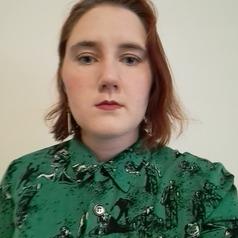
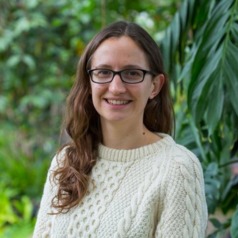
PhD Candidate in History, Monash University Rebecca Houlihan is a current PhD candidate at Monash University. Her PhD looks at the social and cultural history of the internet in Australia from 1989-2010.
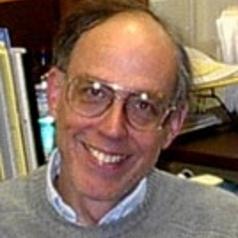
Professor Emeritus of Political Science, William & Mary Professor Ronald B. Rapoport is John Marshall Professor. He received his B.A. from Oberlin College and his PhD from the University of Michigan. Since 1980 he has been doing research on U. S. party activists funded by a series of grants from the National Science Foundation. His book (with Walt Stone of UC-Davis), Three’s a Crowd: The Dynamic of Third Parties, Ross Perot and Republican Resurgence, has just been published by the University of Michigan Press (2005). It is based on surveys with national samples of individuals attracted to Ross Perot’s presidential campaigns between 1992 and 2000, as well as interviews with Republican and Reform party leaders. He is on the editorial board of Political Research Quarterly, and previously served on the Political Science Review Panel of the National Science Foundation. He has published more than forty articles and book chapters in the areas of political behavior, political parties and women and politics. He is the co-editor (with Alan Abramowitz and John McGlennon) of The Life of the Parties. His courses focus on American politics and public opinion and voting, as well as survey research and polling.
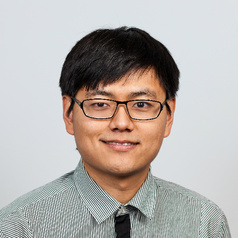
Lecturer in Economics, University of Essex I am a Lecturer (Assistant Professor) in Economics at the University of Essex and a Research Associate at the Institute for Fiscal Studies. My research interests are Labour Economics, Search and matching, Education Economics, and Family Economics.
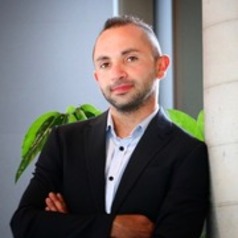
Senior Lecturer in Business Information Systems, University of Sydney G'Day! My scholarship is deeply committed to compassionate digital innovation. My research explores the intersection of digital innovation, decentralized governance, and ethics, blending rigorous interdisciplinary work with qualitative and dialectical inquiry to address complex sociotechnical dilemmas. I focus on both emerging technologies, such as blockchain/Web3 and AI companions, and established systems like social media and cloud applications, with a particular emphasis on designing, using, and governing these technologies responsibly. My goal is to foster sociotechnical systems that promote the common good while navigating the ethical challenges arising from rapid technological change. Throughout my career, I have mentored and supported numerous students, including 6 PhD, 23 Master, and 16 Bachelor thesis writers from institutions in Australia, Denmark, Germany, Switzerland, and the United States. I am passionate about helping them succeed in their research and professional development. As an engaged and developmental critic, I review approximately 30 papers per year, serve as an Associate Editor at leading international conferences, and have earned several Best AE Awards (ECIS2022, ICIS2021, ICIS2019). I also guest-edit for journals such as the Journal of Information Technology and the Australasian Journal of Information Systems and was recognized as a Distinguished Member of the Association for Information Systems in 2021. I have collaborated with software firms, startups, NGOs, banks, and IT consulting houses for both research and teaching. Prior to joining the University of Sydney, I served as an Assistant Professor at the IT University of Copenhagen, earned a PhD and M.Sc. from the University of Zurich, and a B.Sc. from the University of Stuttgart. I speak English, German, Spanish, Italian, and Danish fluently, with basic proficiency in French, Latin, and Russian—and I hope to learn Mandarin one day. I live in Sydney with my wonderful wife and two mad scientists.
Postdoctoral Researcher in Mycology, Earlham Institute I am a postdoctoral researcher based at the Earlham Institute in Norwich, UK. My research interests are on the diversity and evolution of fungi, in particular of the largest phylum in the fungal kingdom: the Ascomycota. It is an extremely diverse group which includes animal and plant pathogens, lichens, decayers and many other cryptic lifestyles. I completed my PhD at the Royal Botanic Gardens Kew, where I first became interested in using genetic data to try to understand how different fungi that associate with plants have evolved to become both beneficial partners and harmful pathogens, which has major implications in economic and ecological issues relating to plant health.