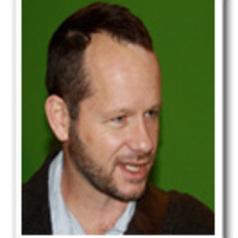
Professor of Modern History, Macquarie University Robert Reynolds is a Professor of Modern History at Macquarie University. He has published widely on gay history, oral history and psychoanalysis.
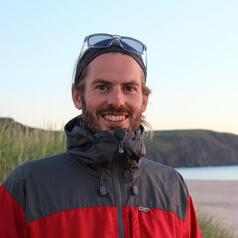
Lecturer in Animal Evolutionary Biology, University of Stirling I am an evolutionary biologist with broad interests in the interaction between genome structure and the processes of adaptation, diversification and speciation in non-model eukaryotes. I work with whole-genome sequence data in conjunction with population genomic and comparative phylogenetic methods to provide insights into how these mechanisms contribute to the evolutionary process. I am particularly interested in the interaction between ecology, life-history and genome structure, the impact of extraordinary molecular mechanisms such as horizontal gene transfer, and the insights to be gained from the genomic peculiarities of non-model organisms. I have a hat-trick of degrees from the University of Edinburgh, with a BSc (Hons) in Evolutionary Biology (2008), then an MSc in Quantitative Genetics and Genome Analysis (2010) before getting my PhD in 2015. I then completed 2 postdocs with Prof Tim Barraclough and Dr Chris Wilson at Imperial College London (and later Oxford) working on a group of enigmatic and unusual animals called bdelloid rotifers, before moving to Stirling in early 2024. Happily, I am still scratching my head trying to understand bdelloid genomes.
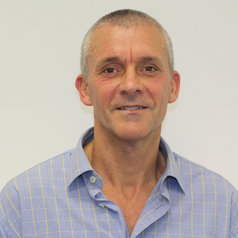
Associate Professor in Media and Communication, Swinburne University of Technology, Swinburne University of Technology Rob Gill is the Course Director for Media and Communication at Swinburne University of Technology. He has been an academic in Public Relations & Advertising at Swinburne since 2007. Rob completed his doctorate in 2006 on the theme “Employee Engagement.” His current research interests include brand communication and reputation management, particularly in sport. Rob is an active Fellow of the Communication and Public Relations Australia (CPRA) association and the International Association of Business Communicators (IABC), and a graduate of the Corporate Public Affairs Institute residential program. Rob has been awarded 3 national teaching citations and was awarded the 2017 national PRIA Educator of the Year. Before becoming an academic, he worked for more than 10 years as a communication manager in the fields of finance, tourism and state government. Prior to this, Rob spent 15 years teaching in Australia and internationally.
Particle Physicist working at CERN on the ATLAS experiment, Research Associate, University of Pittsburgh Riccardo Maria BIANCHI is a physicist, PhD; he specializes in experimental particle physics. Since 2008 he is based full-time at CERN (Geneva, Switzerland), where he works on the ATLAS Experiment handling, analyzing, and visualizing data from the collisions in the Large Hadron Collider (LHC). He is currently a Research Associate, Faculty member of the Department of Physics & Astronomy of the University of Pittsburgh. Dr. Bianchi is currently “Physics Validation” and “Data Visualization” coordinator of the ATLAS experiment, and member of the ATLAS Collaboration at CERN since 2005. In the last 18 years, his research focused on Searches for supersymmetric particles and extra dimensions, model-independent searches for New Physics, muon detectors, data acquisition, development of scientific software & parallel computing, interactive data visualization, detector description & simulation, and virtual reality for science and education. He is a contributor of the university textbook "Applied Computational Physics", published by Oxford University Press in 2017. Dr. Bianchi is member of the European Physics Society (EPS) and the Societa Italiana di Fisica (SIF), and ex-member of the Deutsche Physikalische Gesellschaft (DPG). He is also the founder of the "Quantum Computing" and "Visualization" working groups of the High Energy Physics Software Foundation (HSF). He is also active in Outreach and science communication projects, and as a scientific advisor for the organization of public exhibitions around the world: the latest two are "Cultural Collisions" at the Ontario Science Center in Toronto (Canada, 2018) and "Sperimentando 2018" in Pavia (Italy, 2018).
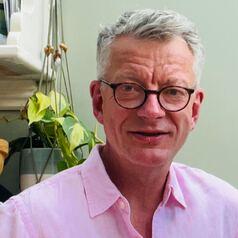
Professor of Evolutionary Anthropology, Durham University I am interested in brain evolution and evolutionary neuroscience, cognition, human and primate behaviour, sexual selection, the evolution of reproductive strategies, and the evolution of sleep patterns. I developed and tested the 'Visual brain hypothesis' for primate brain size evolution, and have recently become interested in the underestimated role of the cerebellum in brain evolution and cognition. I have also published research on the effects of red colouration on human social perceptions and sporting contest outcomes
Research Coordinator, The Wildlife Conservation Research Unit, University of Oxford With a keen interest in wildlife conservation and large carnivores, Robynne studied BSc Zoology at the University of Pretoria. She stayed on in 2010 to complete her honours degree, which investigated patterns of den use in aardwolf (Proteles cristata) in the northern Cape, South Africa. In 2011, Robynne worked as a co-manager on a game farm in the North-West province, setting up a breeding programme for rare game and managing both captive and free-ranging large herbivores including buffalo, sable, roan and white rhino. In 2012, Robynne moved to Botswana to start research on lions (Panthera leo) in the south-western Okavango Delta, under Tau Consultants. During the winter months, when the western Okavango was flooded, Robynne returned to South Africa and continued to work on the game management project in the North-West, conducting research in Botswana in the summer. During this time, she completed her MSc degree, through the University of the Witwatersrand, on lion social organisation and population demographics in the western Okavango Delta using historical data from the area. (Please update) Robynne is currently completing her field work, which will contribute to her PhD, based on her lion research in the western Okavango Delta. In 2017, Robynne joined the Trans-Kalahari Predator Programme to assist in camera trap surveys of the Okavango Delta and other protected areas in Botswana. She is also completing field work for the Trans-Kalahari Predator Programme aimed at examining connectivity between the western Okavango Delta and Namibia, aligning with the programme’s goals to establish secure corridors for lion movement within the KAZA landscape.