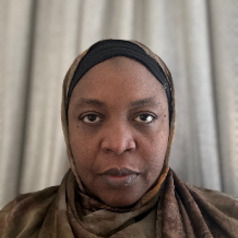
Senior Clinical Research Officer , University of Cape Town Dr Rakiya Saidu is a research scientist with over 20 years of research experience in clinical obstetrics, gynaecology and epidemiology. She is currently a Senior Clinical Research Officer at the University of Cape Town, South Africa. Her expertise spans grant writing, protocol development, research implementation, data analysis, and dissemination of findings through publications and conferences. She is skilled in statistical software, and an AI and machine learning enthusiast. She is committed to adhering and upholding ethics in research practices. Previously, Dr Saidu worked as a lecturer and consultant in Nigeria. She holds a PhD in Gynaecology from the University of Cape Town, an MPH from the University of Liverpool, and a fellowship from the National Postgraduate Medical College of Nigeria. With numerous awards, publications, and conference presentations to her credit, she is dedicated to advancing women's health through her work.
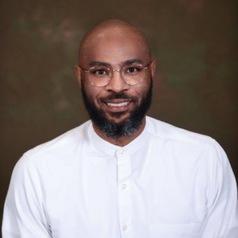
Lecturer in Sociology, Birmingham City University Dr Ryan Scoats gained his BA (Hons) and Master of Research from the University of Bath, and his PhD in Sociology from the University of Winchester (2017). He has previously been a lecturer in Sports Sociology at both Wolverhampton and Winchester Universities, lecturer in Sociology at Coventry University, and a researcher at Birmingham City University in the Faculty of Health. Much of Dr Scoats’ research focuses on people’s experiences of threesomes. Utilising a sociological perspective, his threesome research starts to fill the gap in academic knowledge around group sex as well as reducing the stigma around this behaviour and encouraging more open and honest dialogues around sexual desires. It also highlights how people come to have threesomes, their motivations, and what these sexual encounters tell us about wider changes and developments in society. He also conducts research in the broader areas of gender, sexuality, and relationships. Some of his recent research focuses on consensual non-monogamy and access to healthcare, women’s experiences in the male dominated arena of modern tabletop board games, and young men’s expressions and displays of masculinity.
Professor of History, Jackson State University Rico Devara Chapman currently serves as dean of the College of Liberal Arts and professor of history in the Department of History and Philosophy at Jackson State University (JSU). Before taking on this role, he was a professor of history in the Department of African American Studies, Africana Women’s Studies and History at Clark Atlanta University (CAU) where he also served as assistant dean for the School of Arts and Sciences and director of the Humanities PhD program. At CAU Chapman founded the Center for Africana Digital Humanities. Chapman’s academic journey includes earning his BS and MA in history from Jackson State University and a PhD in African Studies from Howard University. His scholarly work is rich and varied, with research interests that span student movements, public history and digital humanities. His academic and professional pursuits are deeply intertwined with the African diaspora’s historical and contemporary struggles for justice, particularly focusing on student activism both in the United States and South Africa. Notably, Chapman has been named a Fulbright US Scholar Program award recipient in 2024 with affiliation at the University of the Witwatersrand. He has secured funding and directed multiple grant projects from various agencies, such as the National Endowment for the Humanities, the Institute for Museum and Library Services, the National Park Service, the Microsoft Corporation, and the Andrew W. Mellon Foundation. In addition to his book Student Resistance to Apartheid at the University of Fort Hare: Freedom Now, A Degree Tomorrow, he has a number of published articles and book chapters.
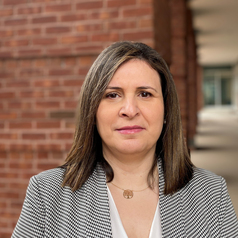
Researcher of Epidemiology, University of Virginia Rita Farah graduated from the Lebanese University with a PharmD degree, and a Master’s in Public Health (sub-specialty in Epidemiology and Biostatistics); she holds a Ph.D. in Clinical Research from the Paris-Est Créteil University (UPEC) and completed an international fellowship in clinical toxicology at Emory University School of Medicine. She worked as an Epidemiologist at the Ministry of Public Health at the central level in Beirut between 2012 and 2020. She has experience in design and implementation of public health response to contain outbreaks as well as designing, implementing and assessing performance and sensitivity of surveillance systems. She has experience in COVID-19 containment with special focus on case investigation, contact tracing and preparing sitrep and outbreak bulletins. She has seven years’ experience in teaching epidemiology, biostatistics and research methods. She is member of the INSPECT-LB research group. She joined the School of Medicine-Emergency Medicine department-Medical Toxicology division at the University of Virginia in June 2022 as an epidemiologist.
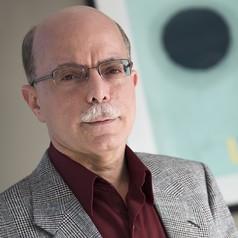
Professor of Psychology, The Ohio State University Richard Petty received his B.A. (with high distinction) in government (political science) and psychology from the University of Virginia in 1973, and his Ph.D. in social psychology from Ohio State University in 1977. He began his academic career that same year as Assistant Professor of Psychology at the University of Missouri. In 1981 he was promoted to Associate Professor, and in 1985 he was named the Frederick A. Middlebush Professor of Psychology at Missouri. After a sabbatical at Yale University in 1986, he returned to Ohio State in 1987 as Professor of Psychology and Director of the Social Psychology Doctoral Program. In 1995, he was visiting Professor of Psychology at Princeton University. In 1998, he was named Distinguished University Professor at Ohio State. From 1998-2002, he served as Chair of the OSU Department of Psychology. He resumed his role as Chair of the Department of Psychology in 2008, and served in this role through 2015. Petty's research focuses broadly on the situational and individual difference factors responsible for changes in beliefs, attitudes, and behaviors. Much of his current work (and that of the students and colleagues with whom he collaborates) is aimed at examining the implications of the Elaboration Likelihood Model of persuasion for understanding prejudice, consumer choices, political and legal decisions, and health behaviors. Topics of special current interest include: understanding the role of meta-cognitive (e.g., belief confidence) as well as implicit (unconscious) factors in persuasion and resistance to change; the effect of racial and ethnic prejudice, stereotypes, and specific emotions on social judgment and behavior; and investigating how people correct their evaluations for various factors they think may have biased their judgments (such as stereotypes they hold or emotions they are experiencing).