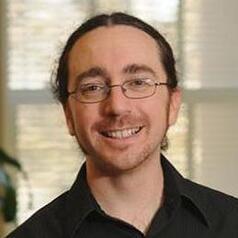
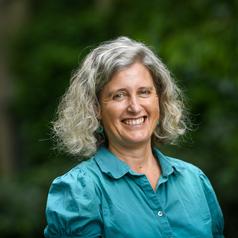
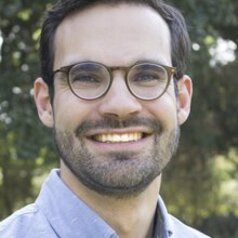
Professor, School of Public Policy, Georgia Institute of Technology Robert Rosenberger is a Professor in the School of Public Policy and is currently serving as the President of the Society for Philosophy & Technology. His research in the philosophy of technology explores the habitual relationships people develop with everyday devices, with applications in design and policy. This includes lines of research into the driving impairment of smartphone usage, the educational advantages of computer-simulated frog dissection, the roles of imaging devices in scientific debates, and the critique of hostile design and architecture (especially anti-homeless design). His edited and co-edited books include Postphenomenological Investigations: Essays on Human-Technology Relations, Postphenomenology and Imaging: How to Read Technology, The Critical Ihde, and the interview book Philosophy of Science: 5 Questions. His monographs include Callous Objects: Designs Against the Homeless, and Distracted: A Philosophy of Cars and Phones.
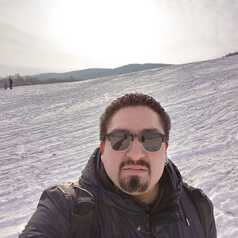
Senior Scientist, Norwegian Institute for Air Research I have a senior scientist position at the Norwegian Institute of Air Research (NILU). Currently my research focuses on the estimation of greenhouse gas emissions using atmospheric transport modelling and statistical optimisation. I received my PhD from Victoria University of Wellington in 2005 and held post-doc positions at the Max Planck Institute of Biogeochemistry (MPI-BGC), Jena, Germany and at the Laboratoire des Sciences du Climat et l'Environnment (LSCE), Gif sur Yvette, France,
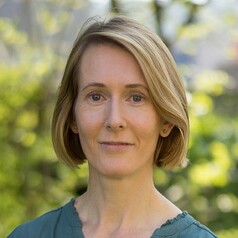
Adjunct lecturer, Lawrence S. Bloomberg Faculty of Nursing, University of Toronto As Director of the Ontario Centres for Learning, Research and Innovation in Long-Term Care at Baycrest, Dr. Raquel Meyer leads the design, implementation, scaling and evaluation of educational innovations to strengthen the current and future workforce. Raquel completed her doctorate in nursing health services research at the University of Toronto. She was the recipient of a Nursing Early Career Research Award through the Ontario Ministry of Health and Long-Term Care. Dr. Meyer’s scholarly activities focus on educational innovation, health human resources, leadership and care models. Raquel is an enthusiastic proponent for the relevance of research to clinical practice, education, leadership and policy development.
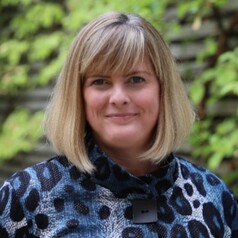
Professor, Global Development, Cornell University Rachel has four major areas of research: 1) historical, political and social roots of the food system in Malawi; 2) sustainable agriculture, food security and social processes in rural Africa; 3) social relations linked to health and nutritional outcomes and 4) local knowledge and climate change adaptation. Her general approach to food systems has been holistic, interdisciplinary and collaborative, drawing from both the natural and social sciences, including collaborations with those working in agricultural and nutritional science, public health and ecology. Most of her research is also applied, community-based and participatory, involving local organizations and community members addressing ways to develop a sustainable food system. In her work, she pays attention to different scales of a problem, as well as the historical roots that shape contemporary realities. She also studies discursive framings of food issues, using post-structural and feminist theory as well as political ecology to explore agricultural practices and policies in southern Africa. Concepts drawn from agroecology, public health and international nutrition have also been important in her research. Her long-term collaborative research project has shown evidence-based improvement in nutrition, food security and soil management from agroecological practices in Malawi and Tanzania.
Lead Scientist, Natural Capital Project, Stanford University Rafael’s (he/him) research is on catchment-scale modelling of hydrologic and sediment transport processes and their integration in decision making processes. In the freshwater and terrestrial ecosystem team, Rafael works on designing catchment interventions for better hydropower outcomes in the Himalayas and on quantifying the value of natural forest cover and sustainable land management for flood risk reduction in Myanmar. Rafael holds degrees in environmental science and engineering from ETH Zurich. During his PhD in information technology at Politecnico di Milano, Rafael developed the CASCADE framework for modelling network-scale sediment connectivity, for which he was awarded the Young Researcher Award of the International Hydropower Association. Before joining NatCap, Rafael was a postdoc at UC Berkeley’s Center for Environmental Design, where he developed optimization-based approaches to identify hydropower portfolios that balance hydropower production and dam impacts on river ecosystem services in the Mekong River Basin while including issues of deep uncertainty as well as trans-boundary equity.