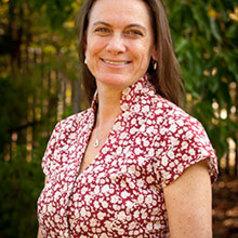
Director, Northern Institute, Charles Darwin University Professor Ruth Wallace is the Director of the Northern Institute. Ruth leads the Workforce Development, Migration and Pathways to Learning theme which focuses on collaborative approaches to workforce development and engagement with community, governments and industry that are sustainable and scalable. Ruth is the former ‘Secure Futures’ Program Leader for the Plant Biosecurity Cooperative Research Centre, with a focus on building resilience through community engagement and collaborative knowledge and management systems for biosecurity surveillance. In February 2016, Ruth became the first female Australian researcher to be awarded a Fulbright Distinguished Chair in Agriculture and Life Sciences (sponsored by Kansas State University). Research Interests Ruth has a strong relationship and working history with Vocational Education and Training – across regional and remote WA, QLD and NT in VET. Her PhD focuses on the needs of learners in regional areas in relation to education and education systems. Her research interests relate to the links between identity, marginalised learners and the development of effective learning and workforce pathways. This work is situated in regional and remote areas of Northern Australia, and undertaken with Aboriginal people in remote and regional areas. Ruth’s research connects to mobile learning pedagogies, literacy and numeracy learning and approaches to workforce development in remote enterprises. Her areas of expertise include: Workforce development in regional and marginalised areas Policy implementation in regional areas Regional development and growth in remote areas Mobile end technology based learning Learning identity Aboriginal enterprise development in remote areas Regional development and governance in Northern Australia and neighbouring regions Marginalised learners and access to knowledge systems Community engagement
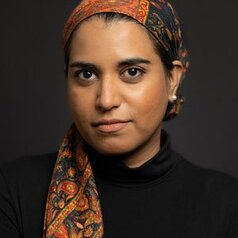
Postdoctoral Researcher, Memorial University of Newfoundland I have a Ph.D. in Political Science from York University, Toronto. I defended my dissertation in 2022 on the topic of "Secularism, Feminism, and Islamophobia: A Study of Anti-Veiling Laws in France and Québec." My research discusses the transnational circulation of the laws banning "religious symbols" in France, how they have circulated to Quebec, Canada, and their impacts on Muslim women across both sites. I'm currently working as a postdoctoral researcher on the SSHRC-funded project, "La Laïcité dans la Francophonie: Vue du Québec et de l’Ontario," alongside the principal investigators, Amélie Barras (York University) and Jennifer Selby (Memorial University). I also have several publications that deal with Quebec, France, anti-veiling laws, and Islamophobia, including: In Press “Good Islam, Bad Islam? Secularism, Separatism and Islamophobia,’” in Islamophobia and/in Post-Secular States. Ed. Sharmin Sadequee. Edmonton: University of Alberta Press. 2021 Fieldworking While Veiled: Autoethnography of a Brown + Muslim + Female Researcher in Québec, in Producing Islam(s) in Canada: On Knowledge Production, Positionality and Politics. Eds. Jennifer Selby, Melanie Adrian and Amélie Barras. Toronto: University of Toronto Press. 2020 Anti-veiling and the Charter of Québec Values: ‘Native Testimonials,’ Erasure, and Violence Against Montreal’s Muslim Women. Canadian Journal of Women and the Law / Revue Femmes et Droit, 32 (1): 114-139. https://doi.org/10.3138/cjwl.32.1.05
Michael J. Connell Distinguished Professor of Law Emeritus, University of California, Los Angeles Richard Abel teaches Torts, Legal Profession, and Law and Social Change. Over the years, he has been president of the Law and Society Association, editor of African Law Studies and of the Law & Society Review, and member of the editorial boards of other journals in the law and society field in the United States, Europe, and Australia. He participated in the founding of the Conference on Critical Legal Studies in 1977 and helped organize the meeting on "Law and Racism: The Sounds of Silence." At UCLA, he has been faculty coordinator for the Public Interest Law Program. Professor Abel spent two years after law school reading African law and legal anthropology in London, and then a year of field work in Kenya studying the ways in which primary courts staffed by and serving the African population had preserved indigenous notions of law and procedure within European institutions. He began teaching at Yale in 1969 and spent the 1971-72 year practicing with the New Haven Legal Assistance Association. Professor Abel's books include Lawyers in the Dock: Learning from Attorney Disciplinary Proceedings (2008); English Lawyers between Market and State: The Politics of Professionalism (2003); Speaking Respect, Respecting Speech (1998); Lawyers: A Critical Reader (1997); Politics by Other Means: Law in the Struggle Against Apartheid, 1980-1994 (1995); The Law & Society Reader (1995); Speech and Respect (1994); American Lawyers (1989); The Legal Profession in England and Wales (1988); The Politics of Informal Justice (editor, 1982); and Lawyers in Society (co-editor, 1988-89).
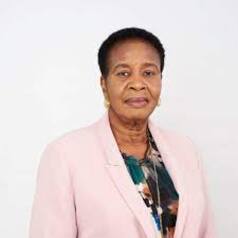
Professor of Environmental Physiology of Animals, University of Lagos Rosemary Iriowen Egonmwan is a professor of environmental physiology of animals in the Department of Zoology, University of Lagos. She is currently the head of the Natural Resources Conservation Unit in the department. Prof. Egonmwan had her bachelor’s and master’s degrees from the University of Lagos in 1977 and 1981 respectively. She holds a D.Phil. (Zoology) from the University of Oxford, United Kingdom (1988). As a student, she was a recipient of various scholarships such the Bendel State Best WASC Students’ Academic Scholarship (1972-1974), Academic Merit Award for Best Year 1 student, Faculty of Science, University of Lagos, and Federal Government of Nigeria scholarship (1975-1977), University of Lagos Academic Bursary Award (1978-1980), and Commonwealth Academic Scholar (University of Oxford, 1984-9188). Prof. Egonmwan started her lecturing career in 1982 in the University of Lagos when she was employed as an assistant lecturer in 1982, and rose to the position of a full professor in 2007. Her current research is on animal ecophysiology, ecotoxicology and conservation. She has served the university, and the nation, at the state and federal levels, in various capacities. In the department, she has served as course adviser, postgraduate coordinator, acting, and head of the Department of Zoology, and head, Natural Resources Conservation Unit. She has also served at the Faculty level on Member, Appointment and Promotion, and Endowment Committees. Egonmwan was a board member of Lagos University Teaching Hospital for four years (2012- 2016). In Edo State (where she hails from) she served as the chair of the Committee of Enquiry in the Edo State Polytechnic. At the federal level, she served as a member, Nigeria National Think Tank. During one of her sabbatical years, she worked a senior environmental advisor to Shell. Prof. Egonmwan is a member of many professional bodies such as the Marine Biological Association of Great Britain, Malacological Society of London, Unitas Malacologica, Ecological Society of Nigeria, Science Association of Nigeria, OWSD, Unilag Branch (where she doubles up as a board of governors member), Nigeria Conservation Foundation, among others. She is a Fellow, Zoological Society of Nigeria and Zoological Society of London. The services of Prof. Egonmwan in the University of Lagos have spanned for over four decades. She has successfully supervised 10 PhD candidates. She is currently supervising two PhD students. In March 2023, Prof. Egonmwan was appointed the chairman of the board of Vitafoam Nigeria Plc.
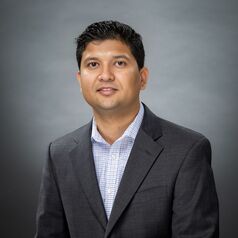
Assistant Professor of Cybersecurity and Computer Science, Quinnipiac University Dr. Robin Chataut is an assistant professor of Cybersecurity and Computer Science at the School of Computing and Engineering at Quinnipiac University. He earned his Ph.D. in Computer Science and Engineering from the University of North Texas and his undergraduate degree in Electronics and Communication Engineering from Tribhuvan University. Prior to his academic career, he worked in the software industry as a software developer. Dr. Chataut's research interests lie in the areas of wireless communication, cybersecurity, AI, machine learning, and advanced technologies such as 5G, Beyond 5G, and 6G networks. His expertise also spans network security, smart cities, vehicular networks, and the Internet of Things. His significant contributions to the field are evidenced by his design, implementation, and optimization of complex algorithms and systems architecture for next-generation networks. He has authored several research articles over the past few years and has been a dynamic presence at numerous international conferences and seminars. Beyond his research and academic commitments, Dr. Robin remains an active participant in the academic community. He serves in multiple international scientific journals and conferences, contributing significantly to the advancement of his fields of expertise.
Assistant Professor of Environmental Science, Quinnipiac University Rebekah Stein is an Assistant Professor in the Department of Chemistry & Physical Sciences at Quinnipiac University. She primarily teaches courses in Environmental Sciences and Natural Sciences. Her research interests are in the interface of the biosphere and atmosphere in times of climate change, including the past, present, and future. She uses biogeochemical tools, including a range of stable and clumped isotopes, to evaluate biological responses to climate stress, and has published a number of articles in reputable journals, from Paleoclimatology & Paleoceanography to PeerJ to JGR Atmospheres. She has received a number of grants and awards to support her research including from the National Science Foundation and Geological Society of America.