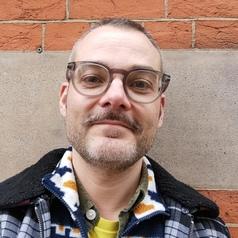
Professor of Psychiatry and Behavioral Sciences, Duke University Dr. Robin Gurwitch, a professor in the Duke University Department of Psychiatry and Behavioral Sciences and the Center for Child and Family Health, is a recognized expert in understanding and supporting children in the aftermath of trauma and disasters. She received her doctorate in Clinical/Medical Psychology from the University of Alabama at Birmingham, completed her internship in Pediatric Psychology at Rush-Presbyterian-St. Luke’s Medical Center in Chicago and completed a fellowship in Child and Adolescent Psychology at the University of Texas Medical Branch in Galveston. Since the Oklahoma City bombing in 1995, Dr. Gurwitch has focused much of her clinical work, training and research on improving the outcomes and increasing resilience in children who have experienced trauma or crisis events, including terrorism, natural disasters and stressors related to military deployment. She has served on state and national committees and task forces including the National Commission on Children and Disasters Subcommittee on Human Services Recovery and served as a subject-matter expert in the area of at-risk populations for the Disaster Mental Health Subcommittee of the National Bio-Defense Science Board for the Pediatric Preparedness and Response in Public Health Emergencies and Disasters for the Office of the Assistant Secretary for Preparedness and Response (DHHS/ASPR). She is a member of the American Psychological Association’s Disaster Response Network and provides expertise on children and disasters/terrorism for the Substance Abuse Mental Health Services Administration (SAMHSA). She was a member of the inaugural HHS National Advisory Committee on Children and Disasters. A prolific writer and educator, Dr. Gurwitch has co-authored book chapters, scientific journal articles and public education materials on the topics of trauma, resilience, psychological first aid, terrorism, disasters and preparedness. She authored a trauma treatment manual for use following disasters for children and adolescents. Dr. Gurwitch regularly presents on topics related to her specialty area at regional, national and international conferences. An active volunteer of the American Red Cross, she worked with the American Red Cross to develop materials related to terrorism and disaster for use in disaster mental health training courses and for use in schools. A caring clinician, Dr. Gurwitch has been involved in direct care following national and international disasters. She has been an active member of the National Child Traumatic Stress Network (NCTSN) since it began in 2001. She currently is the Co-PI for the NCTSN grant, NEW DAY (Network for Enhancing Wellness in Disaster Affected Youth. Dr. Gurwitch serves as a Senior Advisor for the National Center of Child Traumatic Stress' Terrorism and Disaster Program of the NCTSN. Dr. Gurwitch also serves as the Director of the PCIT & CARE Training Program at the Center for Child & Family Health. She is one of only 22 Global Trainers in Parent Child Interaction Therapy, certified by PCIT International. She has led the national efforts for PCIT adaptations for military families and for PCIT with children who have experienced trauma. She is a co-developer of CARE (Child Adult Relationship Enhancement), again leading efforts for military and classroom adaptations. She has published and presented extensively across the United States and Internationally on issues related to PCIT & CARE.
Lecturer in Modern British History, University of Nottingham Dr Richard Hornsey is a cultural historian of twentieth-century Britain, based at the University of Nottingham.
Lecturer in Tourism and Hospitality, Griffith University Dr Rawan Nimri is a passionate Early Career Researcher and Lecturer with industry experience in the discipline of Tourism and Hospitality with multiple publications in leading journals. She was granted her PhD from Griffith University in April 2019. Rawan’s research interest lies in the area of consumerism, behaviour change and sustainability. Rawan is also interested in research on staff employment experiences and wellness. Dr Nimri has expertise in quantitative methodologies and in applying and reviewing indicators and performance measurements in the tourism industry. She has worked on several projects with the Government of Jordan and for diverse organizations such as USAID and international and local NGOs.
Chercheur en agronomie, photographe, accueilli à l’Institut sénégalais de recherches agricoles (ISRA, Dakar), Cirad Quels sont les facteurs naturels et anthropiques qui conduisent à une fragilisation de l'agriculture africaine ? Dans quelle mesure l'agroécologie apporte-t-elle des réponses convaincantes ? Comment travaillent les chercheurs, les paysans et les militants qui portent le projet agroécologique pour l'Afrique ? Pourquoi la transition agroécologique tant espérée tarde-t-elle à survenir ? Pour moi, science et photographie constituent deux moyens complémentaires et indissociables pour aborder ces questions complexes. J’utilise régulièrement la photographie dans le cadre de mes missions de terrain, afin de témoigner des déséquilibres qui touchent les systèmes agro-sylvo-pastoraux africains, et pour mettre en valeur les personnes porteuses de solutions comme l'agroécologie. Au démarrage, tout cela n'était pour moi qu'une passion pour l'image. Mais progressivement, la photographie a pris toute sa place dans ma palette d'outils de chercheur de terrain. Je l'utilise aujourd'hui comme un moyen complémentaire de la méthode scientifique pour produire des connaissances et alimenter une réflexion transversale sur l'agriculture africaine. Agronome de formation, j’ai appris le métier de chercheur-photographe au contact du terrain, à travers de longues périodes d’immersion en brousse. Mes premieres missions m’ont conduites à étudier le fonctionnement des systèmes agraires et des filières agroalimentaires (« de la fourche à la fourchette ») dans divers contextes : Tanzanie (2009), Rodrigues et Maurice (2010), Yémen (2011), Kenya (2012) et enfin la Corse (2013-2016) lors de mes années de doctorat. Ces missions de longue durée (6 mois par pays en moyenne, sauf pour la Corse) ont été autant d’occasions pour aiguiser mon regard de chercheur et pour apprendre l’art de photographier. J’ai publié pour la première fois mes photos dans un ouvrage que j’ai rédigé à l’issue de ma thèse. L’ouvrage raconte, images à l’appui, l’histoire de la filière clémentine de Corse, et la manière dont cette dernière a su se démarquer en valorisant le terroir et la typicité. J’ai été recruté en tant que chercheur au CIRAD en 2017, puis affecté au Sénégal en 2018. Ma mission consiste à comprendre et appuyer la transition agroécologique au Sénégal et en Afrique subsaharienne. Depuis lors, je me déploie partout au Sénégal ainsi que dans d’autres pays (Kenya, Benin, Côte d’Ivoire) avec un travail qui s’organise en trois volets. Le premier volet consiste à comprendre la réalité du monde agricole africain au travers d’enquêtes menées chez les producteurs et les acteurs des filières agroalimentaires. Je mobilise des cadres analytiques et méthodologiques issus de l'agronomie système et des études de transition afin de comprendre les causes de blocage qui freinent le déploiement des innovations agroécologiques, que ces dernières émanent du monde de la recherche ou bien du monde paysan. Le second volet de mon travail consiste à accompagner les équipes de chercheurs qui conçoivent des innovations agroécologiques (outils de lutte biologique, systèmes de culture sans pesticides…). Mon rôle est de proposer des méthodes de co-conception qui prennent en compte les réalités et les contraintes les paysans africains. Le troisième volet de mon travail consiste à accompagner les mouvements sociaux qui émergent autour de l’agroécologie au Sénégal et en Afrique de l’Ouest. À ce titre je suis particulièrement impliqué dans la vie de la Dynamique pour une Transition Agroécologique au Sénégal (DyTAES), mouvement social que j'accompagne à la fois en tant que scientifique et que photographe. La DyTAES est un réseau sans reconnaissance légale, mais structuré, qui a réussi l'exploit de fédérer l'ensemble des acteurs de l'agroécologie sénégalaise (ONG, recherche, organisations paysannes, élus engagés…) dans un seul but : promouvoir l’agroécologie par le plaidoyer, la sensibilisation et l’accompagnement des territoires en transition. C’est la première fois qu’une alliance d’une telle nature apparait en Afrique.
Professor of Criminology, University of Huddersfield Prof. Rachel Armitage is a Professor of Criminology within the School of Human and Health Sciences at the University of Huddersfield. She founded the highly successful multi-disciplinary institute - The Secure Societies Institute (SSI), which she directed between 2014 and 2018. Prof. Armitage’s research focuses upon the role of design (place, space, products and systems) in influencing both anti-social and pro-social behaviour. She has conducted research on the subject of Crime Prevention through Environmental Design (CPTED) for over 20 years - evaluating the effectiveness of the Secured by Design (SBD) award scheme, investigating the links between housing design and crime risk, exploring the tensions and synergies between security and sustainability and studying international approaches to preventing crime through design. Her work has been referenced in local, national and international planning policy and guidance, and she aims to ensure that consideration for crime prevention is on the agenda of all agencies involved in planning and developing the built environment. More recently, she has conducted several projects exploring the role of design in counterterrorism at critical infrastructure sites, in particular, multi-modal passenger terminals. Rachel’s research on housing design has also focused upon the role of housing in the prevention of domestic abuse (specifically the Sanctuary scheme), and the impact of housing on mental and physical health. As well as her focus upon crime prevention within the built environment, Rachel works closely with many agencies to explore the impact of secondary victimisation of online child sexual abuse – particularly IIOC (Indecent Images of Children). Rachel is the Deputy Chair of Trustees for the Marie Collins Foundation; a Trustee of Acts Fast and a founder and trustee of the charity Talking Forward - a peer support group for families affected by online child sexual abuse. She is a founding member of the national Indirect Victims of Indecent Images of Children Investigations (IVIIC) National Strategic Group - working closely with key agencies to explore policy and practice responses to non-offending partners (NOPs) and children of IIOC offenders. Rachel has published extensively on the subject of designing out crime, including a sole authored book: Crime Prevention through Housing Design (2013) published by Palgrave Macmillan, and edited collections: Rebuilding Crime Prevention through Environmental Design (2019) published by Routledge, and Retail Crime – International Evidence and Prevention (2018) published by Palgrave Macmillan. She is on the Editorial Board of several journals including: Security Journal (Book Reviews Editor), the European Journal on Criminal Policy and Research, Crime Prevention and Community Safety and Frontiers in Psychology, Forensic and Legal Psychology. Rachel is an invited member of the Home Office Safer Streets Committee; the Home Office National Burglary Taskforce; the Home Office Vehicle Crime Taskforce; the Child Sexual Abuse Academic Network; the China Safe Cities Advisory Group, and the ActEarly City Collaboratory project (led by Bradford Institute for Health Research) to develop innovative approaches to the prevention of ill health.