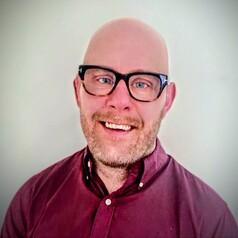
Senior Lecturer in Politics, Glasgow Caledonian University Ruth Lightbody is a senior lecturer at Glasgow Caledonian University and a Senior Fellow of the Higher Education Academy. She joined Glasgow Caledonian University in 2014 after completing an MSc in Political Research from the University of Strathclyde. She was awarded a PhD from the University of the West of Scotland in 2016 which looked at the role of public hearings in institutionalising deliberative democracy to promote environmental policy making. Ruth's principle research interests are deliberative democracy, public participation and community engagement, and how they can be used to implement policy changes which tackle social inequalities and environmental issues. She has established a reputation as a renowned expert in the area of deliberative democracy and community engagement, providing guidance to the Scottish Government, the Royal Society of Edinburgh, What Works Scotland and other third sector organisations, policy actors and organisers of democratic innovations. Ruth was awarded a Fellowship at the Scottish Parliament in 2023 exploring the core principles of participative democracy and developing a framework for measuring impact.
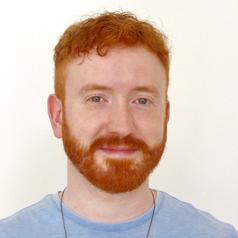
Postdoctoral research fellow at the Wales Institute of Social and Economic Research and Data, Cardiff University Dr Richard Gater is a postdoctoral research fellow at the Wales Institute of Social and Economic Research and Data, Cardiff University. His research interests include social class, education, employment and masculinities. Richard’s current post-doctoral research role involves publishing from his PhD thesis, disseminating his research findings to relevant organisations and identifying opportunities to continue his research, and further exploring several important findings from his PhD study.
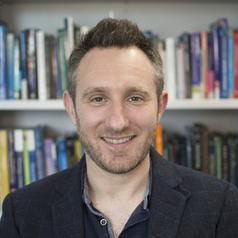
Postdoctoral Fellow, Bonavero Institute of Human Rights, University of Oxford Dr Richard Mackenzie-Gray Scott is Postdoctoral Fellow at the Bonavero Institute of Human Rights and St Antony’s College, University of Oxford, where his research is funded by the British Academy. He previously worked at the Bingham Centre for the Rule of Law, part of the British Institute of International and Comparative Law, where he was a research fellow and a member of its equality, diversity and inclusion committee. Richard has provided evidence to the Scottish Government, the UK Government, and the UK Parliament, and has worked on cases before the United Nations High Commissioner for Refugees, the International Centre for Settlement of Investment Disputes, the London Court of International Arbitration, the UK Supreme Court, and the Court of Appeal. He also served on the International Bar Association’s Human Rights Institute Task Force on Drones. His research has been published in peer-reviewed journals and reported on in the press, including newspapers such as The Herald and The Times, as well as being referred to by the International Committee of the Red Cross, the North Atlantic Treaty Organization Cooperative Cyber Defence Centre of Excellence, and the Public Administration and Constitutional Affairs Committee of the UK Parliament. He is the author of State Responsibility for Non-State Actors: Past, Present and Prospects for the Future (2022).
Royal Academy of Engineering Research Fellow, University of Oxford Robert House is a materials chemist working on next generation rechargeable battery technologies. His research focuses on new materials for lithium-ion, sodium-ion and beyond Li batteries and understanding the fundamental charge storage mechanisms and structural transformations which determine cell performance. Dr House is a Senior Research Fellow in the Department of Materials at the University of Oxford. In 2021, he was awarded an independent research fellowship by the Royal Academy of Engineering to work on developing lower cost, more sustainable alternatives to the Li-ion battery. Before this he was a Faraday Institution Research Fellow working on the CATMAT project researching high energy density cathode materials for next generation Li-ion batteries. He has a first degree in Chemistry from the University of Cambridge and completed his DPhil in 2020 at the University of Oxford under the supervision of Prof Sir Peter Bruce. In 2023, Dr House was included on the Forbes 30 Under 30 list for Science & Healthcare professionals in Europe.
Associate Professor, School of Psychology, University of Lincoln I am a Clinical Psychologist and Associate Professor in the School of Psychology at the University of Lincoln. I worked in the UK National Health Service for over a decade, in clinical practice, management and training. I joined the University of Lincoln in 2007, I lead the BSc Psychology (Coaching Psychology) pathway and teach on the MSc Counselling programme. I mainly teach the theory and practice of psychotherapy and coaching. My research centres on Character Strengths, the positive qualities of character (such as gratitude, wisdom, hope, curiosity, kindness and so on) related to wellbeing and productivity. I have authored two books, and dozens of articles and book chapters, and act as reviewer for several leading academic journals in applied psychology. I have delivered coaching, training and keynotes across a broad range of public and private sector organisations, and sit on the Faculty of the VIA Institute for Character.
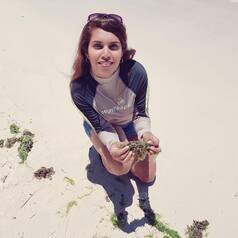
Postdoctoral Research Fellow, Leibniz Centre for Tropical Marine Research I am a marine scientist originally from Mauritius Island. I have a PhD in the field of marine biochemistry from the University of Mauritius. After my PhD, I did my postdoctoral research at the Institut français de recherche pour l'exploitation de la mer (IFREMER) in France where my research work was focused on the toxic effects of harmful microalgae. Currently, I am a postdoctoral research fellow of the Alexander von Humboldt Foundation at the Leibniz Centre for Tropical Marine Research and the University of Oldenburg in Germany where I am investigating the nutraceutical potential of selected jellyfish species.