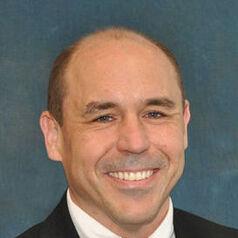
Associate Professor of Management, Penn State Raymond Gibney Jr. joined Penn State Harrisburg in 2007. His primary teaching responsibilities focus on human resource management. Prior to joining Penn State Harrisburg, Dr. Gibney worked as a consultant with such firms as PeopleSoft and Coopers & Lybrand. He has consulted on various HR related issues across diverse industries.
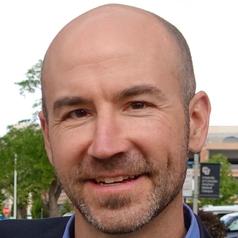
Associate Professor of Business Information and Analytics, University of Denver Ryan Elmore is an associate professor in the Department of Business Information and Analytics, Daniels College of Business. Prior to Daniels, he worked as a Senior Scientist in the Computational Sciences Center at the National Renewable Energy Lab in Golden, Colorado. He has also held positions at the Australian National University, Colorado State University, and Slide, Inc. Elmore’s research interests include statistics in sports, nonparametric statistical methods, and energy efficient high-performance computing. He is currently an Associate Editor for the Journal of Quantitative Analysis of Sports (2015–present). Ryan’s work has been featured in The Economist, The Wall Street Journal, The Telegraph, The Guardian, and The Fried Egg Podcast.
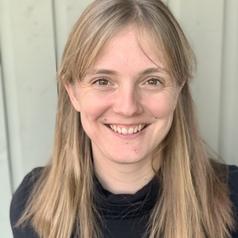
Assistant Professor, Global Development Studies, Queen's University, Ontario Dr. Rebecca Hall is an Assistant Professor of the Political Economy of Resource Extraction and Development in the Department of Global Development Studies at Queen’s University. As a feminist political economist concerned with social justice, her research examines how land and resources are accessed, organized, and extracted from, and how people work, care and reproduce upon this land. Her research has explored the gendered dynamics of resource extraction in Canada; social reproduction and caring labours; ongoing processes of settler colonialism; and gender violence. Her 2022 book, Refracted Economies: Diamond Mining and Social Reproduction in the North (University of Toronto Press), examines the gendered dynamics of diamond mining in the Northwest Territories, Canada. Rebecca's current research examines community experiences of mine closure and aspirations for "post-extractive futures". She is pursuing this research as a co-lead of "We Will Not Be Banned From Our Land", a research network led by Dedats'aatsaa: Tlicho Research and Training Network. She has also partnered with the Yellowknives Dene First Nation and Ecology North in facilitating community talking circles on mine closure. Rebecca earned her MA and PhD in Political Science from York University.
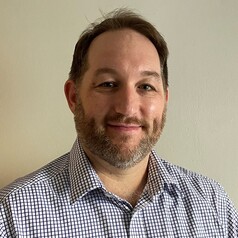
Professor, James Cook University Dr Richard Franklin PhD, is a pracademic who uses an evidence-based approach to developing real world solutions to improving health, safety, and wellbeing with a focus on health services, rural populations, those working in agriculture, disasters and drowning. He is a Professor of Public Health and Director of the World Safety Organization Collaborating Centre - Injury Prevention and Safety Promotion and Co-Director of the WSO Collaborating Centre - Disaster Health, Resilience and Emergency Response at James Cook University, within the College of Public Health, Medical and Veterinary Sciences where he teaches, undertakes research and outreach work. His research interests include epidemiological, qualitative, translational, program evaluation, product evaluation, and surveillance. Current projects include heatwave impacts on health services; travel safety; rural road safety; drowning prevention; mitigating the impact of flooding and cyclones; and disaster preparedness and resilience.
Professor at the Centre for Marine Science and Technology, Curtin University Professor Robert McCauley is a research scientist at the Centre for Marine Science and Technology at Curtin University, Perth, Western Australia. Professor McCauley has been studying how the noise from seismic survey signals impacts marine fauna since 1992 and has been involved with experiments of seismic impacts on plankton, scallops, lobster, squid, octopus, fish, sea turtles and whales. McCauley has spent a career listening to Australia's ocean: trying to understand the numerous biological signals recorded, how they are made and detected by the animals concerned, why they are made and how us humans can use the sounds to study or monitor fauna; plus understanding the myriad of complexities of how sound behaves in the ocean and natural physical ocean noise.
Senior research fellow, University of Tasmania Ryan Day is one of the Animal Ethics committee Chairs and a Research Fellow in Marine Animal Physiology and Biochemistry at University of Tasmania’s Institute for Marine and Antarctic Studies. One of his primary research areas are in measuring the impact of seismic surveys on marine invertebrates. In this field, his research has used quantification of acid-base physiology, haemolymph electrolyte and mineral homeostasis, immune function and oxidative stress to assess the health status of marine invertebrates including lobster, scallops to evaluate the impact of exposure to seismic air gun signals. The outcomes of this research have been incorporated by the federal regulatory body (NOPSEMA) for impact assessments to minimise harm to marine life. In his second primary research area, Ryan investigates approaches for reducing post-harvest loss in marine fisheries, with a current focus on the live export southern rock lobster fishery. This research developed in response to reports of large-scale mortalities within the lobster processing industry. In conducting an assessment of haemolymph physiology, including biochemistry and immune function, his research in collaboration with a veterinary epidemiology team, determined the cause of mortality was sub-optimal holding and handling conditions, rather than a pathogen as was initially feared. In response, Ryan authored an industry best practices guide with recommendations on handling and water quality management. Implementation of these recommendations has been attributed to eliminating mass mortality events and halving mortality rates by industry partners. This work has recently been extended to the fishing vessel component of the industry and projects to apply this research to other marine invertebrate fisheries are in development. In addition to his recent work with invertebrates, Ryan’s PhD research focused on digestive physiology in marine fishes, in which he characterised digestive strategies in fishes that lack a stomach.