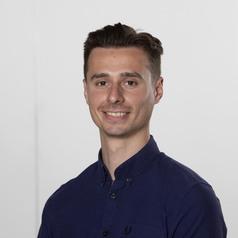
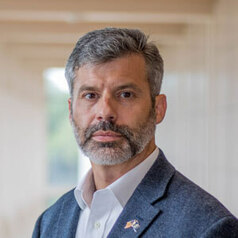
PhD Candidate in Water Resources Engineering, University of Iowa Riley Post, P.E., is an engineer with well over a decade of experience in reservoir management. As a Graduate Research Fellow within the University of Iowa's Iowa Flood Center, Post studies the operation of large systems of reservoirs for the reduction of flooding along tributary rivers throughout the Midwest. His doctoral research focuses on riverine flooding and mitigation through distributed storage, as well as uncertainty in radar rainfall estimation. Prior to starting his PhD studies, he was the lead reservoir operator for three major flood control reservoirs in Iowa while working for the US Army Corps of Engineers where he also operated 18 locks and dams along the Mississippi and Illinois Rivers.
PhD Candidate, Centre for Inflammation Research, Institute for Regeneration and Repair, The University of Edinburgh In 2021, Robert completed his MSc in Biology at Leiden University in the Netherlands. Specialising in Molecular Genetics and Biotechnology, he undertook two research projects within the Animal Sciences and Health/Bioinformatics and Genomics clusters, collaborating with research teams at Radboud University, Nijmegen and KU Leuven in Belgium. The first used the zebrafish as a model system to investigate the glucocorticoid receptor and innate immune cell migration during the inflammatory response. A later project focused on the taxonomic and functional profiling of zebrafish intestinal microbiome using metagenomic approaches and next-generation sequencing datasets. Today, Robert bridges these areas, combining his research interests in human disease, inflammation, and the gut microbiome and applying them to his present PhD project. Inflammatory Bowel Diseases (IBD) are chronic immune-mediated conditions affecting the gastrointestinal tract. They are common, with a global prevalence approaching 20-30 million individuals by 2025. The gut microbiome is a critical factor in the development of IBD and there are now several approaches aimed at manipulating the gut flora as therapy including faecal transplantation, probiotics and selective expansion of beneficial bacteria populations using spore technologies. However, we do not yet have the precision medicine tools to refine our understanding of the complex gut microbiome and its interconnection with IBD disease activity to improve the way we choose and tailor microbial-based treatments. Emerging evidence suggests that inflammation may begin in the oral cavity and spread to the gut as pathobionts move between those body sites, hence there is a need to investigate the oral-gut microbiome axis in IBD. Robert – alongside PI’s with bioinformatics, clinical and IBD expertise – aims to characterise the metagenome to determine if the complexities of the gut microbiome can be refined and reduced based on oral microbiome data to allow for a simple, quicker and more acceptable form of microbiome analysis that can be carried out in the widest IBD setting. Together, they will use strain-level metagenomics to look at the cross-talk between the oral and gut microbiota in IBD, and functional metagenomics to look at functional correlates with disease progression, outcome, and mucosal healing.
Professor of Cultural Anthropology, Georgetown University Dr. Davis’ research focuses on refugees and conflict, specifically, Palestinian, Syrian, and Iraqi refugees. She has conducted research in Jordan, Turkey, Iraq, and Lebanon. She was also the lead qualitative researcher on a Georgetown University-International Organization for Migration longitudinal study of Iraqis displaced by ISIS/ISIL and their access to durable solutions. The study (2015-2021) followed over 3000 Iraqi families internally displaced in Iraq. Her book, Palestinian Village Histories: Geographies of the Displaced, (Stanford University Press, 2011) was co-winner of the Middle East Studies Association’s Albert Hourani Book Award recognizing outstanding publications in Middle East studies. The book addresses how Palestinian refugees today write histories of their villages that were destroyed in the 1948 war, and the stories and commemorations of village life that are circulated and enacted in the diaspora. This work is based on over 120 village memorial books composed by refugees in Syria, Jordan, Lebanon, the West Bank, Gaza, and Israel, and ethnographic research in these communities. Professor Davis’ is currently writing a book about the conceptions of culture in the U.S. military’s war in Iraq. She examines the cultural training material produced by military institutions and contractors about Iraqis, Arabs, and Islam. Through interviews with U.S. soldiers and marines, her research discusses how the servicemen and women assess the cultural training they received and their experiences with Iraqi culture and society. Interviews with Iraqis provide perspective on how Iraqis experienced the American troops’ cultural knowledge in practice. Her other research interests include Palestinian poster art ( and Palestinian social and cultural life prior to 1948. She has also collected over fifty oral histories of Palestinian Jerusalemites about their lives in the twentieth century.
PhD Student, University of Sydney I am a final year PhD student at the University of Sydney, looking at the role digital health technologies for supporting patients with atrial fibrillation and managing their risk factors. I have completed a Bachelor of Science (Biomedical Sciences) at the University of Queensland in 2018. I commenced my PhD in Medicine and Heath in 2020 and am due to submit my thesis early next year.
Assistant Professor of Supply Chain Management, Iowa State University Dr. Robert E. Overstreet is an Assistant Professor in Supply Chain Management. His role is to help advance supply chain management research and outreach in the Ivy College of Business at Iowa State University. Dr. Overstreet engages in industry-based research and enjoys building research and student relationships between academia and practice. In addition to his formal education, he holds multiple industry certifications (Certified Professional Logistician, Certified in Transportation and Logistics, and Lean Six Sigma Black Belt). Prior to entering academia, Dr. Overstreet served in the United States Air Force for nearly 28 years in leadership positions across several functional areas including logistics planning and analysis, transportation and vehicle management, as well as multi-national logistics operations. His combat deployments include one year near Mosul, Iraq where he advised a two-star Iraqi general on the care and provisioning of the 2nd and 3rd Iraqi Armies and six months near Herat, Afghanistan, where he served as the garrison commander of Camp Arena as well as senior logistician in Train Advise Assist Command–West. He also served as a sub-regional commander for Defense Logistics Agency–Energy Middle East in Bahrain where he was responsible for Department of Defense energy needs in Egypt, Iraq, Jordan, Kuwait, Lebanon, and Syria.
Senior Lecturer in Museum and Heritage Studies, Nottingham Trent University Dr Pickering Wood joined the School of Arts and Humanities at NTU in 2019 and contributes to scholarly activity, module leadership and teaching at undergraduate and postgraduate level on BA (Hons) History and MA Museum and Heritage Development. She is also a PhD Supervisor facilitating studies that bridge historical and creative disciplines. Her academic interests include the development of digital skills and narratives, utilising technology as a tool for enhancing experiential learning and practice, seeking to rethink pedagogical approaches for online-learning. Her background in creative design supports her interest in developing creative assessments approaches within humanities focusing on the use of film, audio and visual methods to showcase historical understanding and interpretation. Dr Pickering Wood also seeks to address the lack of representation of minority groups and working-class narratives within Higher Education disciplines through challenging divisive rhetoric and establishing new approaches to inclusive assessment.