Assistant Professor of American judicial politics, Texas Christian University Rachael Houston is an assistant professor of American Judicial Politics at Texas Christian University. Her research lies at the intersection of judicial behavior, political communication, and social psychology. She is interested in how people learn, and form opinions, about, the U.S. Supreme Court, particularly with an emphasis on the role the media plays in informing the public. Her new book SCOTUS and COVID: How the Media Reacted to the Livestreaming of Supreme Court Oral Arguments is out now.
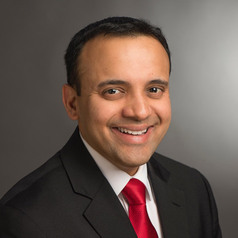
Professor of Marketing, Rochester Institute of Technology Raj S. Murthy, Ph.D., is the J. Warren McClure Research Professor in Marketing. An active business consultant, his research is tied to his experience and teaching interests in quantitative analytics, research methods, with a focus on technology and stakeholder engagement. Raj works with students and the community in Rochester on commercialization of ideas and new product development. As the J. Warren McClure Professor, Raj has organized distinguished lectures and engaged in multiple national and regional media outlets. His most recent research efforts are focused on the adoption, use, and abuse of technology.
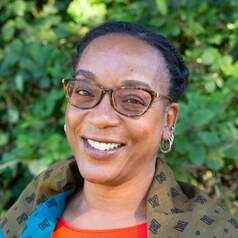
Professor of Sociology, University of South Wales Health and wellbeing are not just about our bodies and physiology, but about the webs we weave and that are woven around us: our relationships, home, community, economy and culture. Community-focussed, place-based approaches to research, and ‘ways of knowing’ that include nuanced and diverse aspects of everyday health and wellbeing are crucial in policy and practice developments seeking to address the low health and wellbeing outcomes that continue to impact poorer, marginalised populations. Since joining USW in 2002, I have led teams of researchers, and collaborated with colleagues across the UK on a wide range of studies and scholarly activities, securing close to £1m of research funding from the Welsh Government, ESCR, AHRC and others. A key aspect of my research activity has been to draw out the voices of people from marginalised, migrant and minority ethnic population groups; to spotlight issues of access, engagement and utilisation in a range of health and social care settings; and to arrive at innovative solutions and new knowledge pathways drawn from a range of stakeholder perspectives, practices and sensibilities. I am a Sociologist and my research incorporates critical race theory, feminism, community development theory, and critical perspectives in health, social policy and practice. My abiding research interest is rooted in intersectionality, in particular, the interplay and impact of, gender, age and social class as experienced by racialised and minority ethnic population groups. My early research included leading on the establishment of a Wales-wide infrastructure research support service that collated and made accessible online research, best practice and policy resources; conducting studies exploring cultural competencies of social work and nursing; and funding, supporting and (most importantly) evaluating the strategies, approaches and outcomes of locally based health and wellbeing small-grant activities led by community organisations. My completed funded projects include qualitative and mixed-methods studies on understandings of dignity, and on experiences and expectations of care, drawing on the perspectives of older Caribbean migrants (men and women) in a localised context, and on the perspectives of older women from a range of minority ethnic backgrounds, alongside the surveyed findings of community-based social care and support professionals across Wales. ‘Go Home’: Mapping the unfolding controversy of Home Office immigration campaigns ended in 2015. This 18-month, multi-site, interdisciplinary research project explored the impact on local communities and national debate of current publicity campaigns about migration by the UK Home Office. Funded by the ESRC (Rapid Response Strand – £200k), this project operated across eight universities; I led on the Cardiff work package. Another recently completed study is Representing communities: developing the creative power of people to improve health and wellbeing (July 2013 to July 2017), a large multi-siteprojectfunded by the Communities, Cultures, Health and Wellbeing strand of Connected Communities (AHRC/ESRC). Using five detailed case studies rooted in communities across the UK (including two in Wales), the project aims to establish how community representations produced through creative-arts practices can be used as forms of evidence to inform health-related policy and service development. I led on the Representing Butetown work package (£183k) and the focus was on the leisure pursuits, physical endeavours and creative activities of older people, with a focus on individual as well as collective wellbeing (behaviours, expectations and representations).
Maître de conférences en psychologie, Université de Lorraine Renaud Evrard est maître de conférences HDR en psychologie à l'Université de Lorraine, et psychologue clinicien au Centre Psychothérapique de Nancy. Il est responsable de l'axe "Psychopathologie clinique et projective" (PsyCliP) du laboratoire Interpsy. Il a co-fondé en 2009 le Centre d'Information, de Recherche et de Consultation sur les Expériences Exceptionnelles.
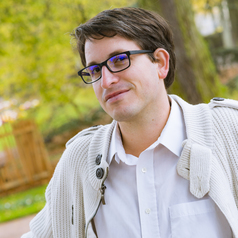
Professor of Anthropology, University of Virginia I am a cultural anthropologist who studies modern western societies. My initial fieldwork was in Quebec (1976-1984) where I studied the Québécois nationalist movement. This has led to an enduring interest in nationalism, ethnicity, and the politics of culture. Upon coming to Virginia in 1986, I pursued the latter topic by looking at history museums. Beginning in 1990, I worked with Eric Gable (Ph.D. Virginia 1990) and Anna Lawson (Ph.D. Virginia 1995) on an ethnographic study of Colonial Williamsburg, which is both an outdoor museum and a mid-sized nonprofit corporation. In addition to examining the invention of history and tradition, our study focuses on corporate culture, class, race and gender. A different interest is the intersection of anthropology and literature. I have written on Jane Austen's novels, on the literary bent of such noted anthropologists as Ruth Benedict and Edward Sapir, and on the difficulties of writing the ethnography of nationalist movements. Finally, I have had an ongoing interest in the history of American anthropology - in particular, in anthropologists as critics of modernity, and the relationship of our discipline's critical discourse to other intellectual trends. I am currently writing a series of essays on the great mid-century sociologist and social critic, Erving Goffman. I am currently directing an interdisciplinary undergraduate program in Global Development Studies, for which I teach several courses. I am also teaching graduate anthropology courses in the history of theory and in nationalism.