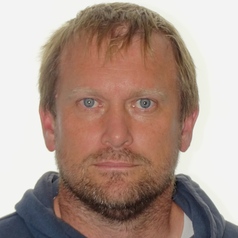
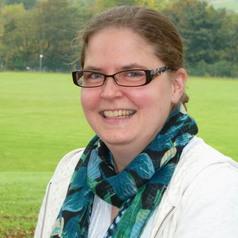
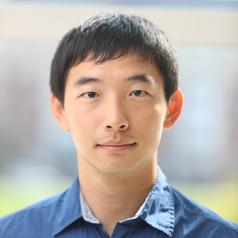
Associate professor in marine biology, Swansea University Richard's expertise lie in the ecological structuring processes of marine systems and the implications of these systems for society. This focuses primarily on the interrelationships between foundation species, habitat, and associated productive fauna (mainly fish). He is particularly interested in the consequences of cross-scale environmental changes on seagrass meadows functioning and the implications of this for global food security and other ecosystem services. Richard has more than twelve years’ experience of research in marine systems and conducts collaborative interdisciplinary research in Europe, Australia, Indonesia, Columbia and the Turks and Caicos Islands. Based within the SEACAMS team at Swansea, he leads the level 3 module in 'Tropical marine ecology and conservation' and teaches on the MSc module 'Conservation of aquatic resources'. After completing his PhD in 2007, Richard conducted research and consulting work for Sinclair Knight Merz, Brisbane and the Northern Fisheries Centre, Queensland, Australia. He has also worked as a senior ecology lecturer at the University of Glamorgan. He is an academic editor at PLoS One and former president of the World Seagrass Association. Richard is also a founding director of Project Seagrass and continues to work as a senior scientist at SeagrassWatchHQ. Other roles include membership of the editorial boards of Marine Pollution Bulletin and Marine Environmental Research. His current research projects include the impact of climate variability on seagrass ecosystems, social-ecological systems analysis, ocean acidification and seagrass, and the resilience and ecosystem service provision of seagrass.
Principal Lecturer in Mathematics Education (Primary), University of Brighton Dr Rachel Marks is a Principal Lecturer in Mathematics Education (Primary) at the University of Brighton. She teaches across BA, PGCE, MA and Doctoral programmes in mathematics education, educational studies and research methods. She is a qualified primary teacher and has previously taught in inner-city and rural primary schools for five years. Rachel completed her ESRC funded PhD thesis at King's College London on ability grouping in the primary mathematics classroom in 2012. She has subsequently worked on a diverse range of research projects within mathematics education, recently completing a nationwide survey of curriculum resource use, funded by the Nuffield Foundation.
Lecturer in Information Activities, Cranfield University Rob Black is a Lecturer in Information Activities at Cranfield University, at the UK Defence Academy. He teaches on the Ministry of Defence’s Cyberspace Operations MSc and his interests are focused on the nexus of cyber, intelligence and warfighting, deception and the legality of cyber operations. He is the former Deputy Director of the UK’s National Cyber Deception Laboratory which explored the potential cyber deception has to offer for cyber defence. Previously, he worked for the MoD developing cyber capabilities supporting the delivery of UK cyber operations. Additionally, Rob is the Director of the UK Cyber 9/12 Strategy Challenge, a university student competition focused on building the next generation of cybersecurity leaders competent in strategy, policy and technology. Rob is also an Associate Programme Director at Wilton Park, an agency of the UK FCDO, where he enables policy dialogues on key issues in defence and national security, cyber and intelligence.
Adjunct Professor, Griffith University Roman Grynberg is a Polish-born professor of economics, author, and academic. He is specialised in international trade and commodities, and has written several research papers in the disciplines. He has written economics papers on the Southern African Customs Union, and his other research interests include Foreign International Trade, Microeconomics, International Commercial Diplomacy, Trade and Development and International Trade Relations. He is also a regular columnist for The Namibian and has written for South Africa's Mail and Guardian on macroeconomic concepts. He holds a PhD in Economics, MA Economics and BEc. Roman is the Manager of the Economic Governance Programme, Pacific Islands Forum. Prior to this, he was the Deputy Director of Trade and Regional Integration at the Commonwealth Secretariat (2000-2005). He has also held positions with the CFTC ( Commonwealth Fund for Technical Co-operation and United Nations Conference on Trade and Development, as well as acting as an economic adviser to the Pacific Islands Forum and the Prime Minister of Papua New Guinea.
PhD Student in Supply Chain Management, University of Maryland Ruifeng (Brett) Wang began the PhD program in Fall 2020. Prior to joining the PhD program, Brett received a Master of Science degree in Global Logistics from Arizona State University. He also holds a Bachelor of Science degree in Management Information System from Shanghai University of Finance and Economics. Previously, Brett worked as an operations specialist with Meritek Electronics Corporation. His primary research interests are digital transformation, technology innovation, and retail operation. Brett has a publication on International Journal of Physical Distribution & Logistics Management.
Professor in Government and Public Policy, University of Strathclyde, and Adjunct Professor in the Nelson Mandela School of Public Governance, University of Cape Town, University of Cape Town Professor Mattes is Senior Adviser to, and co-founder of Afrobarometer, a ground-breaking regular survey of public opinion in 37 African countries. He is also the co-author (with Michael Bratton and E. Gyimah-Boadi) of Public Opinion, Democracy and Markets In Africa (Cambridge University Press, 2005), and the co-editor (with David Denemark and Richard Niemi) of Growing Up Democratic: Does It Make A Difference? (Lynne Rienner Publishers, 2016).