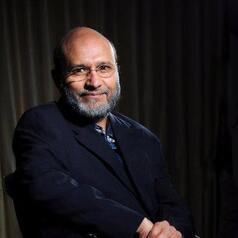
Visiting Professor at the Centre for Development Studies, University of Bath Santosh Mehrotra is Visiting Professor, Centre for Development Studies, University of Bath, UK and ex-Prof (Econ) and Chair of the Centre for Informal Sector and Labour, Jawaharlal Nehru University, New Delhi. After an MA (Econ) from New School for Social Research, New York, and Phd (Econs), Cambridge University (1985), Santosh spent 15 years with the UN (1991-2006) in research positions, heading UNICEF’s global research programme on social/economic policy at the Innocenti Research Centre, Florence, and as chief economist of the global Human Development Report New York. He returned to India to head the Rural Development Division and Development Policy Division of Planning Commission (2006-09), and was lead author of several chapters of the 11th & 12th Five Year Plans of India, and the India Human Development Report. He was also the Director General (2009-14) of the National Institute of Labour Economics Research, Planning Commission, in the rank of Secretary to the Government of India. He advises the current NITI, the Ministry of Labour, and the Ministry of Skill Development. His writings have been translated into Hindi, Spanish, French, Russian, German and Portuguese.
Research Fellow, Matilda Centre for Research in Mental Health and Substance Use, University of Sydney Steph is a Research Fellow at The Matilda Centre for Research in Mental Health and Substance Use. Steph leads an innovative program of research and translation to reduce the impact of substance use. Her research aims to improve the health outcomes for individuals, families and communities especially among vulnerable and disadvantaged groups. Steph is passionate about addressing the stigma and discrimination associated with alcohol and drug use. Steph leads a number of innovative digital projects including 1) Cracks in the Ice, a National Online Portal funded by the Australian Government Department of Health to develop and disseminate evidence-based resources about crystal methamphetamine (‘ice’) for the Australian Community; 2) The Illicit Project an interactive, neuroscience-based harm reduction program that aims to upskill Australian young people in alcohol and drug use harm minimisation. She also works closely in collaboration with Aboriginal and Torres Strait Islander communities to co-develop and disseminate culturally appropriate resources to prevent and reduce the impact of substance use (e.g. crystal methamphetamine, nicotine) among communities.
Associate Professor, Cognitive and Affective Neuroscience, University of Southampton Sarah L. Chellappa, MD, MPH, PhD, is an Associate Professor at the University of Southampton, UK. Dr. Chellappa´s work has shown that sleep and circadian rhythms affect mood, cognition and brain activity in a variety of human populations, including healthy young and older adults, shift workers, patients with depression, patients with ocular diseases, and in individuals with neurodevelopmental conditions. Their work combines multimodal neuroimaging approaches to assess how sleep and circadian rhythms affect brain activity that modulate mood and cognition. Their work also includes sleep/circadian interventions to help improve mood, health and well-being using targeted light exposure and, more recently targeted nutritional interventions (meal timing) to improve cardiometabolic and mental health in humans.
Assistant Professor in Ornithology and Animal Conservation, University of Birmingham Dr Jim Reynolds has worked on the reproductive biology and the nutritional ecology of birds from many different and diverse orders including passerines, geese, grouse, kingfishers and terns. He has worked in North America and in mainland Europe in investigating how human activity influences food availability and the resulting changes in avian reproductive investment and life histories. He employs state of the art technologies and traditional methods in field ornithology in spear-heading research into the foraging ecology of free-living birds in the UK, in the UK’s Overseas Territories and elsewhere.
Investigador posdoctoral en psicología social aplicada al medioambiente, Universidade de Santiago de Compostela Doctor en psicología y miembro del grupo de investigación COSOYPA (Comportamiento Social y Psicometría Aplicada) y del CRETUS (Centro Interdisciplinar de Investigación en Tecnologías Ambientales). Su principal línea de investigación es el análisis de la percepción y la aceptación social de distintas soluciones tecnológicas a problemas ambientales a través varios proyectos multidisciplinares de ámbito europeo y nacional. En 2022, recibe el Premio de Investigación Ernesto Viéitez Cortizo en la modalidad de promoción de jóvenes investigadores menores de 30 años concedido por la Real Academia Gallega de las Ciencias (RAGC) a raíz de una publicación en Water Research sobre aceptación pública del agua reciclada.
PhD Candidate, Università di Bologna Stephanie Arnold is a PhD Fellow at UNU-CRIS within the Digital Governance cluster and a PhD researcher at the Department of Political and Social Sciences of the University of Bologna (Italy). Throughout 2022/2023 she was a visiting PhD researcher at the Centre for Digitalization, Democracy, and Innovation of the Brussels School of Governance (VUB). Her research examines the role of foreign players in the digital development of Sub-Saharan Africa. Previously, she studied abroad at Leiden University and the China University for Political Science and Law in Beijing. She also completed numerous internships including at the Embassy of Italy in Tanzania and the NATO Office of Legal Affairs. In 2022, she was selected to join the Europaeum Scholars Programme, a two-year policy and leadership course for doctoral students coordinated by the University of Oxford. She obtained a 5-year master’s degree in law from the University of Bologna with a master thesis on cross-border data transfers between China and the European Union. She is fluent in English, German, Italian, and Swahili.