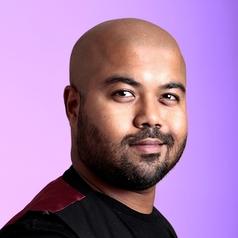
Embedded Artificial Intelligence Scientist & AI Music Producer, University of Essex Somdip Dey, FRSA, also professionally known as InteliDey, is an Embedded Artificial Intelligence scientist, engineer, entrepreneur, AI art & music creator and TED speaker. Dey is the CEO of Nosh Technologies, the CTO of Blockway Technologies, a Lecturer of Computer Science at the University of Essex, and a Lecturer of Data Science at the York St John University. He is also the Danah Zohar Professor of Quantum Philosophy & Professor of Practice (AI/ML) at Woxsen University, India. He has more than 13 years of industrial experience including working for Microsoft and Samsung in developing technological products that are currently used by billions of users in different ways. For contributions to improving society through applications of embedded machine learning Dey is elected a Life Fellow of the Royal Society of Arts, named an MIT Innovator Under 35, an Outstanding Achiever in Education, Science & Innovation at the 2023 India UK Achievers Honours and a 2022 World IP Review Leader. Dey was born on December 13, 1990, in Kolkata, India. Dey is the only child of a painter mother, Soma Dey, and a commercial artist father, Sudip Dey. He attended South Point High School in Kolkata, India and went to study bachelor's in Computer Science at St. Xavier's College, Kolkata, where he graduated with a first-class degree (2012). After graduating with a Computer Science degree Dey pursued a career of an engineer, a scientist and an entrepreneur. In 2012, Dey invented a digital QR authentication system that was adopted by institutes around the world to stop the generation of fake degree certificates. In 2013, he moved to the U.K. to pursue a master's study and while pursuing his MSc at the University of Manchester in 2014, his parents had a car accident that made him the family's sole breadwinner. Sending money to his family to support them left Somdip with an empty bank account and he was left to collect food waste from dumpsters. This led him to co-found Codeepy, a start-up committed to co-developing the world's first crowd food-sharing platform, which was made open source. It won the 3Scale API Award at the Koding's 2014 Global Hackathon & inspired entrepreneurs around the world to develop similar solutions. In 2020, when the pandemic took over the world and people started to overbuy groceries to adapt to the changing shopping schedule, it ran the risk of increased food wastage at home. Dey co-developed an award-winning AI powered food management app - nosh - to help users reduce food waste in the household. In 2021, Dey co-founded Nosh Technologies (nosh tech inc. - US & Nosh Tech Ltd. - UK), which provides the nosh app solution to reduce food waste at home, and he also assumed the role of the CEO & Chief Scientist of the company. In 2022, Dey co-developed a machine learning based platform to reduce scams and malicious behavior in blockchain projects while empowering on-chain marketing. This led him to cofound Blockway Technologies (Blockway Tech Inc.). Dey is a member of the technical program committee and reviewer of several top technical conferences on Artificial Intelligence and Electronic Design Automation fields such as AAAI, CVPR, ICCV, ECCV, ASAP, IEEE EdgeCom, IEEE CSCloud, etc. He is also an editor of numerous academic journals.
Professor of Global Conflict and Development at The University of Sydney; Non-Resident Fellow at the Sana'a Center for Strategic Studies, University of Sydney Sarah G. Phillips is Professor of Global Conflict and Development at the University of Sydney, a Future Fellow with the Australian Research Council, and a Non-Resident Fellow at the Sana'a Centre for Strategic Studies (Yemen). Her research draws from years of in-depth fieldwork (particularly in Yemen, Somaliland, Iraq, Kenya, and Jordan), and focuses on international intervention in the global South, knowledge production about conflict-affected states, authoritarianism, and critical terrorism studies. She lived in Yemen for nearly four years, and has published two books and many articles on its politics, the latest of which is "Trivializing Terrorists: How Counterterrorism Knowledge Undermines Local Resistance to Terrorism” (with Nadwa al-Dawsari), Security Studies (Open Access, 2023): https://www.tandfonline.com/doi/full/10.1080/09636412.2023.2250253?src= Sarah's most recent book, "When There Was No Aid: War and Peace in Somaliland", was awarded the Australian Political Science Association’s biennial Crisp Prize for the best scholarly political science book (2018-20). It was also listed as a ‘Best Book of 2020’ by Foreign Affairs, and a ‘Book of the Year' (2020) by Australian Book Review, and was shortlisted for both the Conflict Research Society’s 'Book of the Year Prize' (2021), and the African Studies Association’s 'Bethwell A. Ogot Book Prize' (2021).
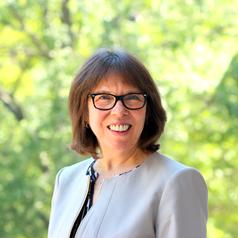
Professor of Communication, University of Maryland Parry-Giles teaches and studies rhetoric and politics in the Department of Communication at the University of Maryland. Parry-Giles is the author or co-author of six books, including: Memories of Lincoln and the Splintering of American Political Thought (2017) and Hillary Clinton in the News: Gender and Authenticity in American Politics (2014). She also authored The Rhetorical Presidency, Propaganda, and the Cold War, 1945-1955 (named a Choice "Outstanding Academic Title") and is a co-author of Constructing Clinton: Hyperreality and Presidential Image-Making in Postmodern Politics as well as The Prime-Time Presidency: The West Wing and U.S. Nationalism. Parry-Giles' most recent book is co-authored with David S. Kaufer and Xizhen Cai that is entitled, Hillary Clinton's Career in Speeches: The Promises and Perils of Women's Rhetorical Adaptivity (2023). Parry-Giles is the Director of the University of Maryland's Rosenker Center for Political Communication and Civic Leadership. She is also co-editor of the journal: Voices of Democracy—a project that was initially funded by the National Endowment for the Humanities and the Recovering Democracy Archives: Speech Recovery Project.
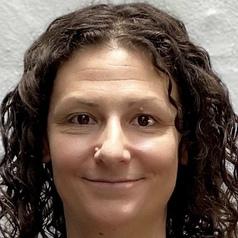
Associate Professor of Art History, The University of Texas at Austin Stephennie Mulder is Associate Professor of Islamic Art and Architecture at the University of Texas at Austin. She is a specialist in Islamic architectural history and archaeology and has worked at numerous archaeological sites throughout the Middle East. She worked for over ten years as the head ceramicist at Balis, a medieval Islamic city in Syria, and has also conducted extensive art historical fieldwork throughout Syria, Egypt, Turkey, and elsewhere in the region. Her research interests include the art and architecture of Shi’ism, the intersections between art, spatiality, and sectarianism in Islam, anthropological theories of art, material culture studies, theories of ornament and mimesis, and place and landscape studies. Dr. Mulder also writes on the contemporary aesthetics of the art of resistance in Syria and elsewhere in the Middle East. Dr. Mulder works on the conservation of antiquities and cultural heritage sites endangered by war and illegal trafficking. Dr. Mulder’s publications include The Shrines of the ‘Alids in Medieval Syria: Sunnis, Shi’is, and the Architecture of Coexistence (Edinburgh University Press, 2014), which was the recipient of the 2015 World Prize for Book of the Year from the Islamic Republic of Iran, The University of Texas Hamilton Book Award, the Syrian Studies Association Prize, and was selected as a 2015 ALA Choice Outstanding Academic Title.
University Research Chair in Digital Livestock Farming, Dalhousie University Dr. Suresh Neethirajan stands out as a preeminent figure in the field of digital livestock farming, recognized for his groundbreaking work and extensive expertise. His academic foundation, which combines engineering with animal science, has propelled him to the forefront of integrating cutting-edge technologies into livestock management. This integration aims to elevate efficiency, animal welfare, and the sustainability of agricultural practices. Dr. Neethirajan's work is particularly notable for its embrace of a wide array of technologies, such as sensors and data analytics, which are crucial in shifting traditional farming towards smart, precision-oriented practices. A key area of Dr. Neethirajan's contributions is his development of sensor-based technologies for continuous monitoring of animal health. This innovation plays a vital role in early disease detection, facilitating prompt intervention and minimizing the spread of illnesses among livestock. In the context of climate change, Dr. Neethirajan's work in creating metaverse digital twins for livestock is particularly groundbreaking. These virtual representations allow for a comprehensive and nuanced understanding of livestock environments, behaviors, and needs, leading to more informed decision-making processes in farming. His efforts in automated monitoring systems are directly aligned with advancing animal welfare and promoting sustainable farming practices. These endeavors underscore the significant role technology plays in not only transforming agriculture but also in addressing broader environmental challenges and ethical considerations in farming.
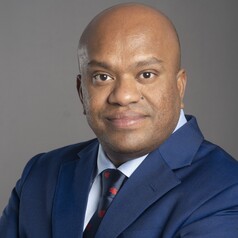
Associate Professor of Practice, School of Health Sciences and the Centre for Disability Research and Policy, University of Sydney Shane's academic background is in theology and ethics. In 2010, he incurred a spinal cord injury that left him with incomplete quadriplegia. Drawing on the virtue ethics tradition and disability studies, Shane focused his research on happiness and flourishing with a disability. In 2013 he joined the Centre for Disability Research and Policy as honorary associate, working with the centre to write Crippled Grace: Disability, Virtue Ethics and the Good Life. He spent four years as a researcher and Policy Director at Australia’s Royal Commission into Violence, Abuse, Neglect and Exploitation of People with Disability. On its completion, he joined the University of Sydney as a faculty member of the School of Health Sciences.