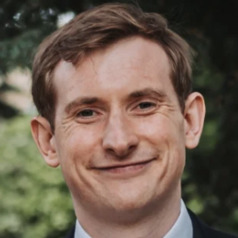
Lecturer in Human Resource Management and Organisation Studies, Royal Holloway University of London Simon has a BA (Hons) in Business Studies from the University of the West of England, an MSc in Sustainability and Management from Bath University and PhD in Management from Royal Holloway University. He is currently a lecturer at a Royal Holloway University in the Human Resource Management and Organisation Studies department. His research interests are focused on understanding how organisations, particularly small businesses, engage with ethics and sustainability, and how individuals seek to maintain their moral identity particularly though ethical decision making.
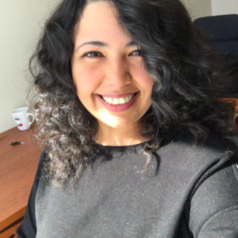
PhD candidate in archival and communication studies, Sessional lecturer and research assistant, Université Laval Siham Alaoui is a PhD candidate in archival science and public communication at Université Laval, Québec (Canada). She holds a bachelor's degree in Information Science (obtained in 2013 from the School of Information Science, Morocco) and a master's degree in Information Science (obtained in 2015 from the University of Montreal). She is interested in digital documentary mediation (information and data management), particularly in the current context of the universities’ digital transformation. She is an author of several scientific and professional articles published in specialized journals in information science (e.g. Archives, Canadian Journal of Information and Library Science, Documentation et Bibliothèques, Comma). She has also given papers and lectures at conferences and symposiums.
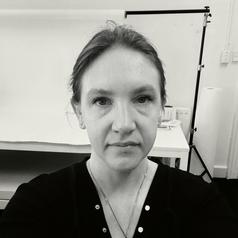
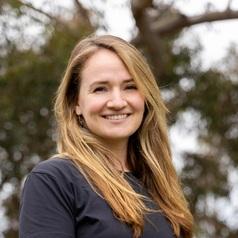
Graduate researcher in art history and material culture studies, The University of Melbourne Samantha Happé (she/her) is a graduate researcher and sessional tutor at the University of Melbourne, and a research officer at the Australian National University. Samantha’s current research project studies the role of the gift in negotiating diplomatic relationships between France and non-European nations during the reign of Louis XIV. Her doctoral thesis examines the diplomatic gifts and material culture surrounding the Persian embassy to Versailles in 1715.
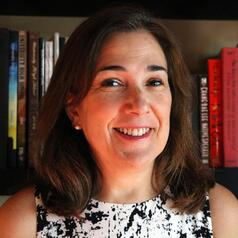
Professor of Spanish and Portuguese, University of Arizona Dr. Sonia Colina's areas of expertise are Spanish phonology (Optimality Theory, syllable structure) and Translation Studies (translation in language teaching, translation pedagogy, translation quality and translation in health care and research). She is the author of Fundamentals of Translation (Cambridge University Press, 2015), Syllable Structure in Spanish (Georgetown University Press, 2009), Translation Teaching: From Research to the Classroom (McGraw-Hill, 2003), the co-editor of The Handbook of Spanish Phonology, Fonología generativa contemporánea de la lengua española, Optimality-Theoretic Studies in Spanish Phonology, and Romance Linguistics 2009: Selected Proceedings of the 39th LSRL, and the author of numerous book chapters and articles in refereed journals. In addition to her publications, Professor Colina has served as an investigator and consultant for the Robert Wood Johnson foundation (Hablamos Juntos program) and as research team member in the UA’s NIH funded-project Oyendo Bien (Hearing Well) (with faculty from Speech and Hearing and Public Health) which used the Community Health Worker model to improve access to care by limited English proficient populations with chronic hearing loss on the Arizona-Mexico border. She was responsible for the translation/language mediation aspect of the grant. She was also a Co-Investigator on another NIH grant with the UA’s Department of Management of Information Systems on Spanish/English automatic text simplification. Sonia Colina is regular faculty in the Second Language Acquisition and Teaching program and is affiliated with the Department of Speech, Language and Hearing Sciences (College of Science). She serves as Director for the UArizona's National Center for Interpretation and is a founding member and Past President of the American Translation and Interpreting Studies Association (ATISA) (www.atisa.org).
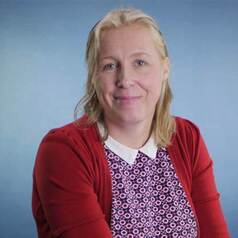
Senior Lecturer in Finance, Aberystwyth University Sarah joined the staff of the School of Management and Business in October 2007 as a lecturer in finance. Previously, she was a full time PhD researcher here. She has since successfully completed her doctoral research, which examines whether UK shareholder 'dividend taxes' are capitalised into share prices and has continued her research career focusing on changes to taxation, tax avoidance, corporate governance, dividend policy and recently the economic impacts of Covid-19. Sarah teaches Corporate Finance, Financial Markets and Institutions, Investments, Banking and Taxation at both the UG and PG level. In 2016 Sarah was promoted to Senior Lecturer in Finance and is currently the Degree Scheme Co-ordinator for Accounting and Finance and Business Finance and the Director of Student Experience and Employability for the Business School.
Ph.D. Candidate in Computational Neuroscience, University of California, San Diego As a Neuroscience PhD candidate at UC San Diego, I specialize in neural signal analysis. Our brains produce many different kinds of signals--chemical, magnetic, electrical--and the ways that neuroscientists use these signals is essential to how we research the brain. I'm specifically interested in the brain's electrical signals, or "brain waves" that we can measure using tools like the electroencephalogram (EEG). When these electrical signals are measured in research experiments, neuroscientists use complex mathematical methods to extract information from their brain waves. This is where my research comes in: how does the math we use influence how we think about the brain? What happens when we're using that math incorrectly or misinterpreting it? These are the questions I face every day in my research. So far, I've been able to answer some pretty big questions about brain waves and how they change in patients receiving treatment for severe depression. By challenging our assumptions about brain waves, I hope to help settle long-standing mysteries about the brain and uncover new, exciting discoveries that help us better understand how the brain works in healthy cognition and disease. Currently, I'm a PhD candidate in the Neurosciences Graduate Program, supervised by Dr. Bradley Voytek in the Neural and Data Analytics Lab at the University of California, San Diego. I have a B.S. in Biopsychology from UC Santa Barbara and also volunteer as a writer for Stories of Women in Neuroscience, a blog and podcast that features women neuroscientists, their research, and journeys in academia.