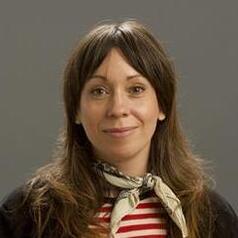
Assistant Professor of Anthropology, University of Delaware Sarah A. Lacy is a biological anthropologist specializing in paleoanthropology and bioarchaeology. She received a BS in anthropology from Tulane University in 2008 and a PhD in anthropology from Washington University in St. Louis in 2014. Lacy explores dental cavities, periodontal disease, and tooth loss in Neandertals and early modern humans across Europe and Southwest Asia and given the prevalence among recent humans. More than just oral health, she looks at how oral diseases also reveal information about diet, environment, disease susceptibility, and overall health in individuals and populations. Her latest project explores the reliability of bony indicators of respiratory health, their presence in ancient populations, and how they might correlate with oral health. Smoke inhalation is as ancient as the domestication of fire, and Lacy is collaborating with colleagues in the fields of human biology and archaeology to identify the health impacts of close human relationships with fire over the last half a million years. Lacy also publishes on issues of sex and gender in the Paleolithic as well as in the field of anthropology. Her research expertise translates to teaching interests in biological anthropology, human health, and human-environment interactions. She has a strong interest in supporting undergraduate research opportunities. She was interim director of the Office of Undergraduate Research at California State University, Dominguez Hills before joining the University of Delaware.
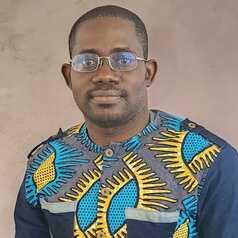
Research Scientist, African Population and Health Research Center Samuel Iddi is a trained and experienced biomedical scientist, biostatistician, and data scientist with a rich research portfolio, underpinned by statistical/methodological research and the application of innovative research techniques to advance public health and biomedical research. He currently works as a research scientist and data scientist at the African Population and Health Research Center (APHRC), managing data science projects that employ machine and deep learning to address problems related to the multimorbidity of non-communicable diseases. Samuel’s career research in the development of statistical methods has led to novel methods for handling overdispersion, inflation of zero counts, jointly modelling longitudinal outcomes, models for marginalised inference, etc. His research works have also influenced and informed statistical practices. He is a recognised trainer in statistical software, statistical methods, data management and analysis, impact evaluation methods, etc., and has provided training workshops and mentorship for researchers and students. In 2013, he got his PhD from the University of Leuven, Belgium, in Biomedical Sciences (Biostatistics).
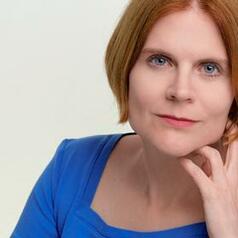
Professor of Russian history , City University of New York Susan Smith-Peter works on Russian history beyond the two capitals of Moscow and St. Petersburg. Beginning with a study of identity in the provinces of European (or central) Russia, she has branched out to investigate the regional identity of the Russian North and Siberia as well. She has published articles on topics related to civil society and regional identity in such journals as The Russian Review, Kritika: Explorations in Russian and Eurasian History and Russian History/ Histoire Russe. Professor Smith-Peter joined the CSI faculty in 2001 and teaches classes on Russian history, European intellectual and political history, and world civilization, among others. She has served as the history department representative to Faculty Senate and on various campus-wide committees. She is former chair of the Columbia University Seminar on Slavic History and Culture and has received a Fulbright for study in Russia, as well as grants and awards from the American Historical Association, IREX, Fulbright-Hays, the University of Illinois and CUNY.
Senior Lecturer in Environmental Change, Department of Economics, University of Strathclyde I am a University of Strathclyde Chancellor's Fellow (Society and Policy) since May 2019, having originally joined the Department of Economics (Fraser of Allander Institute) at the University of Strathclyde in September 2017, working on a collaborative project alongside the Department of Physics and the Stanford Photonics Research Center. My backrgound is in environmental science, though I pride myself in being a truly interdisciplinary researcher. My qualifications include an MA(Hons) in Geography and Environmental Science, and a Master of Research (MRes) in Civil Engineering, both from the University of Dundee. I completed my PhD at the University of Aberdeen in 2013 in catchment hydrology, undertaking research that explored the impacts of environmental perturbations on natural river dynamics in Scottish uplands. My research interests have continued to address the impacts of environmental change on large river systems. Between 2013 and 2016 I worked as a research fellow in the Department of Civil and Environmental Engineering at the University of Surrey, working on a NERC funded project that sought to assess and model the impacts of urbanisation and climate change on water quality in the Thames Basin. In 2016, I moved to the School of Mathematics & Statistics at the University of Glasgow, working on an EPSRC project that sought to determine the interlinkages and feedbacks that exist between water, energy and food systems in the UK. I am the Honorary Treasurer (and executive committee member) for the British Hydrological Society. I also serve as an expert reviewer for the Intergovernmental Panel on Climate Change (IPCC) for the upcoming Sixth Assessment Report, and I am part of the Position Statement authorship team for the American Geophysical Union, where I was recently involved in the determination of a climate change position statement for 2019. My research investigates the role natural resources play in economic systems, and identifying the impacts of environmental change on economic sectors at a regional, national and international scale. Through my involvement with the Global Environmental Measurement and Monitoring (GEMM) Network at Strathclyde, I seek to explore how advances in earth observational technologies can better inform us on the likely impacts of climate change at a sub-national level, helping to drive the development of relative climate and environmental policies. I am open to supporting PhD students that are interested in the role of the natural environment in economic systems, and undertaking transdisciplinary approaches to understanding the likely impacts of environmental change on human-environment systems (including economic impacts, health impacts, environmental system impacts and natural hazards).
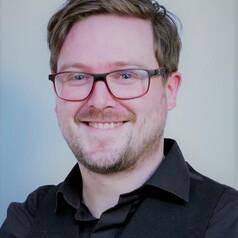
Molecular microbiologist; laboratory head, The Peter Doherty Institute for Infection and Immunity Dr Sacha Pidot is a molecular microbiologist and research-teaching academic with interests in identifying and developing new antimicrobials, primarily from Actinomycete bacteria. His PhD piqued his interest in the ways in which bacteria can produce bioactive metabolites, which he followed up with a change in direction to chemical biology under the direction of Professor Christian Hertweck in Germany. Since moving to the Doherty Institute, Sacha has established his own group to continue unearthing new antimicrobials and investigating their biosynthesis.
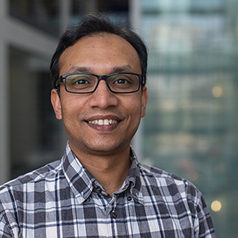
Senior Lecturer in Nutrition, City, University of London Swrajit is a registered public health nutritionist with the association for nutrition (UKVRN), and a member of the Nutrition Society, a full member of the Royal Society of Biology and chartered biologist (CBiol), and fellow of the Royal Society of Public Health (RSPH). His educational background includes a BSc (H) in Biosciences: Medical Biochemistry and Molecular Biology, Masters by Research (MRes) in Public Health Nutrition and a three year doctoral programme in Public Health Nutrition. Previous to his current role has worked as an Associate Dean Student Experience (Faculty of Health and Social Sciences) at Bournemouth University, he was also a senior lecturer in nutrition, he was working as an associate senior lecturer in food and nutrition at Leeds Trinity University and he was a lecturer of nutritional sciences at the University of Central Lancashire. He has also worked as an associate of access and widening participation unit and part-time Lecturer of the University of Greenwich. His key research has been in the field of non-communicable diseases risk identification among south Asian Communities living in the United Kingdom, although he has a broader interest in nutrition-related non-communicable diseases (NR-NCDs) in developing countries and the impact of the nutrition transition on NCD prevalence among migrants from developing countries into developed countries. He is a member of the Africa Nutrition Society (ANS) and have assisted the ANS in organising the African Nutrition Epidemiology Conferences (ANEC) in Kenya and South Africa.