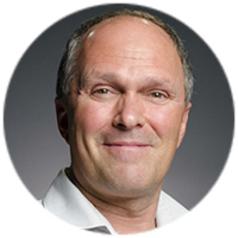
Professor of Biodiversity, Earth and Environmental Science and Biology, Drexel University Sean O’Donnell has been teaching and doing research at the university level since 1996. His current research focuses on relating brain evolution and brain plasticity to ecology and behavior; evolution and development of animal thermal physiology; complex social and ecological group interactions; and the evolution of body shape and size. His study subjects include diverse social insects and arthropods (bees, ants, wasps, termites, and social spiders), and Neotropical birds. He collects data mainly in the Neotropics, with additional field work in Israel. Sean’s teaching interests span ecology, evolution and animal behavior, including tropical field courses. He regularly works as an expert science consultant with natural history film crews on location.
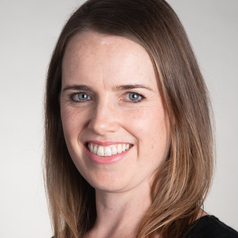
Lecturer in Landscape Planning, Lincoln University, New Zealand I am a Senior Lecturer in Landscape Planning in the School of Landscape Architecture, Lincoln University. I am a research Theme Leader within the Centre of Excellence: Designing Future Productive Landscapes, where i actively research and publish in the areas of agricultural urbanism, peri-urban agriculture, and landscape planning.
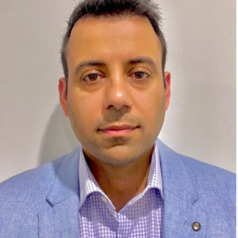
Senior lecturer in Laboratory Medicine , RMIT University I'm a senior lecturer in Laboratory Medicine at RMIT University. My main research interests are diabetes and cardiovascular diseases.
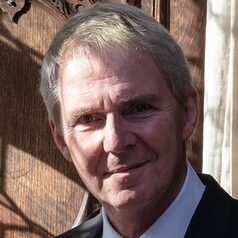
Principal of Jesus College and Professorial Research Fellow in Computer Science, University of Oxford I completed my undergraduate degree in Philosophy and Psychology at the University of Newcastle graduating with 1st Class Honours in 1978. My postgraduate studies were in the Department of Artificial Intelligence at the University of Edinburgh. In 1983 I joined the Department of Psychology at Nottingham where I established and led the AI Research Group. In 1992 I became the Allan Standen Professor of Intelligent Systems. In 2000 I moved to Southampton’s School of Electronics and Computer Science. My research focused on the science and engineering needed to support the continued development of the World Wide Web and I led the Web and Internet Science Group. In 2009 I was appointed along with Sir Tim Berners-Lee as Information Advisor to the UK Government. This work led to the release of many thousands of public sector data sets as open data. In 2010 I was appointed by the Coalition Government to the UK Public Sector Transparency Board which oversaw the continued release of Government open data. I continue to advise Government in a number of roles. I am Chairman and Co-founder of the Open Data Institute (ODI), based in Shoreditch, London. The ODI specialised in the exploitation of Open Data supporting innovation, training and research in both the UK and internationally. I have always been fascinated by the link between innovation and research. I was a founder and Chief Technology Officer of ID protection company Garlik Ltd. In 2008 Garlik was awarded Technology Pioneer status by the Davos World Economic Forum and won the UK national BT Flagship IT Award. In December 2011 Garlik was acquired by Experian Ltd. In its 50th Anniversary year 2006-2007, I was President of the British Computer Society. I am a Fellow of both the Royal Academy of Engineering and the British Computer Society. I have researched and published on topics ranging from cognitive psychology to computational neuroscience, Artificial Intelligence to the Semantic Web. I was one of the originators of the interdisciplinary field of Web Science that seeks to understand the Web at a systems level. As well as open data, my current research is focusing on the concept of "social machines". Working with the universities of Edinburgh and Southampton, I am researching the theory and practice of social machines – applications that succeed at Web scale by integrating humans and computers in novel and unanticipated ways. I have published over 500 articles and since 2000 have acted as principal or co-investigator on 30 research projects.
Senior Lecturer in Education, Anglia Ruskin University Sarah’s career began as a Year 5 primary school teacher in Suffolk. She later became a Special Educational Needs Co-ordinator (SENCo) and Senior Teacher. As a SENCo, she developed an interest in children and young people with social, emotional and mental health (SEMH) difficulties. Consequently, in Cumbria, she worked as a Specialist Teacher for social, emotional and behavioural difficulties (SEBD) and, latterly, autism spectrum conditions (ASC). In these roles, Sarah supported individual children, young people and their families, but also with a variety of settings delivering continuing professional development for school and local authority staff. Most recently, Sarah has lectured at the University of Northampton - mostly in Special Educational Needs and Inclusion (SENI) - and at the University of Birmingham on their Distance Learning SEBD and Autism (Children’s) courses. Whilst lecturing, she has worked with professionals from a variety of settings including: mainstream schools; special schools; pupil referral units; secure units; alternative provision and residential schools both here in the UK and Worldwide. Sarah’s research interests lie in the areas of Special Educational Needs, Disability and Inclusion, specifically attachment and relationships. Her PhD is entitled ‘The Attuned School’: the effects, and effectiveness, of developing relationships between pupils with attachment difficulties and significant adults. Sarah’s research explored whole school approaches to supporting individuals with attachment needs. She is also particularly interested in the cross-over in presenting behaviours between autism, pathological demand avoidance and attachment. With the latter, she has conducted small-scale research working with teachers on the Coventry-Grid (Moran, 2010) assessment tool.
Associate Professor, Molecular Epidemiology, Karolinska Institutet My main research interest is human biological aging; how to measure it in human cohorts, understanding causal pathways in aging and identify geroprotectors to repurpose for age-related diseases. Markers of human biological aging can be telomere length, epigenetic clocks, functional aging, frailty index, etc. I study such markers in longitudinal data from several twin studies of aging (SATSA, GENDER, HARMONY, OCTO-Twin, TwinGene) within the Swedish Twin Registry and also using UK biobank data. Methods that I use include longitudinal modelling, causal analyses using drug target Mendelian Randomization, and large-scale genome-wide approaches.