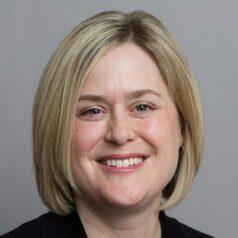
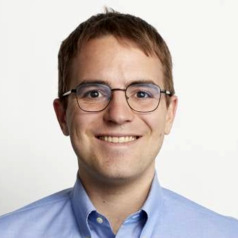
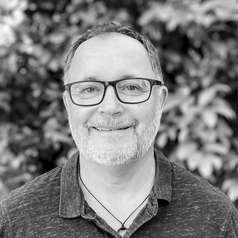
Director of the NASA Iowa Space Grant Consortium, Iowa State University Dr. Sara D. Nelson is the Director of the Iowa Space Grant Consortium (ISGC). The NASA-supported agency is part of Iowa State’s Department of Aerospace Engineering and works to improve and inspire Iowa’s involvement in Science, Technology, Engineering and Math (STEM) education. Nelson has previously served as the ISGC as NASA Iowa EPSCoR interim director and assistant director for education and outreach. Nelson also holds a faculty position in Iowa State’s School of Education and conducts research in STEM education and uses her expertise to work alongside the Iowa 4-H Youth Development Program, developing STEM educational programs and STEM literacy outreach across the state of Iowa. Sara received her Ph.D. in education and M.Ed. in science education from Iowa State University. She obtained a bachelor’s degree in elementary education from Luther College. In addition to her work at Iowa State University, Nelson serves as co-chair for the Governor’s STEM Advisory Council, Diversity, Equity, and Inclusion Working Group. She also serves on the North Central STEM Advisory Board for the Governor’s STEM Advisory Council, the State Science Leadership Team, and the Science and Children Advisory Board of the National Science Teaching Association. A part of NASA’s National Space Grant College and Fellowship Program since 1990, the ISGC supports aerospace research, education and outreach activities for all Iowans with NASA internships, fellowships, and scholarships, competitions for grants within higher education members (with NASA Mission Directorate alignment), as well as informal education grants with outreach affiliates.
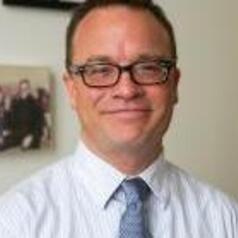
Professor of History and Program Coordinator, Native American and Indigenous Studies, University of Iowa I am a specialist in Native American history who has worked collaboratively with Native nations originally from the Midwest, including the Shawnee, Miami, and Delaware nations. I have written two books and one edited volume, and am particularly interested in subjects related to tribal sovereignty, the United Nations Declaration of the Rights of Indigenous People, Native Americans and the First Amendment, and other issues related to the cultural and political survival of indigenous people. I have published editorials for the Chicago Tribune and have appeared in television documentaries about Native Americans.
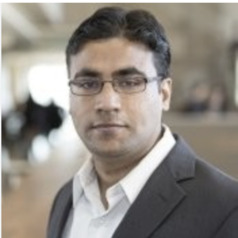
Assistant Professor, Management Information Systems, University of New Brunswick Sampath Bemgal is an Assistant Professor of Management Information Systems (MIS) within the Faculty of Management. Sampath holds a PhD in Information Systems from the Ivey Business School - Western University, an MBA from David Eccles School of Business - University of Utah and a MS in Computer Science from University of North Dakota. Sampath’s research focuses on understanding and theorizing complex digital changes in organizations. Specifically, he focuses on digital transformation occurring in organizations across different sectors. He currently teaches courses in the field of Information Systems at the undergraduate and graduate levels
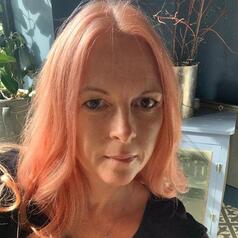
Associate Professor in Medical Anthropology, UCL Susie's work focuses on reproductive disruptions, pregnancy endings and miscarriage. Her interest on impaired parenthood and compromised reproduction was piqued during her PhD work on Gulf War Syndrome (GWS) and her book Impotent Warriors: Gulf War Syndrome, Vulnerability and Masculinity includes these themes (Berghahn, 2009). Her research explored how cultural context impacts the way pregnancy loss is framed, articulated, and experienced in Qatar and the UK; and led to the book Pregnancy and Miscarriage in Qatar: Women, reproduction and the state (Bloomsbury, 2020) and Navigating Miscarriage: Social, Medical and Conceptual Perspectives (Berghahn, 2020). In 2019 She was awarded a Wellcome Trust University Award to continue her research into pregnancy endings. This ongoing project investigates what is left behind when a pregnancy ends and asks how these materials are perceived and handled in different contexts (clinics, homes, burial sites, crematoria) and by different people (women, their families, doctors, nurses, and funeral staff). For this work she has been based at an NHS Early Pregnancy Assessment Unit and its associated gynaecology wards. Susie has previously worked for the NHS as a clinically applied medical anthropologist.
Lecturer, School of Accounting, Auditing and Taxation, UNSW Sydney Sander joined the School of Accounting, Auditing and Taxation as a Lecturer in April 2020. He completed his PhD at KU Leuven in Belgium and also holds a bachelors and master’s degree from KU Leuven. Sander focusses on corporate governance, with a specific interest in the complex relations between company directors and the role of director behaviour in the firm information environment. His expertise lies in evaluation and quantifying determinants and consequences of individual behaviour in corporate boards. His interest is in assessing fairness in the firm information environment and in the treatment of different members of the board of directors. Sander studies insider trading using it as a measure of director diligence and ethics. His work has been published in Journal of Business Ethics, Auditing: a Journal of Theory and Practice, Decision Support Systems, and Accounting Research Journal.
Professor of Marine Science, National Marine Science Centre, Southern Cross University I am a marine benthic ecologist with primary interests in the amazing biodiversity that can be found in our marine and estuarine environments. Much of this diversity is under threat from a wide range of human impacts and I am dedicated to understanding these impacts with a view to fostering long-term sustainability. Because little is known about the distribution and dynamics of marine biodiversity in Australia, especially in subtidal environments, much of my research focuses on measuring and monitoring diversity and determining the main factors that cause it to change - this includes both natural and human-induced impacts. This is a very broad area of research and my specific interests lie in the following key areas: - Developing methods to measure and monitor biodiversity in a rigorous and cost-effective way; - Measuring natural variation in communities - it is only by measuring this that we can effectively detect changes caused by human activities; - Measuring and monitoring the effects of different types of human impact on marine communities (especially marine debris); and - Identifying biodiversity hotspots (areas of high diversity that are also under threat) and, in collaboration with management agencies, facilitating their sustainable management; Much of my work focuses on the highly diverse communities associated with subtropical reefs on the east coast of Australia. However, I am also actively involved in research in Indonesia and SE Asia. My main interest is in marine invertebrates and especially the molluscs which are not only highly diverse, occurring in most if not all marine habitats, but also an excellent model group for studies of biodiversity and human impact. Over the last decade I have focused strongly on developing citizen science programs to both develop community capacity and to deliver data to support marine management at a range of scales. This has included assessments of marine debris, as well as biodiversity assessments of charismatic groups of organisms (e.g. the Sea Slug Census program). Publications: A list of my publications is available here https://scholar.google.com/citations?user=7sHMyEMAAAAJ&hl=en