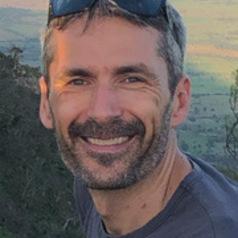
Johanne s Kepler University Linz Sepp Hochreiter is heading the Institute for Machine Learning, the LIT AI Lab at the JKU Linz and is director of private research institute IARAI. He is a pioneer of Deep Learning as he discovered the famous problem of vanishing or exploding gradients and invented the long short-term memory (LSTM).
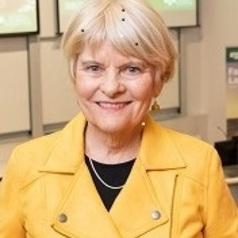
Honorary Associate Professor, Economic Policy Centre, Auckland Business School, University of Auckland Susan St John BSc, MA, PhD, QSO, CNZM Honorary Associate Professor Economics, Auckland Business school researching the economics of ageing, tax, intergenerational equity child poverty and family policy.
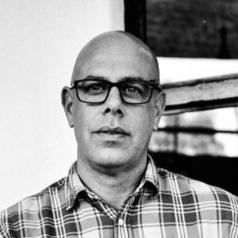
Associate Professor of Geography, Development & Environment, University of Arizona As a cultural geographer, I conduct research on everyday forms of policing, crime, and neighborhood change (gentrification, redevelopment, ethnic in-migration, etc.) and am the author of Going All City: Struggle and Survival in LA's Graffiti Subculture published by University of Chicago Press in 2019. I am associate professor in the School of Geography, Development & Environment and the Graduate Interdisciplinary Program in Social, Cultural, and Critical Theory at the University of Arizona. I live in Tucson, Arizona and Los Angeles, California. My work on gangs, graffiti, policing, and gentrification has appeared in scholarly monographs as well as in peer-reviewed journals including: Critical Criminology, Progress in Human Geography, Environment and Planning (Society and Space), Geographical Review, Journal of Contemporary Ethnography, Radical History Review, and Cultural Geographies.
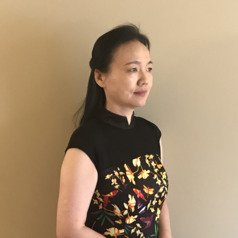
Canada Research Chair, Faculty of Education, University of Windsor Dr. Shijing Xu is Canada Research Chair (Tier 2) in International and Intercultural Reciprocal Learning in Education at the University of Windsor. As the Principal Investigator, she co-directed the SSHRC Partnership Grant Project, “Reciprocal Learning in teacher education and school education between Canada and China” with Dr. Michael Connelly at OISE/University of Toronto (https://reciprocal-learning.ca/pages/). The project has involved six Canadian and Chinese universities, the Greater Essex County District School Board (GECDSB), the Toronto District School Board (TDSB) and more than 40 Canadian and Chinese schools participating in reciprocal learning for pre- and in-service teachers and school students. Six cross-cultural research teams of university researchers and graduate students study the process thereby ensuring global impact by bringing social, cultural, educational and economic benefits to both countries. (e.g. See participant events, activities and assessments captured in news reports and conferences here https://reciprocal-learning.ca/pages/news_n_events.php, and here https://reciprocallearning.ca/c2019/ ).