Senior Lecturer at the School of Pharmacy and Pharmaceutical Sciences, Cardiff University I have worked with microneedle devices since 2002, exploring their potential as a minimally invasive method for trans- and intra-dermal delivery of both novel and established active pharmaceutical ingredients, including a range of biologics and vaccines. I have a particular focus on, and passion for, translating the technology from laboratory prototypes to clinically useful and commercially available products. I have contributed to a range of projects and have considerable technical experience in the evaluation of intra- and trans-dermal delivery systems both ex vivo and in vivo. My expertise and publications include the use of innovative methods to evaluate human skin biomechanics, tissue architecture and local immunology, as well as user studies. I am a co-founder of Extraject technologies, a spin out from Cardiff University, which aims to commercialise minimally invasive systems for cell-based therapy in the skin, and am co-Chair of a Working Group (Microneedle Array Patch - Regulatory Working Group; MAP-RWG), which was initiated in 2018 to help define the regulatory pathway for this dosage form and expedite clinical translation of the technology. I also work closely with major international Pharma to evaluate the performance of established and innovative capsule products to be used in capsule-based dry powder inhalers (DPIs). I helped develop an in vitro testing methodology for capsules that has been, and continues to be, used by the pharmaceutical industry for product development and quality assurance. My aim is to understand and improve the performance of DPIs both in the laboratory and in the hands of the user. My third area of interest is 3D bio-printing and, more specifically, the development of a skin model using an affordable and commercially available 3D bio-printing platform. This highly innovative area of research has stimulated significant scientific and public interest, which has facilitated a number of engagement opportunities. I also have a pedagogic interest in numeracy and medicines-based calculations, with a particular focus on the education of pharmacy students and pharmacists in this area. I have developed a contextualized diagnostic numeracy test that has been used at a number UK Schools of Pharmacy and have contributed to activities that have directly informed the education and training of pharmacy and medical students.
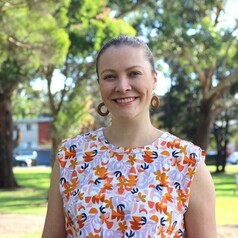
Research Associate, City Futures Research Centre, UNSW Sydney Sophie-May is an urban social geographer whose research focuses on the lived experiences of apartment residents. Her PhD explored the material and emotional geographies of parenting in apartments.
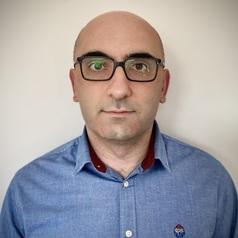
Associate Professor, Department of Economics and Business, Universitat Pompeu Fabra Sandro Shelegia is an associate professor at the Department of Economics and Business - Universitat Pompeu Fabra, an affiliated professor at Barcelona School of Economics, and CEPR research fellow. He received his doctorate from Universitat Pompeu Fabra in 2009 and served as an assistant professor at the University of Vienna from 2009 to 2015. In 2022 he received an ERC consolidator grant for his project Foundations for Antitrust and Policy on Digital Platforms.
Future Leaders Fellow in the School of Archaeology and Ancient History, University of Leicester Sarah Inskip has a PhD in Bioarchaeology and is a bioarchaeologist whose research centres around the interdisciplinary analysis of archaeological human remains. Her research areas focus on tracing the long term impact of changing human behaviour and social practices on health. At present, she is the PI of the UKRI-AHRC funded 'Tobacco, Health and History' Project taking place in the School of Archaeology and Ancient History at the University of Leicester. Sarah also has a strong research interest in the origin and spread of Leprosy, and has published widely on the genetic analysis of the causative bacteria in ancient remains.
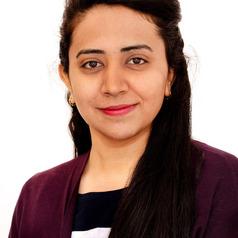
Research Fellow Enterprise AI and Data Analytics Hub, RMIT University I am working as a Research Fellow at RMIT University, Australia. I recently completed PhD at Queensland University of Technology, Australia. Through my research, I aspire to explain the role of emerging technologies in society's gains. My PhD research investigated AI planning and deployment at the government and public agency levels. In my current research program, I am exploring components of AI governance such as fairness, transparency, explainability, ethics and accountability through AI system design, development and allocation.
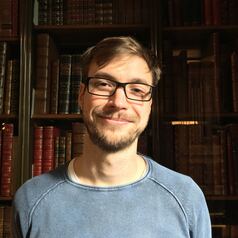
Senior Lecturer in Early Modern History, University of Manchester I am an early modern historian working on material culture, cultural encounters, and global history. In September 2023, I will start as Deputy Director and Scientific Lead of the John Rylands Research Institute. I explore new interdisciplinary collaborations between the humanities and the sciences, and new methodological trajectories in material culture studies like the use of digital microscopes and scientific analysis, remaking experiments, and historians' collaboration with artisans and artists. I was awarded a British Academy Rising Star Engagement Award to organise Microscopic Records, and a Philip Leverhulme Prize in recognition of research achievements in early modern material culture studies and global history. As the research group leader of The Bodies, Emotions and Material Culture Collective, I co-organise Affective Artefacts and run The Manchester Material Culture Lab reading group. Before joining the University of Manchester in 2018, I held postdoctoral positions at the University of Cambridge and the Research Centre Gotha, University of Erfurt. I received the PhD from the Freie Universität Berlin and studied in Berlin, Venice, and at the Warburg Institute London. I was also an intern and research assistant at the Freie Universität Berlin, the Duchess Anna Amalia Library Weimar, and the German Historical Institutes in Rome and London. My current monograph project focuses on the history of hair in Reformation Germany and the broader Habsburg world. I explore what it meant to live in a 'hair-literate society', and how hair was linked to early modern identities. My History Workshop Journal article examines Habsburg and Ottoman captives' descriptions of forced hair removal in the early modern Mediterranean and their societal, religious, medical, and sexual meanings. Bringing gender history, the history of the body, and art history into a conversation with material culture studies, my Gender & History article argues that the sudden fashionability of beards in Renaissance Europe has been intricately linked with a culture of material and visual experimentation. Focusing on how people made hair matter, I suggest working with the concept of face-work. I also published on haircare and hair dyeing in early modern Germany, and run an interdisciplinary research project to conduct scientific analysis of early modern haircare recipes.