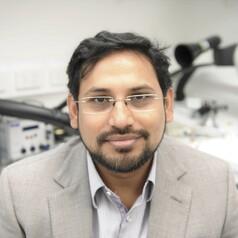
Senior Lecturer in Neural Engineering, The University of Melbourne Sam John is a senior lecturer in neural engineering at the University of Melbourne. He holds a Ph.D. in Electrical Engineering and has extensive research experience in the development of neural interfaces and implantable devices. He has a passion for bridging the gap between cutting-edge medical technology and real-world applications. His research focuses on next-generation neural interfaces.
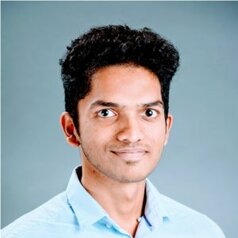
Ph.D. Candidate in Materials Science and Engineering, University of Florida Senthilkumar Duraivel is a graduate student from the Department of Materials Science and Engineering at the University of Florida. He received his B.Tech degree in Rubber and Plastics Technology from Madras Institute of Technology, Chennai, India in 2017. He joined the Angelini lab on Fall 2018. Senthil's research work focuses on genome sequencing based on a 3D printing method which uses jammed microgel systems as the 3D printing space and on developing low viscous microgels for 3D printing of silicone
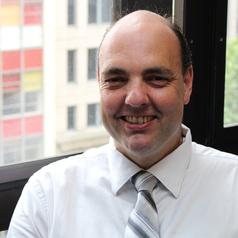
Lecturer in Accounting, University of Tasmania I have been an accounting academic educator for over 12 years, lecturing and facilitating in a number of units at multiple universities including La Trobe University, Monash College/Monash University and I currently lecture at the University of Tasmania. I believe educators can influence student’s futures in significant ways and I therefore aim to provide students with a supportive environment which activates their learning. In order to achieve this, I continually adapt my teaching practices to achieve these outcomes through lecturing and accounting research. I am a clear communicator who is passionate about teaching technical and financial concepts to tertiary students using multiple teaching strategies. I thrive on developing an innovative learning environment that challenges students’ curiosity and positively influences their learning experiences. I am readily able to adapt to a continually changing work environment and thrive in cross-cultural situations. I am a creative and critical thinker who enjoys research (particularly the connection between the environment and communities) and (accounting and education) and through developing self. I have a strong sense of social justice resulting from my interest in sustainability accounting for communities and the environment. I strive to understand the challenges faced by communities and to increase understanding of notions of responsibility and accountability from multiple perspectives. My achievements have seen me developing and publishing accounting research in cross university teams on PhD supervision, accounting education, and sustainability accounting. Utilising the team environment, I have secured a number of grants enabling research into the adoption of accounting technology across Australian universities, the development of a multi-campus peer to peer mentoring program and to increase understanding of motivation in the flipped classroom environment. I enjoy the challenge and sense of achievement in teaching and research through developing my research interests and innovating my teaching approaches to enliven learning experiences.
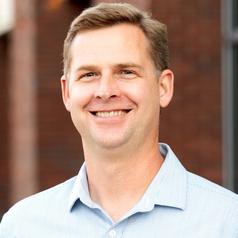
Professor of Materials Science and Engineering, Boise State University Scott Phillips is a full Professor in the Micron School of Materials Science & Engineering at Boise State University. He earned his Ph.D. from Paul A. Bartlett at UC Berkeley in 2004 and trained as a postdoctoral fellow in George Whitesides’ group (Harvard). He started his independent career at Penn State in 2008. His research interests include developing sustainable plastics, designing signal amplification reagents, and developing new classes of smart materials. Dr. Phillips’ awards include the NSF CAREER award, DARPA Young Faculty Award, Beckman Foundation Young Investigator Award, Eli Lilly and Company Young Investigator Award, the Arthur F. Findeis Award, and he held fellowships from the Alfred P. Sloan Research Foundation and the Camille & Henry Dreyfus Foundation.
Visiting Lecturer, Clinical Psychology, Leeds Beckett University Dr. Suzanne Heywood-Everett is a Visiting Lecturer at Leeds Beckett University. She is also a Clinical Psychologist, Professional lead of Medical Psychology, Clinical Lead Primary Care Wellbeing Service, Bradford District Care NHS Foundation Trust, Clinical Associate for Eating Disorders for Yorkshire and Humber Clinical Network, NHS England. Suzanne has specialised in eating disorders clinically, as a researcher and as a lecturer and is passionate about raising the profile of inequalities in accessing health care.
Associate Professor, Spatial Ecology, Toronto Metropolitan University I am a spatial ecologist and Associate Professor in the Department of Chemistry and Biology at Toronto Metropolitan University. I’m fascinated by urban ecology and ecosystem diversity at the local level and across multiple scales. My work in spatial ecology began with research on birds in terrestrial systems, but then pivoted into aquatic systems. By drawing on my expertise in both areas, I can now tackle ecological questions using both lenses — an approach that often provides a wider, more comprehensive and unique understanding of the land-water connection. Our lab researches the impact of environmental stressors on species and on ecological functions. Specifically, we take a spatial analytical and geo-computational approach that lets us find patterns across multiple scales. We’re one of only a few labs to take a combined land-water lens to ecological problems. We draw on large datasets with spatio-temporal components (e.g. climate, socio-economic and environmental monitoring network data, land cover maps). From these, we build theoretical and empirical models of species distributions and compound environmental variables. Ultimately, our work aims to inform real-world strategies for responsible environmental stewardship.