Postdoctoral Scholar in Biological Sciences, Vanderbilt University Stephen is a postdoctoral scholar at Vanderbilt University with a productive research history studying insect chemosensory systems and animal behavior. His research, which has been published in leading peer-reviewed scientific journals, has helped us better understand the role of chemical cues in mediating important insect behaviors, such as aggression in ant societies and disease-transmission in vector mosquitoes. His discovery of the molecular mechanism regulating aggression in ants was promoted on the cover of the Journal of Experimental Biology and subsequently featured in popular science magazines such as Scientific American and Cosmos Magazine. Stephen continues to share his passion for scientific discovery through his writing, teaching, and presentations at national and international events.
Professor of Medical History and Bioethics, University of Wisconsin-Madison Susan E. Lederer's interests include medicine and society in 20th-century America; race, medicine, and public health; medicine and popular culture; research ethics; and history of medical ethics.
Profesor of History, University of Tennessee During my career as a historian of medicine, I have worked on projects ranging from hospitals and medical education in 18th century London, to a digital project on Washington, D.C., during the Civil War (see Civil War Washington at www.civilwardc.org), to the effect of HIPAA and research ethics on claims about privacy rights for the dead. Now I am writing a book on the history of whole body donation in the United States with Susan E. Lederer of the University of Wisconsin-Madison. Why did Americans – starting with an eccentric few – decide they wanted to donate their corpses to medical schools? By the early 1950s, enough Americans had asked to do this that anatomy departments had to accommodate this unexpected bodily altruism. Over the next three decades, donated bodies slowly replaced the bodies of people who died with no one to claim them for burial. That legal supply had, in its turn, replaced the 19th century practice of dissecting corpses stolen from graves. From the horror of body-snatching to willing gift-giving – what a remarkable transition in attitudes towards, and access to, the dead. At the University of Tennessee, I teach undergraduate and graduate courses on the history of medicine, in addition to World Civilizations since 1500. Before coming to the University of Tennessee, I was on the history faculty at The Ohio State University, the University of Nebraska-Lincoln, the University of Iowa, and Ball State University.
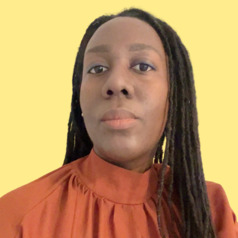
Banting Postdoctoral Researcher, Department of Political Science, Columbia University. Incoming Assistant Professor of Canadian Politics, Department of Political Science, University of Toronto Semra Sevi is a Banting postdoctoral researcher in the Department of Political Science at Columbia University and a visiting scholar at McGill University with the Institute for the Study of Canada. Beginning in July 2023, she will be an Assistant Professor of Canadian Politics in the Department of Political Science at the University of Toronto. Broadly speaking, she is interested in voting behaviour, political representation, public opinion, legislative politics, women & politics, partisanship and political methodology. Before Columbia, she earned her PhD in the Department of Political Science from l’Université de Montréal and her Honours BA and MA from the University of Toronto.
Lecturer, College of Social & Applied Human Sciences, University of Guelph Simone Holligan holds a PhD in Applied Human Nutrition from the University of Guelph. She was previously an NSERC Visiting Fellow with the Public Health Agency of Canada, and a Research Fellow at The Hospital for Sick Children.
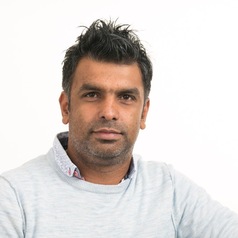
Professor of Marketing, Royal Holloway University of London Sameer is Professor of Marketing and Head of Department, School of Business and Management, Royal Holloway University of London. He is recognised as a research pioneer by applying advanced quantitative methodologies at the intersection of psychology, marketing, and tourism. Professor Hosany has published influential and highly cited papers and his works have won multiple awards.