Lecturer in Media, University of East London Sophie Wood is a fashion and media academic with an interest in social media, materiality, wardrobe studies and celebrity culture. She lecturers in Media, Communication and Advertising and University of East London. She is also a lecturer in Fashion Marketing and Fashion Theory at Regent's University London. Sophie brings together a decade of professional experience in social media and marketing with her academic background in fashion and cultural theory.
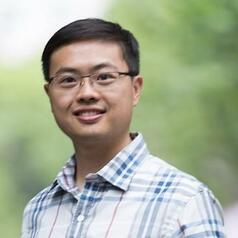
Principal Research Fellow in Spatial Epidemiology of Infectious Diseases, School of Geography and Environmental Science, University of Southampton Dr Lai is a Principal Research Fellow in Spatial Epidemiology of Infectious Diseases at the School of Geography and Environmental Science, University of Southampton. He is currently leading the Dynamics and Mobility (DM)/Spatial Epidemiology and Public Health (SEPH) thematic group within WorldPop (https://www.worldpop.org/). His research interests are investigating the spatiotemporal patterns and interactions between seasonal population movements, environmental changes and infectious disease transmission dynamics by using multidisciplinary approaches, e.g. GIS and epidemiology, and novel data sources, e.g. mobile phone and Internet check-in data, to provide an improved evidence-base for development and disease control decision-making.
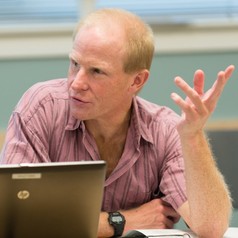
Professor of Economics, Colorado State University Stephan Weiler holds the William E. Morgan Endowed Chair as Professor of Economics at Colorado State University. He received his BA (Honors) in Economics and MA in Development Economics from Stanford University in 1988, and his Economics PhD from UC-Berkeley in 1994 where he studied with eventual 2001 Nobel Laureate George Akerlof. From 2004 through 2006, Stephan was appointed as Assistant Vice President and Economist at the Federal Reserve’s Center for the Study of Rural America to lead the Center’s applied research work. The Center was the focal point in the Federal Reserve System for rural and regional development issues, providing cutting-edge research perspectives to private, public, and nonprofit decision makers. Stephan became a frequent speaker before industry, university, and public policy audiences throughout the nation, is a regular contributor to media outlets ranging from the Wall Street Journal to National Public Radio, and has published over one hundred articles, book chapters, and policy papers. He served as Research Associate Dean for CSU’s College of Liberal Arts from 2006 to 2016. His research, teaching and mentoring have spanned a variety of development and labor market issues in Africa, Appalachia, Europe, and the American West. His current work focuses on regional economic growth and development, particularly in rural and inner-city areas, combining theoretical, empirical, and policy analyses on topics such as information, innovation, industrial restructuring, land use, public/private partnerships, immigration, entrepreneurship, and the environment. These various elements informed his role as founding research director of the Colorado Innovation Report (www.innovation.colostate.edu), begun in 2012 with a broad-based coalition of leaders from the private, public, and nonprofit sectors to understand and enhance the state’s innovative capacities. He is distilling these three decades of experience into the Regional Economic Development Institute (REDI@CSU), partnering with the City-Region Economic Development Institute (City-REDI) at the Birmingham Business School in the UK to provide fresh, timely, and cutting-edge information to enhance economic growth and development prospects for regions across the globe.
Honorary Research Fellow in Italian Studies, Royal Holloway University of London Dr Stefano Jossa is Honorary Research Fellow at Royal Holloway University of London and teaches Italian Literature at the Universita` degli Studi di Palermo. He is the recipient of the BA/Leverhulme SRG for research on the Ridolfi collection at the Archives of Royal Holloway (2019-2021). His research specialises in the Italian Renaissance and the Italian national identity expressed through literature. He held Visiting Professorships at the Polytechnic (ETH) of Zurich (Switzerland - De Sanctis Chair, 2017), the University of Parma (Italy, 2017) and the University of Roma Tre (Italy, 2018). Among his main publications: (with L. Curreri), In balia di Dante e Pinocchio: Per una critica della cultura italiana (Rome: Mauvais Livres, 2022); (with J. E. Everson and A. Hiscock), Ariosto, the Orlando Furioso and English Culture (Oxford: OUP, 2019); La più bella del mondo: Perché amare la lingua italiana (Turin: Einaudi, 2018); (with G. Pieri), Chivalry, Academy and Cultural Dialogues: The Italian Contribution to European Modernity (Cambridge: Legenda, 2016); Un paese senza eroi: L’Italia da Jacopo Ortis a Montalbano (Rome: Laterza, 2013); (with Y. Plumley and G. Di Bacco), Intertextuality, Memory and Citation between Middle Ages and Renaissance (Exeter: Exeter University Press, 2011).
Associate Professor, Public Health, Griffith University With a background in environmental science, my career has focussed on researching the links between environmental change and human health and building capacity to understand and respond at local, national and global levels. I have been involved in research to solve public health problems, from pandemic risk communication in China, mosquito-borne diseases in Kenya and Bangladesh, coastal salinity and hypertension in Bangladesh, to disasters and climate change governance in China, Philippines and Indonesia. My leadership and expertise in climate and health has developed from working with WHO on climate and water, teaching climate and health content into university postgraduate and short courses (Bangladesh and Pakistan), master supervision (food security and climate, heat and health adaptation policy in India, hope and climate action in young Australians, digital uptake in heat sensitive populations of Australia) and HDR supervision (flood vulnerability in China, climate and infectious disease in Vietnam, climate and dengue fever in Bangladesh, climate-health adaptation policy in the Philippines, heat and worker health in garment factory workers, heat and early warning systems in older people). I lead the Climate and Health Collective, a Griffith group of multi-disciplinary researchers committed to collaboration to solve climate and health problems. This collective has led to large external research grants, WHO projects and numerous health related Climate Action Beacon projects. My research achievements are founded on quality HDR supervision, an extensive publication track record and a collaborative research leadership approach. I am committed to leading transdisciplinary research that improves the health of communities, focussing on climate and health impact and risk management research that aligns with Griffith’s Strategic Plan 2020-2025 high level goal of ‘providing research solutions to humankind’s greatest challenges’. I currently teach into Griffith’s Master of Public Health and Master of Global Public Health programs producing public health professions capable of addressing the many complex and diverse current and emerging health issues that we face as a global community.