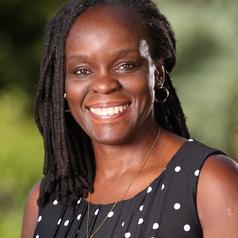
Professor and Dean, College of Arts and Humanities, University of Maryland Stephanie Shonekan is professor of ethnomusicology and dean of the College of Arts and Humanities at the University of Maryland. From 2003-2011, she was a faculty member at Columbia College Chicago and was also the director of the Black World Studies Program and the associate director of the Cultural Studies Program. From 2011-2018, she was a faculty member at the University of Missouri in the Black Studies Department and the School of Music. She became chair of the Black Studies department at the University of Missouri from 2015-2018. While at Mizzou, Dr. Shonekan created and ran various programs geared towards inclusion and diversity on campus. For example, she created a campuswide program called Citizenship@Mizzou, a mandatory program for all incoming students to the university. The program was also customized for faculty and staff. She also created The Huddle, a mentoring program for underrepresented faculty across the campus. Dr. Shonekan moved to the University of Massachusetts in 2018 as professor and chair of the W.E.B. Du Bois Department of Afro-American Studies. She returned to Mizzou in 2020 as senior associate dean of the College of Arts and Science, before accepting the position at the University of Maryland. Dr. Shonekan earned a doctorate in ethnomusicology and folklore with a minor in African American studies in 2003 from Indiana University. Her dual heritage combining West Africa with the West Indies allows her to straddle the Black world comfortably. She has published articles and book chapters on afrobeat, Fela Kuti, Nigerian and African American hip-hop, soul music and country music. Her publications explore the nexus where identity, history, culture and music meet. Her books include “The Life of Camilla Williams,” “African American Classical Singer and Opera Diva” (2011), “Soul, Country, and the USA: Race and Identity in American Music Culture” (2015), “Black Lives Matter & Music” (2018) and “Black Resistance in the Americas” (2018). She also wrote and produced an award-winning live action short film based on the mother of Fela Anikulapo Kuti, “Lioness of Lisabi.”
Pro Vice-Chancellor Research, Kingston University After completing my DPhil at the University of Sussex in 1993, my research has concentrated on the connections between continental philosophy, literary theory and a variety of political and psychoanalytic texts. I have published books on the philosophical question of the university institution; on the question of sleep as a complex and surprisingly persistent topic within the history of philosophy; on the European philosophical tradition's relationship to problems of pain and suffering; on the complicated interplay between psychoanalytic and political ideas of resistance; and on the writings of Jacques Derrida. My last academic monograph explored the legacy of philosophical discourses of optimism and pessimism in order to assess the limits and possibilities of contemporary political hope. Since then, I have written a trilogy of novels published by Ma Bibliotheque, the first appearing in 2020. My new book, Reading Robert Walser: Criticism, Creativity, Correspondence, includes a novella based on the author's correspondence as well as chapters on the question of address, both in epistolary writing and creative performances. The book will be published by UCL Press in 2025. While at Kingston I have supervised PhDs on topics as varied as psychoanalysis, trauma and creative writing; resistance, revolution and fascism; Kantianism and speculative realism; and deconstruction and performativity.
PhD Candidate, Department of Government and PhD Fellow UNU-WIDER, University of Essex I research post-revolutionary violence, ethnic representation, public opinion, democratisation and foreign policy in Sub-Saharan Africa. My thesis looks into the role of expectations in shaping political violence in a post-revolutionary context. Using survey data after Burkina Faso's latest uprising in 2014, I argue that post-revolutionary political discontent can lead to the increase and diffusion of violence. My doctoral research is funded by the South East Network for Social Sciences (SeNSS).
Assistant Professor of Global Affairs, University of Notre Dame Susan L. Ostermann is Assistant Professor of Global Affairs. She completed her Ph.D. in the Travers Department of Political Science at the University of California, Berkeley. She also holds a law degree from Stanford Law School and worked for several years as a practicing litigator, focusing on class actions and intellectual property disputes. Employing both quantitative and qualitative methodology, Ostermann seeks to understand why we sometimes see compliance with regulations in very unlikely places: those in which the state is weak and actors, be they individuals or organizations, have strong incentives to break the law. Her dissertation develops the concept of regulatory pragmatism to explain variation in strategies used by both the Nepali and Indian states to secure compliance with conservation, education and child labor regulations under challenging conditions. While Professor Ostermann’s research focuses mainly on regulatory compliance in South Asia, she is broadly interested in understanding norms and how they change. Towards this end, she has published papers on inter-caste marriage and the role of skin color in Indian politics. Her current projects are designed to explore the historical roots of conservatism in Indian political thought, the development and expansion of the Indian Election Commission, and variation in sex-ratios throughout the subcontinent. She has also published work on the Indian bureaucracy, state capacity in South Asia, and the 2014 Indian general election. Ostermann’s work has been published in Asian Survey, Studies in Comparative International Development, the Journal of Race, Ethnicity and Politics, Studies in Indian Politics and Law & Policy.
Professor of Internatiional Relations, University of South Florida Steven C. Roach is professor of international relations in the School of Interdisciplinary Global Studies at the University of South Florida. A Fulbright scholar and honorary professor at the Universidad Autónoma de Madrid, Spain (2020-21), he has published widely on politics and international affairs. In 2022 he was the recipient of the Theodore and Venette Askounes-Ashford Distinguished Scholar Award, Global Excellence Award, and Outstanding Faculty Award, and in 2019, was appointed country expert of USAID’s Democracy, Human Rights, and Governance (DRG) work team in South Sudan. The work team’s assessment report was presented to the US State Department and Congress and now serves as the basis of USAID’s five-year strategic mission in the country. At the University of South Florida, he served as SIGS director of graduate programs (2018-21), where he restructured and significantly increased recruitment to the PhD program. He currently teaches a variety of subjects, including international relations theory, human rights, global governance, African politics, and the foundations of political inquiry. Professor Roach’s research is broad in scope, focusing on the politics of international law, critical international relations, global ethics, East African politics (South Sudan), European politics, human rights, and global governance. Among his recent books are South Sudan’s Fateful Struggle: Building Peace in a State of War (Oxford University Press, 2023), International Relations: The Key Concepts. Fourth Edition (Routledge, 2023), Moral Responsibility in Twenty-First Century Warfare: Just War Theory and the Ethical Challenges of Autonomous Weapons Systems (eds) (SUNY Press, 2020; 2021 CHOICE Outstanding Academic Title), Handbook of Critical International Relations (ed.) (Edward Elgar, 2020), Decency and Difference: Humanity and the Global Challenge of Identity Politics (University of Michigan Press, 2019), The Challenge of Governance in South Sudan: Corruption, Peacekeeping and Foreign Intervention (eds.) (Routledge, 2019), Critical Theory of International Politics: Complementarity, Justice, and Governance (Routledge, 2010), and Governance, Order, and the International Criminal Court: Between Realpolitik and a Cosmopolitan Court (ed.)(Oxford University Press, 2009). He has also published articles in several leading journals, including International Affairs, Political Studies, Politics, Millennium, International Studies Review, Cambridge Review of International Affairs, Globalizations, International Studies Perspectives, Global Governance, the International Journal of Human Rights, and Journal of Human Rights, and contributed commissioned articles to edited volumes on international law and international relations theory. His books have been translated into Arabic, Chinese, Farsi, Portuguese, and Turkish. Currently, he is the editor of the SUNY Press book series, “Ethics and the Challenges of Contemporary Warfare” and serves on the editorial board of four academic journals, Politics and Governance, Globalizations, Human Rights and Human Welfare, and The Journal of African Conflicts and Peace Studies. He is also a member of the advisory board of Human Dignity and Humiliation Studies, and the Brill book series “Critical Emotions Studies”. In addition, he has written various op-ed essays that have appeared in Foreign Affairs, African Arguments, openDemocracy, Journal of International Affairs, and the Cairo Review of Global Affairs. He is presently working on two books: Nile Basin Politics: Cooperative Peace, Hegemony, and the New Riparian Reality(ed.)(under contract) and The Lost Crusade: Eclipsing the Freedom of Movement. His planned book project is an extensive book on American Decency.
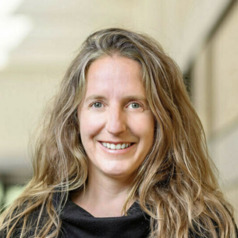
Research Fellow, Carer Hub: A Centre of Excellence in Cancer Carer Research, Translation and Impact, Deakin University Dr. Stephanie Cowdery is a Postdoctoral Research Fellow at Deakin University’s Centre of Excellence in Cancer Care Research Translation and Impact. Previously, she was a Senior Research and Evaluation Officer in the Behavioral Science Division at Cancer Council Victoria, where she specialised in skin cancer prevention, early detection, population monitoring, and the evaluation of SunSmart Victoria programs and campaigns. Dr. Cowdery holds a PhD in Medicine from Deakin University's School of Medicine, focusing on cancer control research, as well as a postgraduate degree in Psychology and an undergraduate degree in Health Sciences. Her extensive experience spans multiple disciplines, including psychiatry, public health, epidemiology, and oncology.