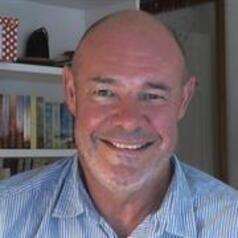
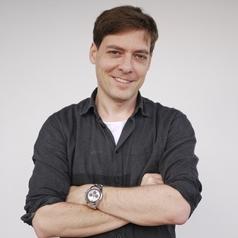
Senior Lecturer, School of Education and Professional Studies, Griffith University Stephen ‘Steve’ Hay is a research and teaching academic in the School of Education and Professional Studies at Griffith University. Since completing his PhD in 2009 (winning the Deans Award for Outstanding Research Higher Degree Thesis 2009), Steve has focused his research program, HDR supervision and teaching in areas that advance social justice within and beyond the field of compulsory education. Steve’s research and teaching expertise addresses: • Sociology of Education • Inclusion and social justice in education for students with disability • Globalisation and its impacts on education policy in compulsory education • Schooling to employment transitions for young people, particularly school leavers not intending to progress to university • Health and Physical Education curriculum and pedagogy • Education research methodology.
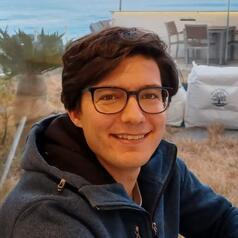
Assistant Professor in Astrophysics, Kavli Institute for Cosmology, Cambridge, Department of Physics, University of Cambridge Sandro Tacchella is an astrophysicist working at the Department of Physics (Cavendish Laboratory) and at the Kavli Institute for Cosmology of the University of Cambridge. Before joining the University of Cambridge in 2022, he was Assistant Professor at the Physics Department of UNIST in Ulsan, Korea. From 2017-2021, he was a CfA Fellow at the Harvard-Smithsonian Center for Astrophysics in Cambridge, USA. He has received his Ph.D. from ETH Zurich (Switzerland) in 2017. Sandro's long-range scientific goal is to understand the physics of the formation and evolution of galaxies and black holes across cosmic time. Specifically, he investigates the physical mechanisms that govern the formation of the first galaxies in the early universe, the buildup of the bulge and disk components in galaxies, and the cessation of star formation in massive galaxies. He exploits cutting-edge multi-wavelength observational data obtained with some of the most advanced telescopes on ground and in space. He uses and develops analytical and cosmological numerical models to shed light on the physical properties of galaxies. Sandro is also heavily involved in the new James Webb Space Telescope, playing a key role both in the data processing of the NIRCam instrument and in projects aimed at detecting galaxies formed in the early Universe and at characterising their primeval properties.
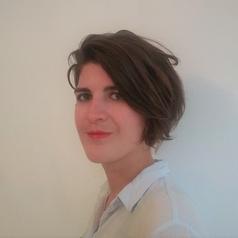
Lecturer in Law, Essex Law School, University of Essex Dr Sophie Duroy joined the University of Essex in August 2023 as a lecturer in the School of Law. Her current research focuses on the mutual influence of international law and intelligence practice on one another. Her research interests span public international law, international human rights law, intelligence and security studies, and social science approaches to international law. Prior to her appointment at Essex, Sophie held a postdoctoral fellowship at the KFG Berlin-Potsdam research group 'The International Rule of Law: Rise or Decline?' (2021-2023) and was a PhD researcher at the European University Institute (2017-2020). She has also worked as an analyst and project manager in the field of counterterrorism (2015-2017) and taught French constitutional law at Sciences Po Paris (2019 and 2020). Her first book, The Regulation of Intelligence Activities under International Law, was published by Edward Elgar Publishing in the International Law series in May 2023.
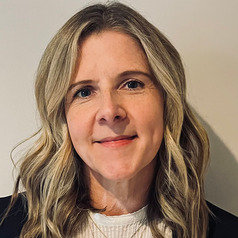
PhD candidate, School of Public Health, Monash University Shauna Hurley is a science communications researcher, freelance writer and adviser to the Editor in Chief of the Cochrane Collaboration. Shauna's PhD will explore the role and impact of social media in fostering the global backlash against science, scientific experts and public health authorities throughout the COVID-19 pandemic. It will consider if and how the growing global reach and power of the 'wellness' industry, influencers and popular podcasters can be countered in preparation for the next pandemic.
Group Leader Population Genetics, Max Planck Institute for Evolutionary Anthropology I am group leader for population genetics at the Department for Archaeogenetics of the Max Planck Institute for Evolutionary Anthropology in Leipzig, Germany. My group investigates human history by means of Genetics, and develops computational methods to model and analyse ancient and modern genomic data.
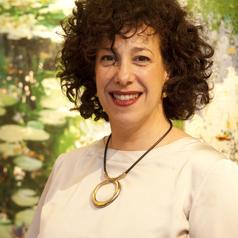
Professor of Philosophy, Complutense University of Madrid, Universidad Complutense de Madrid Areas of specialisation: Epistemology and Feminist Philosophy Field of interest: Philosophy of Birth Stella Villarmea is Distinguished Professor of Philosophy at Complutense University of Madrid, and Associate Faculty Member in Philosophy at the University of Oxford. She is a main contributor to the emergent field of the Philosophy of Birth. With an expertise in epistemology and feminism, her works address the relation between knowledge and emancipation. She has published on capacity and rationality in birth care, obstetric violence, and the language of birth from an epistemic perspective. In former years, she published research on conceptual innovation and scepticism, as well as on Wittgenstein, Kant, and Levinas. She currently leads a Program of Excellence on the Philosophy of Birth (PHILBIRTH-2), funded by the Government of Madrid (2021-24). She is a research member in the European Project ‘IPOV-Respectful Care’, an International Platform on Obstetric Violence, funded by the European Commission MSCA Staff Exchange Programme. As a Marie S. Curie Fellow at the University of Oxford, she led the research project, ‘Controversies in Childbirth: from Epistemology to Practices (VOICEs), funded by the European Commission (2018-20). As the principal investigator of ‘Philosophy of Birth: Rethinking the Origin from Medical Humanities (PHILBIRTH-1)’, funded by the Ministry of Economy in Spain, she coordinated an interdisciplinary team around birth care (2016-19). Stella Villarmea received the Special Distinction of Excellence for her 20 year-teaching career at her former University, the University of Alcalá. She was Adjunct Professor at University of Saint Louis, Madrid, and Visiting Professor at the Humboldt and Paderborn (Germany), Lund (Sweden), Marie Curie (Poland), Kent and Oxford (United Kingdom). Stella Villarmea serves in the Steering and the Gender Committees of The International Federation of Philosophical Associations (FISP) and has been Speaker of The International Association of Women Philosophers (IAPH), the oldest and most diverse global network of women philosophers. She is a Member of the Institute for Feminist Studies at Complutense University of Madrid. She is the Lead of the Philosophy of Birth Network in The Collaborating Centre for Values-based Practice at St Catherine’s College, Oxford. She volunteers in Childbirth is Ours, the Spanish birth-rights association, and has been recently hired by the European Commission to co-author the report “Obstetric Violence in Spain”. Her career, commitment, and knowledge speak for her ability to contribute to the diversity of philosophical areas, methods, and topics; and to apply the philosophical tools to improve birth-care and citizenship in the labour room.