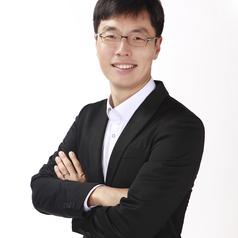
Senior Research Fellow, Melbourne Institute of Applied Economic and Social Research, The University of Melbourne I am a Senior Research Fellow in the Health Economics Research Program at the Melbourne Institute (University of Melbourne). I completed my PhD in Management and Economics at the University of Zurich. My research fields are health economics, empirical industrial organization, and regulation and competition policy. My research areas reflect my interests for economic issues directly affecting markets and society. In my projects, economic theory serves as the foundation for solid applied work in which policy evaluation and social welfare analysis play an important role. Currently, the topics of my research revolve around health care markets, in particular the medical workforce and the pharmaceutical industry.
Visiting Researcher, CGIAR System Organization Dr Siyaxola Gadu has a PhD in geography and environmental sciences (climate change) from the University of the Witwatersrand. Dr Gadu investigated the complexity of evaluating and monitoring the adaptive capacity to climate change of local government institutions in South Africa: A study of the Eastern Cape Province. Dr Gadu is currently part of CGIAR's Alliance of Bioversity International and CIAT team researching the fragility, conflict and migration (FCM), and climate security (Climber) projects in southern Africa.
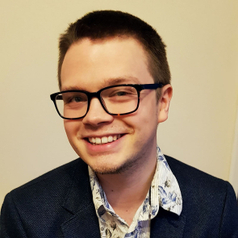
Professional Casual Staff, University of Auckland, Waipapa Taumata Rau Sanghyub Lee is a PhD graduate from the University of Auckland, with a research focus on AI emotion detection models. His interdisciplinary research bridges artificial intelligence, machine learning, and emotional psychology, aiming to enhance the way AI understands and interprets human emotions. Sanghyub’s work has explored innovative methods to synchronize socially agreed and self-reported emotions using big data, resulting in groundbreaking developments in emotion detection models that have wide applications, from improving human-computer interactions to supporting individuals with communication difficulties, such as those with autism. Lee’s research integrates AI with real-world emotional contexts, contributing to more sophisticated and empathetic AI systems. His academic journey has led to numerous publications and awards, reflecting his influence in both AI and emotional cognition research. His interdisciplinary approach allows him to apply insights from marketing, psychology, and computer science, advancing the field of emotion recognition and creating AI models that respond more intuitively to human emotions.
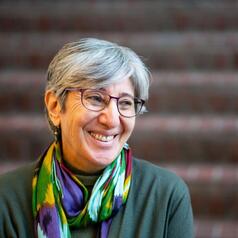
Senior Fellow, The Fletcher School, Tufts University As a girl and a member of Afghanistan’s Hazara minority, Sima Samar was not born to power. Even so, she rose to an unprecedented level of influence. A Nobel Peace Prize nominee, she sat on advisory panels to the United Nations secretary-general and became Afghanistan’s first minister of women’s affairs and deputy prime minister of the Afghanistan Interim Administration in December 2001. She chaired the Afghanistan Independent Human Rights Commission from 2002 to 2019. That couldn’t happen since the Taliban’s return to power in 2021, she believes. “Growing up in Afghanistan, as a girl, I have to say that it was much better than it is today,” said Samar, a visiting fellow at The Fletcher School and a Tufts Scholar at Risk. Today the Taliban, which retook control of Afghanistan in August 2021 as U.S. and other international forces withdrew, has outlawed girls from attending school beyond sixth grade. The women employees of Shuhada, a network of hospitals and schools Samar founded, also face restrictions. Instructors have been asked to teach from home. Many women in medicine are allowed to keep practicing, due to the sensitivities of treating female patients, but “they are very, very careful,” said Samar, who started her career as a medical doctor. “They dress the way they’re supposed to. They used to work long after dark, but now that’s not the case,” she said. “They’re not doing anything to give anyone a reason to cause a problem.” For Samar, who once in addition to chairing the Afghanistan Human Rights Commission also headed the Commission on the Prevention of Torture, current conditions represent a painful break from more promising times. She was in the U.S. in August 2021, when the Taliban retook control of Afghanistan for the first time in nearly 20 years. She had arrived in America that June with a coast-to-coast itinerary of visits to family she hadn’t seen during the height of COVID.
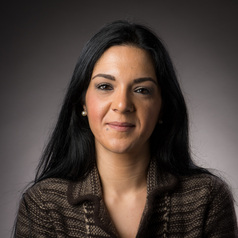
Lecturer in Politics, University of Sussex Stavroula Chrona is a Lecturer in Politics at the Department of Politics, University of Sussex. Her field of research lies at the intersection of political science and psychology. Analytically, her main research interest focuses on the exploration of the psychological underpinnings of political behavior. Focusing in particular on the cognitive, affective and motivational mechanisms, her work explores the interplay of individual-based factors in the shaping of political judgements and beliefs. Stavroula is particularly interested in the effect of ideological dispositions, value orientations and emotions on citizens' political judgements and decision-making processes. Her current work is focused on the political affectivity of grievance politics and democratic change.
Lecturer in Applied Cognitive Psychology, The Open University My core interest is in the effects of ageing on the brain, particularly in relation to how older adults process sensory signals (from sight, sound, touch, etc.), though I am also involved in a range of other psychology and cognitive neuroscience research. I use a variety of methods in my research, including computerised behavioural testing (online and in person), fMRI, eye tracking, and computational modelling.