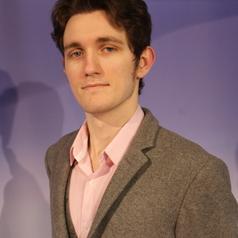
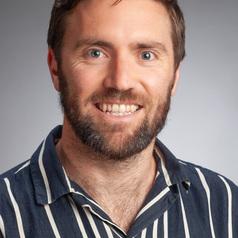
Lecturer in Media & Communication, City, University of London My research focuses on how US cable news networks employ emotion in their reporting, specifically looking at the video content that they produce for online consumption. Through analysis of Fox News, CNN, MSNBC, BBC, Al Jazeera and TYT, I hope to see if there is any link between the topics that are covered and the types of emotion that are most used with those topics, as well as the extent of their use. My particular areas of interest are YouTube, Twitter, American politics and the goings on in the American media landscape.
Professor of Microbiology, University of Tennessee Dr. Steven W. Wilhelm is the Kenneth and Blaire Mossman Professor of the Department of Microbiology at the University of Tennessee. In 2016 he became a fellow of the American Academy of Microbiology as well as a Sustaining Fellow of ASLO. In 2021 he was elected a Fellow of AAAS. In 2021, he was awarded (along with Curtis Suttle) the John R Martin award from ASLO for their contribution describing the Viral Shunt. His research group studies synergies between microbial communities and biogeochemical cycles in lakes and oceans. Lab members use biomolecular tools - DNA and RNA sequencing, metabolomics, and PCR-based quantitative analyses - to study viruses, bacteria, cyanobacteria and algae.
Research Fellow, The Senator George J. Mitchell Institute for Global Peace, Security and Justice, Queen's University Belfast Dr. M. Satish Kumar’s research has been to understand the production of colonial and postcolonial ordering of space. Currently, he is engaged with the challenges faced by cultural heritage due to rapid urban expansion, political conflict and climate change and natural disasters. Of particular interest is the role of cultural heritage in informing questions of marginalization, identity in a decolonialized world. This involves identifying the synergies of the physical and the human ecosystems. Providing critical non-Eurocentric perspectives to questions of colonial and postcolonial development based on previous research on dignity, gender, values, sustainable human development and humanitarian competition, across the rural-urban divide.
Associate Professor of Marketing, University of Michigan Scott Rick is an Associate Professor of Marketing at the University of Michigan's Ross School of Business. Rick received his PhD in Behavioral Decision Research from Carnegie Mellon in 2007, and he then spent two years as a post-doctoral fellow at Wharton. Rick's research focuses on understanding the emotional causes and consequences of consumer financial decision-making, with a particular interest in the behavior of tightwads and spendthrifts. The overarching goal of his work is to understand when and why consumers behave differently than they should behave (defined by an economically rational benchmark, a happiness-maximizing benchmark, or by how people think they should behave), and to develop marketing and policy interventions to improve consumers' decision making and well-being. Rick has published in marketing, psychology, management, neuroscience, and economics journals, including the Journal of Consumer Research, the Journal of Marketing Research, the Journal of Consumer Psychology, Organizational Behavior and Human Decision Processes, the Annual Review of Psychology, and Neuron. His research has been covered by media outlets such as the New York Times, the Wall Street Journal, the Financial Times, the Washington Post, NPR, and Harvard Business Review. At Ross, he has won awards for both research and teaching. He is the author of "Tightwads and Spendthrifts: Navigating the Money Minefield in Real Relationships," available in January 2024 from St. Martin’s Press.
Professor, Musculoskeletal Ageing, University of Birmingham Professor Jones is a Professor in Musculoskeletal Ageing within the Institute of Inflammation and Ageing, University of Birmingham. He is an expert in the molecular mechanisms that mediate musculoskeletal ageing, including muscle loss with age (sarcopenia), ageing of the joint (osteoarthritis) and scoliosis (h-index=37; >5400 citations). Funded by bodies including UKRI, industry (AstraZeneca, Eli Lilly) and charities (Versus Arthritis, Dunhill Medical Trust), he has made sustained and significant contributions to the field. He has a particular research focus on the regulatory gene messages (called non-coding RNAs) and their central role in mediating inflammatory responses and in understanding how obesity affects the pathology of musculoskeletal tissues. Previously, he was was a research leader in the pharmaceutical industry, leading small molecule projects in inflammation research (AstraZeneca, UK; 2003-2011), and development of new biological drugs (Boehringer Ingelheim, Vienna, Austria; 2011-2012).