PhD Candidate, RMIT University Sarah Vrankovich (She/Her) is a PhD Candidate at RMIT University and researcher under the School of Population Health at Curtin University. With a particular focus on sexual violence and primary prevention strategies, Sarah's research centres on the role of sexuality education in shaping young people's attitudes, knowledge, and skills surrounding sexuality.
Assistant Professor, School of Public Administration, University of Victoria Dr. Sarah Marie Wiebe grew up on Coast Salish territory in British Columbia, BC. She is an Assistant Professor in the School of Public Administration at the University of Victoria and an Adjunct Professor at the University of Hawai'i, Mānoa with a focus on community development and environmental sustainability. She is a Co-Founder of the FERN (Feminist Environmental Research Network) Collaborative and has published in journals including New Political Science, Citizenship Studies and Studies in Social Justice. She is the author of Life against States of Emergency: Revitalizing Treaty Relations from Attawapiskat with UBC Press, 2023. Her book Everyday Exposure: Indigenous Mobilization and Environmental Justice in Canada's Chemical Valley (2016) with UBC Press won the Charles Taylor Book Award (2017) and examines policy responses to the impact of pollution on the Aamjiwnaang First Nation's environmental health. Alongside Dr. Jennifer Lawrence (Virginia Tech), she is the Co-Editor of Biopolitical Disaster and along with Dr. Leah Levac (Guelph), the Co-Editor of Creating Spaces of Engagement: Policy Justice and the Practical Craft of Deliberative Democracy. At the intersections of environmental justice and citizen engagement, her teaching and research interests emphasize political ecology, policy justice and deliberative dialogue. As a collaborative researcher and filmmaker, she worked with Indigenous communities on sustainability-themed films including To Fish as Formerly. She is currently collaborating with artists from Attawapiskat on a project entitled Reimagining Attawapiskat funded through a SSHRC Insight Development Grant. Sarah is also a Co-Director for the Seascape Indigenous Storytelling Studio, funded through a SSHRC Insight Grant with research partners from the University of Victoria, University of British Columbia and coastal Indigenous communities.
Senior lecturer in Forensic Anthropology, Anglia Ruskin University Dr Samantha Tipper is a biological and forensic anthropologist with over 15 years of experience working in both the commercial and academic sectors in human osteology, paleopathology, forensic anthropology, and forensic science in both the UK and USA. Samantha has collaborated on projects involving skeletal remains dating from the Bronze Age to Medieval period in Britain as well as skeletal remains from Sudan. She continues to collaborate on both archaeological and forensic cases and is a forensic anthropologist team member at Blake Emergency services. Samantha is also currently an associate fellow in the History and Heritage department at the University of Lincoln, chair of the University of Lincoln Archaeology group and treasurer for the Norton Disney Archaeology Group.
Doctoral Researcher in Politics, University of East Anglia Sonali holds a BA (Hons) in history from the University of Oxford, and an MSc in comparative politics from the London School of Economics. Her PhD research at the University of East Anglia is funded by an ESRC SeNSS studentship and explores the concept of capacity in the context of election management bodies. Sonali previously worked in international electoral assistance and has supported observation missions and training in Africa, Asia, the Caribbean, Europe and the Pacific. She is an affiliated researcher with the Electoral Integrity Project, and in summer 2023 was a visiting scholar at International IDEA in Stockholm, Sweden.
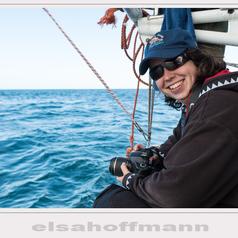
Postdoctoral Researcher in management and conservation of white sharks, Stellenbosch University Dr. Sara Andreotti is a marine biologist, working as a postdoctoral researcher at Stellenbosch University. Her research focuses mainly on white sharks, in the attempt to provide much needed information for the management and conservation of this vulnerable species. In 2007, while completing her master's degree in marine biology at the University of Trieste (Italy), a lucky encounter with the world known conservationist Michael Rutzen (www.sharkdivingunlimited.com) initiated a collaboration and instrumental access to the field. In 2009, in partnership with Michael Rutzen and the Branch Oceans and Coasts of the Department of Environmental Affairs of South Africa, she started collecting daily photographs of white sharks' dorsal fins to construct a database of the individual sharks in the area of Gansbaai. Subsequently, to combine a morphological and genetic approach for the identification of individual white sharks, Sara was enrolled at Stellenbosch University as a PhD student in 2011. White sharks are listed for protection under the Convention on International Trade in Endangered Species (CITES) and the International Union for Conservation of Nature (IUCN, Category VU A1cd+2cd) and are recognised as particularly vulnerable to rapid stock declines. The lack of basic information is arguably the biggest obstacle to planning effective protection. Understanding the population dynamics can thus play a critical part in developing conservation strategies for these animals. The PhD project also included a population genetic study of white sharks in South Africa to estimate the numbers of animals present in the coastline, point out the presence of different stocks and the level of genetic segregation between stocks. The PhD project, thanks to the sponsor of Michael Rutzen’ s Shark Diving Unlimited, was therefore extended from Gansbaai to the whole coastline and several voyages have been successfully completed by sailing around South Africa with a catamaran, equipped as a research vessel. For the PhD project, completed in March 2015, 426 white sharks could be successfully identified and catalogued from over 5,000 photographs, and more than 300 genetic samples have been collected. Since March 2015 Sara has been enrolled as a postdoctoral researcher in the Department of Botany and Zoology, thanks to the Consolidoc bursary scheme, to complete the publications on the findings of the PhD project and expand the complex dynamics of South African white sharks. Besides her own PhD project, Dr. Andreotti has been actively involved in the Sharksafe project: a novel and eco-friendly technology that aims to replace beach nets and baited drumlins to protect beach goers from large predatory sharks, without harming the marine life. As a member of the Sharksafe team she has been helping with field work and scientific publications.
Professor of Earth Sciences, University of Oxford Broadly, my research concerns the ocean’s role in the global carbon cycle, and in particular the complex interplay between climate, ocean circulation, and ocean biogeochemistry. Understanding and modeling these interactions is one of the fundamental challenges in science, and the key to unraveling the human impact on Earth’s climate. My research addresses many different aspects of this broad theme. For instance, I use geochemical tracer observations in combination with inverse methods to quantify the uptake of anthropogenic CO2 by the ocean. I also develop coupled physical circulation and biogeochemical models to address a variety of problems in climate science such as the role of the biological pump in partitioning CO2 between the atmosphere and ocean. I use a wide range of tools and approaches in my work, and am actively engaged in the development of mathematical and computational models and tools that enhance our ability to simulate the climate system. I believe that a balanced approach, in which theory, simulation, and observations play complementary roles, is critical for advancing our understanding of the ocean and climate.