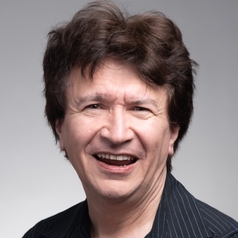
Professor of Microbiology, Lincoln University, New Zealand Stephen committed to a career in microbiology at the age of 14 and became especially interested in the field of diagnostics, where the ability to recognise a pathogen quickly and accurately could be critical. His interests led to the completion of his PhD on ”Identification methods for rRNA superfamily VI” conducted at the Central Public Health Laboratory in London, England, whereafter he became a Senior Researcher at the Danish Institute of Food and Veterinary Research in 1994 and moved to New Zealand in 2005 to become Food Programme Leader at the Institute of Environmental Science and Research (ESR). He moved to Lincoln University in 2015 as an Associate Professor in food microbiology, and was appointed as a Professor in 2022. He currently leads the Department of Wine, Food, and molecular biosciences and is Acting Director of the Centre for Foods for Future Consumers. Stephen’s expertise is evidenced in over 170 research articles or book chapters, and membership of various National and International committees and advisory boards. He has won two awards recognising his contributions to bacteriology (2001, UK Society for Applied Microbiology and 2017, NZ Microbiological society) and another in 2014 recognising his success in winning the right to host an international microbiology conference here in NZ. His current projects span three major areas, including the characterisation of microbes involved in making wine – and whether or not we can predict if the wine will be good, or otherwise!
Postdoc, Harvard Kennedy School | Associate, Department of African and African American Studies, Harvard University Dr. Suraj Yengde is an award-winning scholar and activist from India. He is an author of bestseller Caste Matters. The book went to reprint within a week of it's publication date. Caste Matters was recently featured in the prestigious "Best Non-fiction Books of the Decade" list by The Hindu. Suraj is an inaugural postdoctoral fellow at the Initiative for Institutional Anti-racism and Accountability, Shorenstein Center on Media, Politics and Public Policy at the Harvard Kennedy School. Suraj is India’s first Dalit Ph.D. holder from an African university (University of the Witwatersrand, Johannesburg) in the nation's history. Suraj Yengde's interest lay in theories of subordinate subaltern movements and the Global South migration. His on-going project theorizes the diaspora movement activism, in particular, Dalit diaspora in the North America. He is also co-editing a book on B R Ambedkar's 125 years. Additionally, he regularly writes on caste and inequality in India. He served on the University of the Witwatersrand Senate and as an executive member of various student body committees.
Research Theme Fellow - Environment and Sustainability, Western Sydney University Dr Sebastian Pfautsch is a Senior Research Fellow at Western Sydney University. In 2007, Sebastian received his PhD (summa cum laude) in forest ecosystem science from the University of Freiburg, Germany. In his research he investigates the effects of global change and extreme climate evens on plant and ecosystem functioning. In his role as Research Theme Fellow he applies his knowledge to urban ecosystems to reveal the potential of trees to mitigate effects of global warming. Sebastian uses his research to inform government agencies, politicians, industry and the public how to ‘future-proof’ today’s management of urban green infrastructure.
Lecturer in Psychology, University of Bristol I am a Lecturer in Psychological Science at the University of Bristol, where I teach a popular course on the Science of Happiness and run interventions to improve student well-being. I am also a lecturer and researcher in animal cognition, running comparative studies to explore the evolution of intelligence. I am broadly interested in the evolution of cognitive abilities in humans and non-human animals. Over the past decade I have studied the cognitive abilities of a range of animals, including Eurasian jays, rufous hummingbirds, Goffin cockatoos, and both human children and adults. The majority of my work has focussed on the New Caledonian crow, a remarkable species of bird which manufactures complex tools in the wild and performs exceptionally well on cognitive tasks in captivity. In addition, since joining the University of Bristol in 2019, I have transitioned towards applied psychological research. This is a move I made largely in response to the student mental health crisis and a desire to tackle well-being concerns among young adults. Here, I am investigating the effects of positive psychology interventions on student well-being, delivered as part of the teaching curriculum.
Senior Lecturer in Media, University of Adelaide Saira Ali has over ten years of experience in the media industry, having worked at the top tiers of publishing with Kitab Pvt Ltd and the Oxford University Press in Pakistan. She started her academic career in 2015 at the University of the Sunshine Coast (USC), where she taught in various Public Relations and Social Media courses. She joined the Department of Media at the University of Adelaide in 2019. Her current research focuses on securitization and the media-terrorism nexus. In 2022 her book Mediatised Terrorism: East-West Narratives of Risk was published in the Routledge Critical Terrorism Studies series. Saira also co-authored, Public Relations & Strategic Communication (2019), for Oxford University Press, Australia. She regularly publishes in high ranking journals such as Global Media and Communication, International Communication Gazette and Media International Australia.
Lecturer Nutrition and Dietetics, RMIT University Dr Sharayah Carter is a lecturer specialising in Nutrition and Dietetics at RMIT University. With over 10 years of experience as an Accredited Practising Dietitian, she has a strong background in teaching, clinical practice, and private practice. Sharayah earned her PhD focusing on intermittent fasting for Type 2 Diabetes treatment. Her primary goal is to explore the link between dietary patterns and chronic disease risk, empowering individuals to make informed decisions about their health.