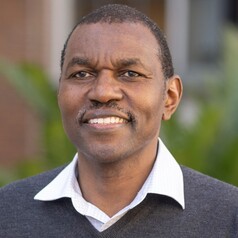
Director for basic and translational science, Africa Health Research Institute (AHRI) Professor Thumbi Ndung'u is an eminent HIV scientist who has made important contributions in the field of HIV vaccine and pathogenesis research. His research programme at AHRI is focussed on understanding how HIV and TB persist and replicate in the face of a hostile host immune system – with the goal of aiding the design of a safe, affordable and effective HIV-1 vaccine or effective immune-based therapies. Thumbi has a special interest in capacity building for biomedical research in Africa, primarily through the Sub-Saharan African Network for TB/HIV Research Excellence (SANTHE) programme, based at AHRI. He is a Max Planck Society Group Leader and holds a professorship at the University of KwaZulu-Natal. He is interested in understanding antiviral immune mechanisms and viral adaptation in HIV-1 subtype C infection as a pathway to vaccine development. His work has focussed on understudied populations and viral strains in resource-limited, high burden settings where knowledge of the role of antiviral immune responses, viral strains and associated genetic factors is likely to yield the greatest impact in terms of biomedical interventions like vaccines. Thumbi’s early work addressed the lack of biological tools for HIV vaccine and pathogenesis research on HIV-1 subtype C, the predominant subtype globally and in southern Africa. He generated and characterised the first infectious molecular of HIV-1 subtype C from primary isolates, and constructed the first infectious subtype C envelope-derived simian-human immunodeficiency virus able to replicate in rhesus macaque peripheral blood mononuclear cells. These tools were deposited in the NIH AIDS reagent program and remain available to researchers. The tools have facilitated in vitro and animal model studies of HIV-1 subtype C biology and vaccine development research.
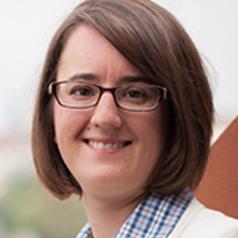
Associate Professor of Thomistic Studies, University of Notre Dame I work on medieval theories of mind, cognition, and personhood, with special focus on the thought of Thomas Aquinas and his thirteenth-century interlocutors. Themes that animate my research include, e.g., the nature of consciousness, the history of the self/person and concepts of subjectivity, what it means exactly to be "immaterial," Aristotelian hylomorphism and how it applies to mind, and problems connected with mental representation and intentionality, the relationship of imagination and intellect, and medieval theories of light and vision. In approaching these themes, I'm particularly interested in uncovering different ways of "modeling" the mind and its activities. I am engaged in a research cluster funded by Notre Dame's Office of Research, titled "Modeling the Mind in the European History of Philosophy" (2020-2023). I also direct the History of Philosophy Forum and The Jacques Maritain Center at Notre Dame. Another central research interest of mine is how Islamic philosophers--such as al-Farabi, Averroes, Avicenna, and the author of the "Liber de causis"--shaped Scholastic thought in medieval Christian Europe. Getting into the mindset of medieval philosophers, on my view, requires a scholarly community that is committed to rediscovering the broader shared philosophical tradition that connects Muslim, Jewish, and Christian thinkers in the Middle Ages, and tracing its patterns of development from late antiquity. To that end, I serve on the executive committee of the "Aquinas and the Arabs Project." I am also a member of the Pontifical Academy of St. Thomas Aquinas.
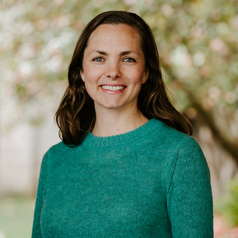
Postdoctoral Research Fellow in Environmental Social Science, The University of Melbourne Tessa Toumbourou is a postdoctoral environmental social science research fellow in the School of Agriculture, Food, and Ecosystem Sciences, at The University of Melbourne. Her research, informed by feminist political ecology, explores the links between social and environmental change, land and natural resource governance, and changing livelihood responses and strategies.
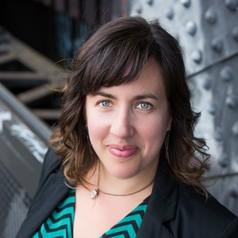
Assistant Professor of Landscape Architecture & Urban Planning, Texas A&M University Most updated information: u.tamu.edu/goddard Fastest way to find me: @DrTaraGoddard on Twitter. I am an Assistant Professor in the Department of Landscape Architecture and Urban Planning at Texas A&M University. I earned my PhD in Urban Studies at Portland State University, where my dissertation research explores drivers’ attitudes and behaviors toward bicyclists. I have a Masters in Civil Engineering from UC Davis, where I studied women’s travel behavior in traditional and suburban neighborhoods under the advising of Dr. Susan Handy. After my Masters, I worked first as an Associate Transportation Planner with the City of Sacramento, and then from 2007 through 2011 as the Bicycle/Pedestrian Coordinator for the City of Davis, CA, which enjoys the highest levels of bicycling for transportation of any city in the United States. While there I worked on everything from the City’s first on-street bike racks to re-starting the “bicycle rodeo” program in area schools, and wrote the grant applications for the City’s first protected bike lanes, bicycle boulevard, and major road diet/bike lane project. My research interests include all things bicycle and pedestrian safety-related, but in particular, the intersections of transportation and social psychology, and people’s differential experiences and safety outcomes on the road.
Distinguished Professor & Director of Special Projects, Faculty of Health, Deakin University Prof Livingston has over 25 years of experience in oncology research involving behavioural interventions to improve health outcomes for people living with cancer and their carers. Prof Livingston’s research involves large collaborative teams, leading studies that have demonstrated gaps in service delivery, and she and her teams have developed recommendations, changes in clinical practice, guidelines and policy initiatives to improve consumer access to health and community services. Prof Livingston is the Co-Director of the Centre of Excellence in Cancer Carer Research, Translation & Impact (Cancer Carer Hub). The Hub is designed to identify and test cost-effective and scalable strategies to ensure that those who provide a caring role are recognised and supported. Prof Livingston is also a member of the Centre for Quality & Patient Safety Research in the Institute for Health Transformation at Deakin University.