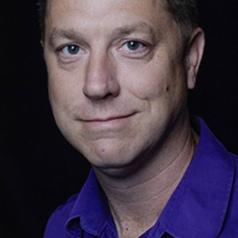
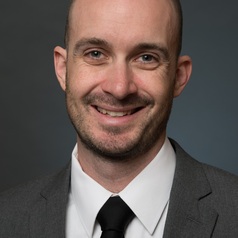
Teaching Fellow in Film and Television Studies, University of Warwick Tom Hemingway is a Teaching Fellow in Film and Television Studies. He holds a BA in Film and Literature (2016) and an MA (2017) and PhD (2021) in Film and Television Studies, all completed at the University of Warwick. His PhD thesis, ‘The Aesthetics of Post-Broadcast Comedy Television’ explores questions regarding style, authorship, and temporality in the original comedy programming for two of the largest subscription-based streaming services - Netflix and Amazon Video. He leads BA and MA classes on Television Criticism, Television Analysis, and US Comedy Television at University of Warwick. His publications include: 'Autofictional Authenticity: Bo Burnham's Inside, Netflix Comedy, and YouTube Aesthetics' (co-authored with James MacDowell), The Lesser Feat (YouTube), March 2023 - https://www.youtube.com/watch?v=j0_CocjBaaM. ‘“Next Episode in 5…” Binge-Watching and Narrative in Streaming Television Comedy’ in Mareike Jenner (ed.) Binge-Watching and Contemporary Television Studies (Edinburgh: Edinburgh University Press, 2021) pp. 224 – 235. 'On the Beach: The 400 Blows', South Atlantic Review, 85:4 (Winter 2020), pp. 51 - 67. 'Irony, Control, and Distance in The Life Aquatic with Steve Zissou', Offscreen, 22:5 (May 2018), https://offscreen.com/view/irony-control-and-distance-in-the-life-aquatic-with-steve-zissou. 'The Objectification of Jennifer Lawrence in Contemporary Hollywood Cinema', Offscreen, 21:4-5 (May 2017), https://offscreen.com/view/the-objectification-of-jennifer-lawrence-in-contemporary-hollywood-cinema.
Royal Society University Research Fellow, Reader in Cosmology, Queen Mary University of London I'm a cosmologist who works on understanding the role of gravity in our universe. In particular, I develop tools to test ideas about modified gravity and dark energy models with gravitational waves, large-scale structure and cosmological voids. I completed my PhD at the University of Oxford, on devising mathematical frameworks for testing alternatives to General Relativity. I remained in Oxford for a five-year postdoctoral research fellowship at All Souls College, one year of which I spent as Fulbright Visiting Scholar at the University of Pennsylvania. In January 2019 I moved to QMUL to join the Cosmology & Relativity group as a Royal Society University Research Fellow and proleptic Reader. I'm a member of the LIGO Scientific Consortium, DESC -- the consortium behind the Large Synoptic Survey Telescope (LSST) -- the ESA Euclid satellite, and the Laser Interferometer Space Antenna (LISA).
Senior Lecturer in Business Analytics, University of Stirling I am a research-active lecturer in Artificial Intelligence, Data-Science and Business Information Systems. My primary research area is in the artificial intelligence of artificial persons and interactions between artificial persons and natural persons. The oncoming fourth industrial revolution which will blur the distinction between human and machine interactions is inevitable, and will bring disruptive business opportunities for organisations who manage to harness the new business potential of social bots, communicative medical devices, deep data-mining, cognitive and near-cognitive systems and robotic, autonomous systems. Alongside the challenge of innovating hardware and software systems that can mimic or impersonate human capabilities come fascinating and complex ethical questions of their place in the Information Society. Clear, logical AI models that maintain contractual obligations and ethical responsibilities; and that are comprehensible and testable by technologists and civic society alike are my major interest. My background is both academic and business focused. The rollout of implementations of AI systems while addressing the ethical questions these systems raise are of interest both to my Artificial Intelligence training and my business background.
Horace T. Morse Distinguished Professor of Political Science and Law, University of Minnesota I am Horace T. Morse Distinguished Professor of Political Science and Law. Over my 24 year career I have published several books, including Oral Arguments and Coalition Formation on the U.S. Supreme Court, A Good Quarrel, Oral Arguments and Decision Making on the U.S. Supreme Court, and The Logic of American Politics (10th edition). My research also appears in a variety of academic journals including the American Political Science Review, the Journal of Politics, and the Law and Society Review. Along with legal and political commentary my work has been covered by The Economist, The Guardian, The New York Times, The Washington Post, The Wall Street Journal, NPR, C-SPAN, Slate, USA Today, ABC, and CNN. In 2018 I was named a semi-finalist for the prestigious Robert F. Cherry Award for Great Teaching and was awarded the American Political Science Association's Distinguished Teaching Award.
Professor, Great Lakes Institute for Environmental Research, University of Windsor Our lab (housed at the Great Lakes Institute for Environmental Research, University of Windsor) investigates scientific questions related to evolutionary biology, reproductive ecology, and conservation biology using fishes (both economically important species and species at risk) from the Great Lakes Basin and the west/east coast of Canada. Our primary species of study include (among others) Chinook Salmon, Redside Dace, Lake Sturgeon, Atlantic Salmon, and Lake Trout. We conduct field research across the Great Lakes basin (and on each coast of Canada) and we employ molecular ecology approaches including (among others) population genetics, environmental DNA (eDNA), proteomics, and transcriptomics. In addition to our foundational research program focused on genetic quality in wild populations we also apply this knowledge to; (1) improve captive breeding for endangered and threatened species of fishes, (2) increase the fitness of fishes released from fish hatcheries and (3) inform and improve the sustainability of salmon aquaculture. Our lab also focuses on questions related to reintroduction biology in species as varied as fishes, frogs and snakes. In order to offer students unique experiential learning opportunities and to educate the public about science we founded the Freshwater Restoration Ecology Centre (FREC, see video below and link in banner for more details) in partnership between the Town of LaSalle and the University of Windsor. This facility houses unique infrastructure, species at risk experimental populations, and access to the Lake Huron-Erie Corridor via the Detroit River.
Assistant Professor of Economics, Mississippi State University I am Assistant Professor of Economics at Mississippi State University, a CESifo Research Network Affiliate, and an IZA Research Affiliate. My research interests are in applied microeconomics, including the economics of education.