Thomas Kehoe
Historian, Cancer Council Victoria
Historian, Cancer Council Victoria
1 articlesOur contributors
Meet the researchers, writers and practitioners bringing perspective to the global conversation.
Join the conversation556 contributors · T
Historian, Cancer Council Victoria
Historian, Cancer Council Victoria
1 articles
Researcher, University of the Witwatersrand
Researcher, University of the Witwatersrand Thea is a researcher at the African Centre for Migration & Society at the University of the Witwatersrand. She is currently the research co-ordinator for the Global health research group on Disrupting the cycle of gendered violence & poor mental health among migrants in precarious situations (GEMMS).
0 articles
Research Officer, Geography Department, Swansea University
Research Officer, Geography Department, Swansea University Researcher at the Centre for Wildfire Research, department of Geography, Swansea University. Tadas studied geography and his PhD focused on satellite-based estimation of atmospheric emissions from large wildfires in boreal regions. Following completion of the PhD Tadas research interests were satellite observations of global fire activity, wildfire emissions modelling and prediction of fire occurrence.
0 articles
Researcher in Ecological Economics, Lund University
Researcher in Ecological Economics, Lund University Timothée Parrique is an economist, originally from Versailles, France. He is currently a researcher at the School of Economics and Management of Lund University (Sweden). He holds a PhD in economics from the Centre d’Études et de Recherches sur le Développement (University of Clermont Auvergne, France) and the Stockholm Resilience Centre (Stockholm University, Sweden). Titled “The political economy of degrowth” (2019), his dissertation explores the economic implications of degrowth. Tim is the author of Ralentir ou périr. L’économie de la décroissance (September 2022, Seuil), a wide-audience book adaptation of his PhD dissertation. Tim frequently writes about green growth and decoupling; he is the lead author of “Decoupling debunked – Evidence and arguments against green growth” (2019), a report published by the European Environmental Bureau (EEB). He blogs at https://timotheeparrique.com and posts at @timparrique (Twitter), timotheeparrique (Insta), and @timparrique (Mastodon).
0 articles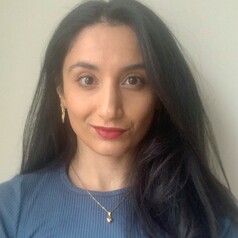
PhD Candidate, Human Resource Management, York University, Canada
PhD Candidate, Human Resource Management, York University, Canada Tina Sharifi is a PhD Candidate at the School of Human Resource Management at York University. As a passionate, thoughtful and creative HR academic with significant industry experience, her work and research aims to embolden and empower equity-deserving individuals in the workplace. In particular, her academic research endeavors to spotlight the critical voices and contributions of BIPOC women in leadership and management. Other critical areas of research interest include, authenticity, companion animals and calling. Her research has been published and presented at various national and international conferences.
1 articles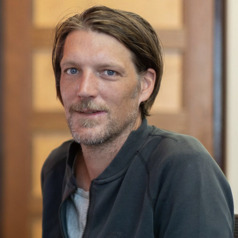
Senior Lecturer, University of Sydney
Senior Lecturer, University of Sydney My research areas revolve around sediment transfer from source-to-sink, sedimentary systems, geodynamic and landscape evolution, carbonate platforms and ocean dynamics. My main activities consist in the design and implementation of open-source numerical codes that improve our understanding of the complex interactions between sedimentary systems, climatic & tectonic forcing, and the physical processes that erode, transport, and deposit sediments. My current fields of research are: 1. Reading past history from the stratigraphic record - Unraveling basin archives by developing state-of-the-art numerical models of sedimentary systems through space and time. 2. Learning Earth evolution to better prepare for the future - Tackling complex problems using holistic approaches that quantify earth surface processes interactions with both climatic, oceanic and tectonic forces. 3. Enabling cross-disciplinary research by linking data to whole Earth models - Working across temporal and spatial scales fostering new knowledge related to biodiversity, coral reef and ocean hydrodynamic. 4. Designing open-source software for the geoscience community - Promoting reproducible science and open source software by making numerical codes & workflows available for both Industry, Research & Teaching.
1 articles