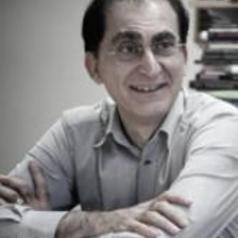
Professor of Sociology, Politics and Public Policy and Founding Director of the Centre for the Study of Ethnicity and Citizenship, University of Bristol I am the founding Director of the University Research Centre for the Study of Ethnicity and Citizenship. I have held over 40 grants and consultancies (UK, European and US), have over 35 (co-)authored and (co-)edited books and reports and over 200 articles or chapters in political philosophy, sociology and public policy. I am the co-founding editor of the international journal, Ethnicities. My publications include Multicultural Politics: Racism, Ethnicity and Muslims in Britain (2005), Multiculturalism: A Civic Idea, (2007/2013) and Still Not Easy Being British: Struggles for a Multicultural Citizenship (2010); and as co-editor, Multiculturalism, Muslims and Citizenship: A European Approach (2006), Secularism, Religion and Multicultural Citizenship (2009), Global Migration, Ethnicity and Britishness (2011), European Multiculturalisms (2012), Tolerance, Intolerance and Respect (2013), Religion in a Liberal State (2013), Multiculturalism Rethought (2015) and Multiculturalism and Interculturalism: Debating the Dividing Lines (Feb, 2016). I am highly committed to public engagement and am a regular contributor to media and policy debates. My work is frequently cited by policy-makers and practioners and on several occasions has influenced policy. I have been Adviser to the Muslim Council of Britain and have served on the DfES Race, Education and Employment Forum; the Commission on the Future of Multi-Ethnic Britain (1997-2000); the IPPR Commission on National Security (2007-09); the National Equality Panel (2007-10); and the Commission on Religion and Belief in British Public Life (2013-16). My impact case study, ‘Influencing law, policy and public discourse on the accommodation of Muslims in Britain’ was one of three which collectively were ranked as 2nd in the UK by the Sociology 2013 REF. The importance of public intellectual engagement is expressed in this biographical interview: http://www.tariqmodood.com/uploads/1/2/3/9/12392325/modood-interview.pdf
Principal Investigator on Deep Space Atomic Clock Technology Demonstration Mission, Jet Propulsion Laboratory, NASA Todd has over 29 years of experience in astrodynamics and space navigation. Since 1999 he has been at the Jet Propulsion Laboratory developing and implementing navigation systems and architectures for many projects - big and small - including the NASA’s Mars Network, the former Constellation Program and Altair lunar lander. His research focuses on new navigation methods, adaptive navigation, nonlinear dynamics, and mean element theory. Todd is currently the principal investigator for NASA’s Deep Space Atomic Clock mission being developed to advance our capabilities to navigate effectively in deep space. He is a graduate of Purdue University and is a former Air Force Officer.
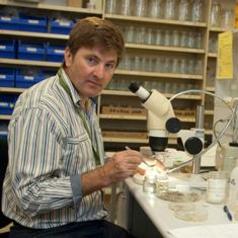
Senior Curator of Marine Invertebrates, Museum Victoria Dr Timothy O'Hara uses museum collections to answer large-scale questions about the distribution of seafloor animals around the globe. This research includes aspects of biogeography, macroecology, phylogeny, and phylogeography. His taxonomic speciality is the Ophiurodea (brittle-stars), a class of echinoderms that are a dominant component of the seafloor fauna.
Senior Lecturer in Human Geography, University of Portsmouth I graduated from Royal Holloway (University of London) in 2003 with a BSc (Hons) in Geography. I then went on to complete an MA in Cultural Geography Research (Royal Holloway, 2004) before taking time out of academic study to work in the area of Special Educational Needs in secondary education. I then returned to Royal Holloway to complete a PhD in Human Geography (2009) and Postgraduate Certificate in Skills of Teaching to Inspire Learning (2006). Following completion of my PhD (funded by an ESRC Studentship awarded through the Open Interdisciplinary Competition), I joined the Department of Geography at the University of Exeter in 2009 as a Teaching Fellow. In 2011 I was awarded an ESRC Postdoctoral Fellowship, which I completed at Exeter alongside a period as Visiting Scholar in the Centre for Children and Children Studies at Rutgers (Camden) in the US. Following completion of my postdoctoral studies, I joined Geography at the University of Portsmouth as a lecturer. Teaching Responsibilities I deliver social and cultural geography components of the undergraduate teaching in the department. I am the co-ordinator of two human geography units: Foundations of Human Geography Place: Invented, Experienced, Represented I also contribute to the following co-taught units: Geography, Skills and Prospects Social Geography: Geographies of Wellbeing Research Design and Practice Human Geography: critique and discourse Independent study I jointly teach a European residential field course to Berlin explores urban geographies, more specifically landscapes of memory, subterranean geographies and gentrification. I have contributed chapters to the following book series: The Wiley-Blackwell Companions to Geography series The Open University’s Childhood series Ashgate’s Critical Geopolitics series I have also contributed chapters to the following reference volumes: Springer’s Geographies of Children and Young People series CQ Press Encyclopedia of Consumer Culture Research Ludic (or playful) Geographies My interest in play extends to it role across the lifecourse, and coalesces around three key themes: the relation of play to the everyday, a reconfiguration of the politics of play toward an inwardly oriented vitality, and the ways in which play exceeds representation. I am particularly interested in the critical and ethical potential of playful ways of being and doing and how this can operate as an affirmative mode of critique. Geographies of Material Sensibilities My research examines how material geographies and sensuous geographies can inform each other in productive ways around questions of tactility, affect and relational agency. As a geographer, it is not only the material relations between people and things that are of concern to me, but also the imaginative spaces that can be configured through these relations and how these spaces are enacted in and of the ‘real’ spaces of the everyday. Creative Methodologies Influenced by my concern with material and sensuous geographies, I am interested in exploring ways of investigating non-cognitive and profoundly practical knowledges. Current Research Projects Ludic Geopolitics: children’s play, war toys and re-enchantment with the British military Funding: ESRC Standard Grant (£492,850) This project analyses military action figures for the purpose of examining a ‘ludic geopolitics’: how contemporary geopolitics are expressed and enacted through play. Studies of the ‘military entertainment complex’ have documented the entanglement of the military and toy industry, however work has focused on videogames in a US context. Despite the iconic status of traditional toys like Action Man, and the commercial success of the contemporary HM Armed Forces brand, action figures are yet to receive critical academic attention. Using an ethnographic approach, this project examines children’s embodied practices with the HMAF range. To contextualise and historicise the brand, this work is complemented by archival and museum-based research of the British action figure’s trajectory. This research critically reviews the status of children, mundane everyday practice and the more-than-textual in critical geopolitics, and makes a significant intervention in the interdisciplinary war toy debate by addressing war toys not just as ideological texts, but as objects in playful practice. Please see my blog for more information about my research: http://materialsensibilities.wordpress.com/
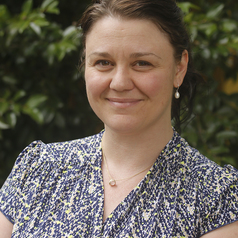
Research Fellow, University of Canberra Research Fellow at the University of Canberra working in climate adaptation and urban planning since 2013. Current PhD candidate at the Institute of Culture and Society at Western Sydney University.
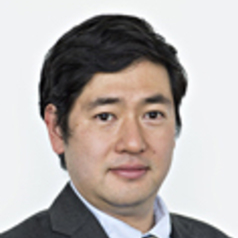
Lecturer in International Relations, Loughborough University Taku Tamaki is a Lecturer in International Relations, specialising in the international political dynamics of the Asia-Pacific region. After gaining his PhD at Aberystwyth, he was Research Fellow at the Institute of Asian Cultural Studies at International Christian University in Tokyo, and taught International Relations at Plymouth before moving to Loughborough in 2007. He has taught a wide range of courses on international politics and international political economy, including International Relations Theory, the United Nations and International Organisations, The Asia-Pacific in Global Politics, and the International Political Economy of the Asia-Pacific Region. Having spent four years as a US Treasuries broker at Cantor Fitzgerald (Tokyo office), he brings first-hand experience of political economy to the classroom, having experienced the market turmoil immediately following the announcement of the collapse of Barings Bank in 1995. Taku is interested in applying the concepts of International Relations and Social Theory to the international political-economic dynamics of the Asia-Pacific region. His main focus is on Japanese foreign policy in East Asia, spanning both Tokyo’s diplomatic- and economic relations with Asia and the US. His current research investigates the images of Asia in contemporary Japanese foreign- and economic policy pronouncements. Here, he explores how policy elites understand and explain Asia as both a threat and opportunity—an interpretation that transcends both the past and present. He is also looking into Japan’s soft power projection in Western Europe, researching on the way Japanese government perceives its political- and economic activities in the EU and the UK. He has published in leading journals in international relations and the international politics of the Asia-Pacific, including The Pacific Review, International Relations, and the International Relations of the Asia-Pacific.