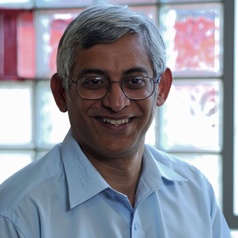
Professor, Department of Optometry and Vision Sciences and Melbourne Neuroscience Institute, University of Melbourne Trichur Vidyasagar (called Sagar) is a neuroscientist, with a special interest in vision. He is a professor in the Department of Optometry & Vision Sciences at the University of Melbourne and also an affiliate of the Melbourne Neuroscience Institute. Sagar first qualified as a medical doctor from the University of Madras. Having already been involved in research into vision and neuroscience during his undergraduate years, he proceeded to do a PhD at the University of Manchester, exploring neuroplasticity in the developing sensory system. He then moved to the Department of Neurobiology at the Max-Planck Institute for Biophysical Chemistry, Goettingen. During the 10 years at MPI, he studied the basic neural circuitry underlying visual perception. This work, which has continued when he moved to Australia, first to The Australian National University (John Curtin School of Medical Research and School of Psychology) and then to The University of Melbourne, has led to a new theory of how basic attributes of a visual scene such as lines, colours and movement are coded by the brain. This understanding could help not only in being able to explain many perceptual disturbances but also the development of neural prostheses for the blind. One of Sagar’s other research areas is the neural basis of visual attention and memory. This work is undertaken in both human subjects at the cognitive level as well as in trained macaques at the cellular level, thus seeking to link our understanding from the cellular to cognitive stages. The work of his team has also helped to elucidate the neural mechanisms that different parts of the brain use to communicate with each other. This research programme has led to insights into the neural processes that enable the brain to search for objects in the cluttered world around us and match our perceptions to stored memories, helping to further understand a number of neurological disorders such as dyslexia, ADHD and schizophrenia. Most notably, Sagar has developed a new theory that describes the neural machinery that we use for reading and identifies a basic aspect of visuo-spatial attention as the underlying reason for the differences in reading performance between good and poor readers. Sagar has over 75 peer-reviewed publications in neuroscience. Additionally, he has had a life-long interest in the ecological impact of the food we eat and done his own (unpublished) calculations that show how even halving the present meat and dairy consumption in the world could potentially prevent catastrophic global warming due to the reduction in its direct ecological footprint and due to the carbon sequestration from the reforestation of large tracks of current pasture and croplands that were previously woodlands.
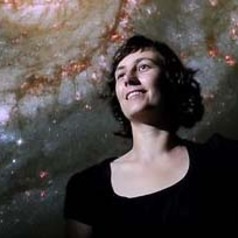
Honorary Fellow of the University of Melbourne and Senior Curator (Astronomy), Museum Victoria I am an extragalactic astronomer, Honorary Fellow of the University of Melbourne, and am currently working in the field of science communication at Melbourne Planetarium. I have been the Curator (Astronomy) at Melbourne Planetarium, Scienceworks since 1999, drawing on my background in research astronomy to create more than a dozen planetarium productions. The most recent of these are now screened in over fifty planetariums across sixteen countries world-wide. I am proud to be the Australian Representative of the European Southern Observatory’s (ESO) Science Outreach Network. This sees me working with Astronomy Australia Limited (AAL) to promote ESO’s extensive research accomplishments throughout Australia. I am also involved in projects to bring research astronomy data into the planetarium to both engage the public and to turn the planetarium into a tool for research astronomers wanting to know more from their data.
Associate Professor in Physics, The University of Queensland A/Prof Stace completed his PhD at the Cavendish Lab, University of Cambridge in the UK on quantum computing, followed by postdoctoral research at the Department of Applied Mathematics and Theoretical Physics, also at Cambridge. During this time he was a fellow at Queens' College. He has been a researcher at the University of Queensland since 2006, firstly on an ARC Postdoctoral Research Fellowship, then an ARC Research Fellowship, and currently on a Future Fellowship. His research has largely focused on applying methods from quantum optics to solid state devices for use in quantum information applications, and more recently on error correction protocols. He also works on high precision measurement in collaboration with experimental colleagues at the University of Adelaide, in a project whose ultimate aim is to contribute to the international definition of Boltzmann's constant, and some biophysics. Dr Stace also consults for UniQuest, UQ's commercial arm, on scientific and technical matters.
I study learning and decision making. My main focus is the movement system – the idea being that if we can understand the intelligence of simple actions we will have an excellent handle on intelligence more generally. My research looks at simple decision making, and simple skill learning, using measures of behaviour informed by the computational, robotics and neuroscience work done in the wider group. Academic website here: http://www.tomstafford.staff.shef.ac.uk/
Tim Highfield is Vice-Chancellor's Research Fellow in the Creative Industries Faculty at Queensland University of Technology, where he is a member of the Digital Media Research Centre. His fellowship project is 'Visual Cultures of Social Media'. His research covers social and digital media, politics, activism, popular culture, sport, identity, humour, digital cultures, and more. His first book, Social Media and Everyday Politics, was published by Polity in April 2016. For more information, see http://timhighfield.net or @timhighfield on Twitter.
Tomas lectures in areas of Advocacy, Legal Philosophy and Intellectual Property and coaches the International Trade Law Moot program. In the past he coached a wide variety of state, national and international moot teams. Prior to taking up his position with the Law School, Tomas worked as part of the in-house legal team of a multi-national public company for two years. During that time he worked on a diverse range of matters within the areas of Intellectual Property, International Commercial Arbitration, Industrial Relations and Civil Litigation generally. Tomas holds a BA (majoring in Philosophy and Literature), and an LLB, and has published a number of articles in the area of Intellectual Property and International Trade Law and presented conference papers on Jurisprudence. His research interests include Intellectual Property, Jurisprudence – particularly Natural Law theory – and Feminism.