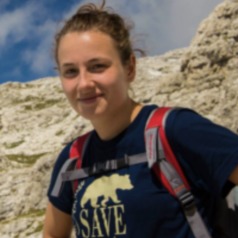
Postdoctoral researcher, Palaeontology, University College Cork I am a palaeobiologist, skilled in the analysis of pigmented soft tissues in fossil and extant vertebrates. A particular focus of my studies is the preservation of melanosomes in fossil vertebrates. My work so far have produced the first report of a tissue-specific chemical signal in melanosomes in extant amphibians, reptiles, mammals and birds and the first report of similar chemical signals in fossils, spanning in age between 10 and 280 millions years old. During my PhD I have specialised in the study of metal-melanin associations using synchrotron-based chemical analysis. My research interest also include the investigation of the taphonomic processes that lead to the preservation of soft tissues and biomolecules using taphonomic experiments at high pressure and temperature.
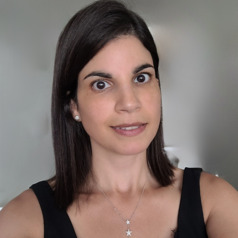
Assistant Professor, Computer science, University of British Columbia Vered Shwartz is an Assistant Professor of Computer Science at the University of British Columbia, and a CIFAR AI Chair at the Vector Institute. Her research interests focus on natural language processing, with the fundamental goal of building models capable of human-level understanding of natural language. She is interested in computational semantics and pragmatics, commonsense reasoning, multimodal models, and culturally-aware NLP models. Before joining UBC, Vered was a postdoctoral researcher at the Allen Institute for AI (AI2) and the Paul G. Allen School of Computer Science & Engineering at the University of Washington. Prior to that, She did her PhD (2019), M.Sc. (2015), and B.Sc. (2013) in Computer Science in Bar-Ilan University. Experience
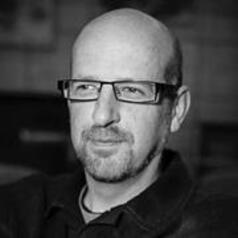
Associate professor, University of Auckland, Waipapa Taumata Rau Vernon is an Associate Professor at Auckland Law School. Before joining Auckland Law School, he was an Associate Professor and Deputy Head of School at the Auckland University of Technology School of Law. Prior to commencing a full-time academic career, Vernon practiced environmental, planning and public law in Auckland, latterly as a partner at New Zealand national commercial law firm Chapman Tripp. His teaching and research activities focus on four (related) areas of interest: public law, climate change law, international environmental law and New Zealand environmental law. Throughout his academic career, he has lectured in Public Law, Constitutional Law, Judicial Review, International Law, International Environmental Law, Resource Management Law and Climate Change Law. He has published widely in the areas of environmental and international environmental law. In 2019, his research on a 5-year New Zealand Law Foundation-supported project critiquing New Zealand and international law responses to fossil fuel subsidies culminated in the publication of a monograph Fossil Fuel Subsidies: an International Law Response published by Edward Elgar. He is the author of Laws of New Zealand: Climate Change (LexisNexis NZ, Wellington, 2017); “International Environmental Law” in Alberto Costi (ed) Public International Law: A New Zealand Perspective (1st ed, LexisNexis NZ, Wellington, 2020); “Environmental Assessment” in Derek Nolan (ed) Environmental and Resource Management Law (7th ed, LexisNexis NZ, 2020).
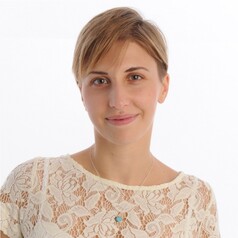
PhD Candidate, The University of Western Australia Vania is originally from Italy, where she completed her Master's in Environmental Economics and Policy at the University of Turin. She became fascinated with the ocean since moving to Australia in 2013. Vania’s interests lie in the interrelations between the ocean and human health, in particular the global issues of food and nutrient security. She is exploring the challenges that compromise the role of wild capture fisheries in providing a secure source of food and nutrients, such as fisheries subsidies, overfishing and international trade. Vania wants to impact policy by providing information on how to make the ocean a more equitable place for all.
Research Fellow in Ecology and Evolution, University of Sussex Vera Vasas is a computation biologist working in the field of animal cognition. Her work explores the algorithmic bases of vision and visual learning, aiming to understand the computations taking place in animal brains. Her favourite subjects are insects - due to the dual selection pressures of living complex lives and being limited in their energy, insect brains are small and highly efficient, offering an excellent model system for studying the fundamental principles of animal minds. Vasas is currently a Research Fellow at the University of Sussex, working on models of ant navigation with Prof Paul Graham. Previously she has worked at Queen Mary, University of London, where she studied visual cognition in bees with Prof Lars Chittka.