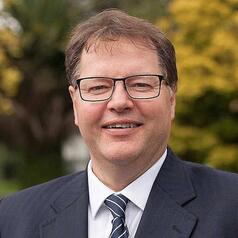
Professor of Nutritional Sciences, Massey University Warren McNabb is a Professor of Nutritional Sciences at the Riddet Institute. The Riddet Institute is one of New Zealand’s Centres of Research Excellence (CoRE) which is hosted by Massey University. His research interests include nutrition for health, sustainable nutrition, and physiology and metabolism. Warren joined the Riddet Institute in 2016. Warren currently supervises 17 PhD students and 4 Postdoctoral Fellows. Warren has published >220 peer-reviewed scientific papers with >17,000 citations and an h-index of 64 (Google Scholar). Warren completed his B. Agric. Sci (First Class Honours; 1986) and PhD at Massey University. Prior to joining Massey University, Warren joined AgResearch in 1993 as a Research Scientist and was promoted to Principal Research Scientist in 2004. Warren was promoted to Science Team Leader in 2000, Science Section Manager in 2005, General Manager in 2009 before becoming AgResearch’s Research Director in 2011. At the Riddet Institute, Warren leads several programmes including the Sustainable Nutrition Initiative (SNI; www.sustainablenutritioninitiative.com) and the MBIE-funded programmes, New Zealand Milks Mean More (NZ3M) and Kai anamata mō Aotearoa – exploring future food system scenarios and impacts. Warren is also a Principal Investigator in the Riddet Institute CoRE Research programme (www.riddet.ac.nz) and an Associate Investigator in the HVN National Science Challenge (www.highvaluenutrition.co.nz) priority research programmes’, Healthy Digestion, and Infant Health. Warren has been elected to a number of international committees including the Food and Agriculture Organization of the United Nations (FAO) to be a member of the International Scientific Advisory Committee guiding the process leading to a comprehensive and evidence-based global assessment of the contribution of livestock to food security, sustainable food systems, nutrition, and healthy diets, and to represent NZ as a member of the World Farming Organisation (WFO) Scientific Council by Federated Farmers NZ.
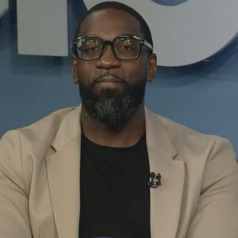
Assistant Professor, Anthropology, University of Manitoba Warren Clarke is an assistant professor at the University of Manitoba in the Anthropology department. Warren's focus is in sociocultural anthropology. Warren’s research is situated in youth cultures, social citizenship, neoliberalism, gentrification, race & ethnicity, anti-colonialism, and masculinity.
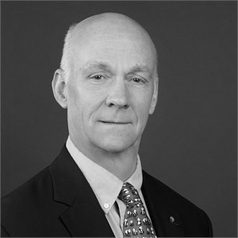
Professor of International Science, Public Policy and Human Development, Harvard University William Clark is the Harvey Brooks Research Professor of International Science, Public Policy and Human Development at Harvard University’s John F. Kennedy School of Government. Trained as an ecologist, his research focuses on sustainability science: understanding the interactions of human and environmental systems with a view toward advancing the goals of sustainable development. He is particularly interested in how institutional arrangements affect the linkage between knowledge and action in the sustainability arena. At Harvard, he co-directs the Sustainability Science Program. He is co-author of Pursuing sustainability: A guide to the science and practice (Princeton, 2016), Adaptive environmental assessment and management (Wiley, 1978), and Redesigning rural development (Hopkins, 1982); editor of the Carbon dioxide review (Oxford, 1982); coeditor of Sustainable development of the biosphere (Cambridge, 1986), The earth transformed by human action (Cambridge, 1990), Learning to manage global environmental risks (MIT, 2001), Global Environmental Assessments (MIT, 2006) and The global health system: Institutions in a time of transition (Harvard, 2010); and co-chaired the US National Research Council’s study Our Common Journey: A Transition Toward Sustainability (NAP, 1999). He serves on the editorial board of the Proceedings of the National Academy of Science. Clark is an elected member of the National Academy of Sciences, the American Academy of Arts and Sciences, and the American Association for the Advancement of Science. He is a recipient of the MacArthur Prize, the Humboldt Prize, the Kennedy School’s Carballo Award for excellence in teaching, and the Harvard College Phi Beta Kappa Prize for Excellence in Teaching.
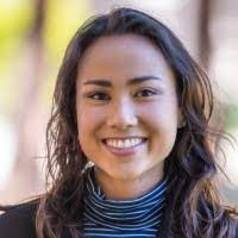
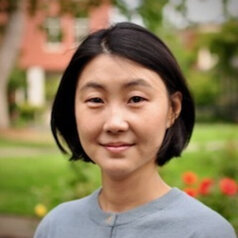
Assistant Professor of Biology, Menlo College Dr. Gordon is Assistant Professor of Biology at Menlo College. This is her first year teaching at Menlo College. Dr. Gordon went to graduate school to become an undergraduate professor and work at a student-focused institution. Prior to joining faculty, Dr. Gordon taught graduate courses at UC San Francisco and undergraduate courses at University of San Francisco, San Francisco State University, and UC San Diego, as well as elementary courses at San Francisco public schools. At Menlo College, Dr. Gordon is focusing on improving STEM interest in STEM-underrepresented groups and connecting students to their surrounding biotechnology hub. Dr. Gordon first began research at the Ocean Institute in Dana Point, California, where she worked as a husbandry intern. She conducted an artificial reef habitation project with local swell sharks and launched an aquaponics education exhibit. Dr. Gordon went on to work as a husbandry intern in the lab of Dr. Deborah Yelon at UC San Diego, where she migrated to the laboratory bench to study zebrafish heart development. Dr. Gordon simultaneously worked in the lab of Dr. Maike Sander at Sanford Consortium for Regenerative Medicine as a lab assistant and, later, the lab of Dr. Amro Hamdoun at Scripps Institution of Oceanography as an undergraduate researcher and URS (David Marc Belkin Memorial Research Scholarship for Environment and Ecology). While learning about drug transporters and embryonic development with sea urchins in Dr. Hamdoun’s lab, Dr. Gordon pioneered a collaborative project between the labs of Dr. Hamdoun and Dr. Yelon, identifying a cell type in the zebrafish embryo that likely protects embryonic development from harmful small molecules (Gordon et al., Aquatic Toxicology, 2019). As a graduate student, Dr. Gordon joined the lab of Dr. Nadav Ahituv at UC San Francisco to investigate the genetic factors underlying the evolution of frugivory (fruit-specialization) in mammals. By studying the DNA of mammals that adapted to high sugar diets, bats and primates, Dr. Gordon and her collaborators can identify novel DNA targets for therapies for metabolic diseases in humans like diabetes. Dr. Gordon utilized both comparative genomics and functional genomics techniques for her investigation, and she also traveled to Belize to work with bats and other bat researchers across the globe at the “Bat-a-thon.” Dr. Gordon was awarded the NSF GRFP and also acquired an NIH EDGE CMT grant with Dr. Ahituv to advance her research. Dr. Gordon discovered many frugivory adaptations in the fruit bat kidney and pancreas, including differentially active genes and regulatory regions involved in fluid and electrolyte balance in the frugivore kidney and an increase in endocrine and a decrease in exocrine cells in the frugivore pancreas (Gordon and Baek et al., BioRxiv, 2023). More of Dr. Gordon’s work will be published in the coming years. Dr. Gordon’s research at Menlo College will be on general biology education. She will be testing a variety of techniques and collecting data. Ultimately, she intends to use her genetics expertise to develop new courses at Menlo College that are in line with student interests and prepare students to become positive leaders of change in fast-growing biotechnological spaces of genomics, gene therapy, and pharma.
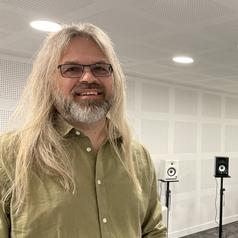
Deputy Head of School, leading Music and Music Technology, Anglia Ruskin University Dr Campbell holds a first-class BSc (Hons) degree in Audio and Music Technology since 2008 and a PhD in 'The Effect of Dynamic Range Compression on the Quality and Loudness of Commercial Music' since 2019. His research has an international profile, with conference presentations and published journal articles. Dr Campbell began his career as a touring live sound engineer. He currently manages the Music and Music Technology department at ARU and freelances as a music engineer, producer, and post-production filmmaker. He is also a certified Wwise instructor, teaching sound design and music implementation for games. Dr Campbell is a Fellow of the Higher Education Academy, a Member of the Music Producers Guild, and a Member of the Audio Engineering Society. His research interests include Dynamic Range Compression, Psychoacoustics, Noise-related Fatigue, Technology, and Pro Audio. He has published several articles, including "Listener preferences for alternative dynamic-range-compressed audio configurations" in the Journal of the Audio Engineering Society in 2017.
Research Scientist, University of Washington I am a researcher interested in how the computations in the human visual system are influenced by experience. I characterize the building blocks of perception using a combination of visual/auditory psychophysics, eye-tracking, neuroimaging, and computational modeling. I work with both neurotypical and neurodiverse populations (e.g., autism spectrum disorder, blindness), with an aim to find ways that can positively shape individuals' perceptual experiences.