Associate Professor, art history and visual culture, Southern Cross University Dr. Wes Hill is an art historian, critic and curator who lectures in art history, theory and visual culture studies at Southern Cross University, Northern NSW. Specialty research areas include contemporary art, visual culture, the folkloric, the hipster, and the nature and representation of criticality in creative practice. Publications include "How Folklore Shaped Modern Art: A Post-Critical History of Aesthetics" (Routledge, New York), "Speech Acts: Richard Grayson & Matt Mullican" (UTS Press, Sydney), and "Art After the Hipster" (Palgrave Macmillan, New York). His forthcoming book is “Jeff Gibson: False Gestalt,"co-published by Perimeter Editions and Griffith University.
Professor of Planetary Science, University of Science and Technology of China Wenzhong Wang is a professor at the University of Science and Technology of China, who studies the chemical and physical properties of rocky planets under extreme conditions using first-principles calculations based on quantum mechanics. Particularly, he applies the isotope fractionation during planetary differentiation to investigate the origin and evolution of rocky planets. With the support from NSFC and Carnegie postdoctoral fellowship, he has published more than 40 papers.
Research Professor of Geography, University of California, Los Angeles William Clark is Research Professor of Geography at UCLA and an active affiliate of the California Population Center. He was born in New Zealand and earned BA and MA degrees from the University of New Zealand and a PhD in Geography from the University of Illinois. He was a fellow at the Netherlands Institute for Advanced Studies in the Humanities and Social Sciences in 1993, and held a Guggenheim Fellowship in 1994-95. In 1994 he was awarded a D.Sc. by the University of Auckland, New Zealand. He is an Honorary Fellow of the Royal Society of New Zealand and in 2003 he was inducted into the American Academy of Arts and Sciences. In 2005 he was elected to the US National Academy of Sciences and in that year he also received the Decade of Behavior Research Award for research that influences public policy. In the past ten years he has lectured and taught in Europe, New Zealand and Canada and in 2011 held an UK Economic and Social Research Council Fellowship at the University of St. Andrews, Scotland. He was a Benjamin Meaker Research Fellow, at Bristol University, United Kingdom in 2014. At the Association of American Geographers meetings in 2018 he was awarded the Lifetime Achievement Award. His research focuses on mobility, migration and housing choice and housing outcomes. Each of these areas continues his long term interest in demographic change in large urban areas. He has published extensively on models of residential mobility and the sorting processes that bring about residential segregation in the urban mosaic His research is focused on how demographic changes and specifically the spatial outcomes of both internal and international population migration change neighborhoods. The edited volume, with David Clapham and Ken Gibb (The Sage Handbook of Housing, 2012) brings together work on residential change, housing choice, housing markets and policy issues on the future of housing. A forthcoming book reviews recent research in Housing Studies. His studies of immigration and its impacts both on places and on the immigrants themselves are set out in two books, The California Cauldron: Immigration and the Fortunes of Local Communities and Immigrants and the American Dream: Remaking the Middle Class. The California Cauldron focuses on the impact of immigration on California, and Immigrants and the American Dream examines how immigrants have transformed themselves as their life courses intersect with the American mainstream. Both examine the way in which immigrants change local communities and how they succeed in their life course trajectories.
Professor Emeritus of History, University of California, Los Angeles William H. Worger specializes in the social and economic history of southern Africa. A New Zealander by birth, his first research project was a study of Te Puea Herangi, a Maori woman who led a cultural and economic revival among the Waikato people in the early 20th century. Since coming to the United States in 1975 he has worked on historical representations of Shaka, the industrial origins of racial discrimination--South Africa's City of Diamonds: Mine Workers and Monopoly Capitalism in Kimberley, 1867-1895 (Yale University Press, 1987)-- and, currently, contestations between African and European over the meaning of colonialism in the late 19th and early 20th centuries. Prior to coming to UCLA in 1989, he taught at Stanford University, the University of Michigan, Ann Arbor, and Dalhousie University.
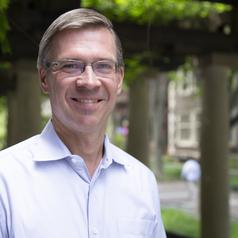
Vice Dean and Faculty Director, ESG Inititative; Deloitte & Touche Professor of Management, University of Pennsylvania Witold J. Henisz is the Vice Dean and Faculty Director, ESG Initiative and the Deloitte & Touche Professor of Management in Honor of Russell E. Palmer, former Managing Partner at The Wharton School, The University of Pennsylvania. His research examines the impact of political hazards as well as environmental, social and governance factors more broadly on the strategy and valuation of global corporations. He has won multiple teaching awards and teaches extensively in executive education programs. He is currently a principal in the consultancy PRIMA LLC whose clients span multinational firms, asset managers, intergovernmental organizations and non-governmental organizations.