Assistant Professor of Anthropology, University of Memphis Broadly, I am interested in the connections between biomedical practice and cultural norms concerning bodies, genders, and sexualities. My research sits at the intersections of critical medical anthropology, queer theory, and science & technology studies. My work has focused on issues concerning queer and trans people in medical settings. My dissertation project, based on 12 months of ethnographic fieldwork at an anal cancer prevention clinic in Chicago, developed a queer theory of care that challenges heteronormative logics underlying both medical care and anthropological scholarship on care. My earlier Master's Thesis work examined the experiences of queer medical students as they were socialized into medical professionalism and developed a heteronormative medical gaze. My new work builds on my queer theory of care in a collaborative engaged-applied project in Memphis examining the care and wellbeing needs of LGBTQ+ people in re-entry after incarceration.
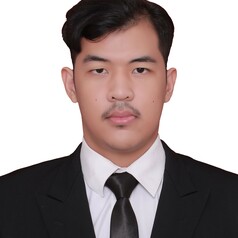
Program Officer, Resilience Development Initiative (RDI) Working in resilience and sustainable development, particularly in the financing aspects. Currently program officer for Center for Environment and Global Financing (CEGF), a center under world renouned think-tank Resilience Development Initiative.
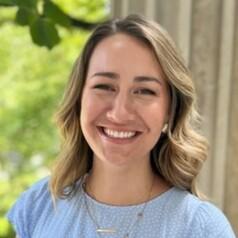
PhD Candidate in Political Science, University of Iowa Willow’s research focuses on gender, conflict, and international institutions. Some of her current research projects include examining how states' commitments to the UN Treaty CEDAW influence women’s rights over time; how rebel commitments to human rights affect violence against civilians, particularly violence against women; how natural disasters influence women’s political trust in their government in post-disaster countries; and how different peace agreements after civil war can influence the duration of peace as well as create a sense of healing for citizens. Overall, she is curious about how gender influences and is influenced by institutions and the outcomes created by these institutions for women. She hopes to add to the current field by engaging on a deeper level with feminist literature and institutional design to help create solutions to issues for women. Willow graduated summa cum laude from the University of Kentucky with a bachelor’s degree in Political Science, as well as two minors in Gender & Women Studies and International Studies. She holds a master’s degree from the University of Iowa in Political Science and is working to complete her Graduate Certificate in Gender Women’s and Sexuality Studies in addition to her Ph.D. in Political Science.
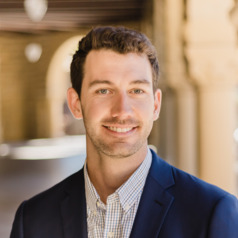
PhD Candidate, Emmett Interdisciplinary Program in Environment and Resources, Stanford University William Scott is a PhD Candidate at Stanford University working in the fields of environmental economics and policy and energy systems modelling. His research focuses on evaluating climate and energy policy to better understand how alternative approaches to decarbonization manage trade-offs between environmental, economic, and social objectives. Will's research has been published in the journals Energy Policy, Climate Policy, and featured in Nature Climate Change and Policy Options. He has testified before Canada's Senate Committee on Energy, Natural Resources and the Environment and presented to the federal Environment Ministers of Canada, the United States, and Mexico at the Commission for Environmental Cooperation Ministerial. Will also holds a Masters degree in Economics from Stanford University, a Masters of Environment from Griffith University (Australia), and a BA from Western University (Canada).
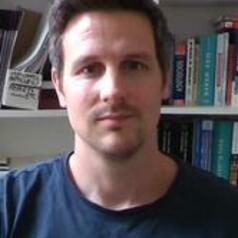
Professeur en éthique des affaires, EDHEC Business School Wim Vandekerckhove is Professor of Business Ethics at EDHEC Business School in France. He holds a PhD from Ghent University. Before joining EDHEC, he held a lecturer post at Ghent University (Belgium), visiting scholarships at the University of Oslo (Norway), Griffith University (Australia), the International Anti-Corruption Academy (Austria), and was Professor of Business Ethics at the University of Greenwich (UK). Wim has provided expertise on whistleblowing to various organisations, including Council of Europe, UNODC, the International Olympic Committee, Transparency International, the UK Department of Health, and the British Standards Institute (BSI). He was the convenor for ISO37002, the international standard for whistleblowing management systems.
Professor in School of Sociology, Politics and International Studies, University of Bristol Will Atkinson is a sociologist specialising in social class. He has researched almost all aspects of it using a wide variety of methods and authored or co-edited several books on the topic. These include Class Inequality in Austerity Britain (Palgrave Macmillan, 2012), Class in the New Millennium (Routledge, 2017), The Class Structure of Capitalist Societies (Routledge, 2 vols, 2020-22) and his introductory text, Class (Polity, 2015, 2nd ed 2024). Fascinated by the way in which class is woven through individual biographies, he has latterly used the life of Vincent van Gogh as a lens on this.