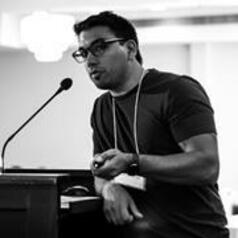
Research Fellow, Institute for Glycomics, Griffith University For millennia, pathogens have not stopped to evolve in parallel with humans in order to thwart our immune system. I am mostly interested in the molecular and cellular aspect of host-pathogen interactions.
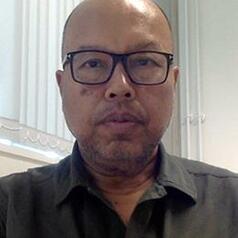
Win Myo Thu is a development practitioner with over 30 year’s working experience extensively in environmental conservation and rural development. He professionally contributed to several policy developments such as the national communication report on climate change, national biodiversity strategic action plan (NBSAP), national environmental performance assessment, national rural development strategic framework for poverty reduction, and Myanmar Sustainable Development Plan (MSDP). In addition to these contributions, he has been actively advocating for the cancellation of hydropower mega-dams, promoting renewable energy, improving land tenure security of the poor and indigenous people, and strengthening a common platform for civic empowerment in the process of natural resource governance. He directs a local environmental organization, the Association of Advancing Life and Regenerating Motherland (ALARM) and is currently a Visiting Research Fellow at Christ Church College. Qualifications He studied at Asian Institute of Technology (AIT) in Thailand for M.Sc in Rural and Regional Development with the background of undergraduate study in B.Sc(Forestry) from Yangon University and Yezin Agriculture Institute of Myanmar. He also pursued the Chevening Fellowship in Governance and Environmental Democracy at the Center for International Development and Training of the University of Wolverhampton in the United Kingdom. Academic Background He studied at Asian Institute of Technology (AIT) in Thailand for M.Sc in Rural and Regional Development with the background of undergraduate study in B.Sc(Forestry) from Yangon University and Yezin Agriculture Institute of Myanmar. He also pursued the Chevening Fellowship in Governance and Environmental Democracy at the Center for International Development and Training of the University of Wolverhampton in the United Kingdom. Research Interests He is currently conducting a research study on the assessment of climate risk by severe drought and water insecurity in the central dry zone of Myanmar and its impacts on local livelihoods and political economy. Publications Luke Bridgestock, Gideon M. Henderson, Phil Holdship, Aung Myo Khaing, Tin Tin Naing, Tin Aung Myint, Wint Wint Htun, Win Khant, Win Myo Thu, Mo Aung Nay Chi, Jotautas Baronas, Edward Tipper, Hazel Chapman & Mike Bickle (2022), Dissolved trace element concentrations and fluxes in the Irrawaddy, Salween, Sittaung and Kaladan Rivers. Available from: https://www.researchgate.net/publication/361399200_Dissolved_trace_eleme... [accessed Jul 22 2022]. Win Myo Thu (2019). Deforestation Dilemma in Myanmar, In University of Nottingham, Asia Dialogue Blog, https://theasiadialogue.com/2019/09/30/the-deforestation-dilemma-in-myan... Oliver Springate-Baginski, Aung Kyaw Thein, Anthony Neil, Win Myo Thu, Faith Doherty (2014), An assessment of Myanmar's emerging ‘Forest Law Enforcement, Governance and Trade’ (FLEGT) process, Forest Policy and Economics (2014), http://dx.doi.org/10.1016/j.forpol.2014.09.004 Win Myo Thu (2012), Impact of cross-border road construction on the livelihoods of women and men in Kyaing Ton – Tachileik, Myanmar, In Kusakabe Kyoko (ed.) Gender, Road and Mobility in Asia, Bourton on Dunsmore, Rugby: Practical Action Publishing 2012 ISBN: 978 85339 734 9, 225 pp ADB (2007), Myanmar National Environmental Performance Assessment: Asian Development Bank - National report of Greater Mekong Sub-regional Core Environmental Program, https://www.gms-eoc.org/resources/myanmar-epa-report @chchoxford @ChCh_Oxford christchurchoxford
Emeritus Professor of Sustainable Energy Engineering, University of South Australia Wasim Saman is Emeritus Professor of sustainable energy engineering, University of South Australia. His career has focused on sustainable energy education and industry targeted research since the 1980s. He has published over 300 technical articles and supervised 35 post graduate research candidates. His research has focused on solar thermal generation and storage and sustainable use of energy in buildings. He has been leading industry-focused research teams developing thermal storage materials and systems for buildings, solar thermal applications, low energy air conditioning systems and developing smart demand management technologies. He has been a founding research leader for the CRC for Low Carbon Living and led a number of research projects as well as establishing and leading the SA Research Node for Low Carbon Living until July 2018. He has been leading industry focused research into low energy and water housing which involved establishing guidelines and detailed performance monitoring programs. This commenced at Mawson Lakes and culminated in the Lochiel Park Green Village, Australia’s most environmentally sustainable housing development where a multidisciplinary approach research involving social, economic and engineering research demonstrated the environmental, social and economic advantages of near zero energy housing. Wasim is Fellow of the Australian Institute of Energy, Fellow of the Australian Institute for Refrigeration, Air Conditioning and Heating. He received the Pioneer Award from the World Renewable Energy Network in 2012. He is currently working with industry on commercialising solar water heating and energy storage systems. Wasim provides advice to developers and has served on a number of national and international committees on energy use in buildings.
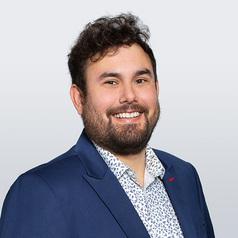
Post-doctoral Fellow, Department of Biology, McMaster University I am a Mitacs Post-doctoral Fellow at McMaster University (Hamilton, Ontario) in the department of biology. I'm a developmental toxicologist, and my work delves into trying to understand our impacts on aquatic life. As carekeepers of this planet, humans haven't really done a great job. We have released pharmaceuticals, personal care products, single-use plastics, and other contaminants into aquatic environments through our wastewater, and we don't really know what their consequences would be in habitats receiving municipal wastewater effluent. I like to investigate the damage these contaminants may have on early-life stages of fish, because these critical windows of development can have life-long effects. I look at these animals from the top-down, finding changes in their behaviour, and then looking under the hood to see what part of the engine is malfunctioning.
Course Director (B Des Arch), Senior Lecturer, School of Architecture, University of Technology Sydney William Feuerman is the founder and principal of Office Feuerman, a Sydney-based design office, founded in New York in 2007. Before starting Office Feuerman, William worked at several leading international architecture firms including five years at Bernard Tschumi Architects in New York. Feuerman has coordinated and taught in graduate and undergraduate architecture programs in Australia and the United States, including Columbia University GSAPP, the University of Pennsylvania, and the interior design program at Pratt Institute. Since 2012, he has been the Course Director for the Bachelor of Design in Architecture Program and Senior Lecturer at the University of Technology, Sydney (UTS). Feuerman received a Master of Science in Advanced Architectural Design (MSAAD) from Columbia University, GSAPP and a Bachelors of Architecture (BARCH) from the California College of the Arts. He came to Sydney in 2010 via New York, San Francisco and Los Angeles.
Professor of Innovation and Entrepreneurship, Associate Dean (Teaching), Director of the Glendonbrook Institute for Enterprise Development, Loughborough University Wilfred is a Professor of Innovation and Entrepreneurship as well as Director of the Glendonbrook Institute for Enterprise Development. Wilfred has taught at bachelor, master, MBA, and PhD levels, in a number of different programmes and countries on the core themes of his academic research. His research focuses on collaboration for innovation, within and between organisations. Wilfred has consulted a number of large and small firms as well as government and NGO organisations. Trained as both an economist and a philosopher, Wilfred focuses his research and teaching on collaboration within and between organisations to stimulate innovation and entrepreneurship. The approaches taken include social network analysis, (gift) exchange theory, and institutional theory. He has published award winning books and articles, in a range of international academic journals. CURRENT RESEARCH AND COLLABORATIONS Wilfred is involved in a number of projects with leading firms and academics across different continents. He is keen to collaborate with organisations that seek to improve their innovative performance, providing advise in exchange for research collaboration. CURRENT PHD/RESEARCH SUPERVISIONS Wilfred supervises PhD projects that focus on the antecedents for and effects of innovation for large as well as small firms, in particular the strategic implications for firms of their strategic choices where innovation is a key research focus. INTERESTS AND ACTIVITIES Wilfred is an editor-in-chief of the Review of Social Economy, associate editor of Innovation Management Policy and Practice, and a member of the editorial board of the Journal of Organisational Change Management.