


 Minnesota Wildfires Spread as Governor Tim Walz Deploys National Guard
  LG Energy Solution Q2 Profit Plunges 77% Despite Revenue Growth on Weak EV Demand
  Yaskawa Electric Shares Slide as Weak Profit Overshadows Strong AI Demand
  SK Hynix’s $28B U.S. IPO Draws Strong Demand as AI Chip Boom Fuels Investor Interest
  Trump, Canada Reach Gordie Howe Bridge Deal Ahead of July 27 Opening
  Trump Administration Bars U.S. Travelers From Congo Flights Amid Ebola Outbreak
  Ukraine, Europe Launch Freyja Missile Shield to Strengthen Air Defense Against Russia
  Wolfspeed Sues Navitas Over GaN and SiC Patent Infringement
  Zhipu AI Stock Jumps on Report of Custom AI Chip Development Plans
  Trump to Deliver National Address on Declassified 2020 Election Intelligence
  Apple Sues OpenAI, Former Employees Over Alleged Trade Secret Theft
  EU to Propose New Rules Limiting Children's Access to Social Media
  SK Hynix’s $28 Billion U.S. Share Sale Draws Massive Demand Amid AI Chip Boom
  Nvidia Invests $500M in Firmus Technologies Ahead of Planned ASX IPO
  Ann Widdecombe Murder: Police Arrest Second Suspect, Rule Out Terrorism Motive
  Iranian Missile Strike on UAE Oil Tankers Kills Indian Crew Member in Strait of Hormuz
  Bain Capital Exits Kioxia After AI-Fueled Valuation Surge


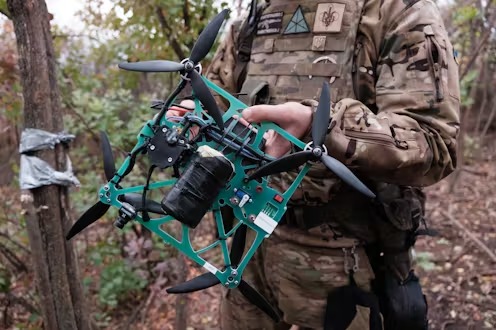
Ukrainian drone operators are increasingly relying on artificial intelligence to overcome the heavy signal interference that has become common along the front lines of the war with Russia. One Ukrainian pilot, known by his call sign Mex from the 58th Separate Rifle Brigade, recently described how a 20-kilometre drone strike on what appeared to be a Russian tank succeeded only because of an AI-assisted targeting system. According to him, hitting such a distant and well-protected target would have been impossible using manual controls alone, especially with Russian jamming devices saturating the area.
Over nearly four years of conflict, both Ukraine and Russia have dramatically expanded drone production, deploying millions of devices capable of surveillance and precision strikes. As electronic warfare has intensified, many drones lose contact with their pilots long before reaching their objectives. To counter this, Ukraine has increasingly adopted autonomous guidance tools that allow drones to lock onto visual targets captured by onboard cameras. Even if communication is cut, the drone can continue tracking and flying toward the designated target.
While Russia has introduced similar technology, the rapid integration of AI into drones on both sides has sparked global concern over the ethics of autonomous weapons. Despite the lack of binding international regulations, Ukrainian officials emphasize that final strike decisions remain firmly in human hands. Dozens of AI-enabled systems are already in use, with some integrated into thousands of drones across various units.
Mex explained that the system guiding his drone does more than follow a marked point on the map. It uses a trained “memory bank” of vehicles—including tanks, cars, and motorcycles—to help identify and pursue targets more accurately. He noted that even if he sets an initial aim point a few kilometers off, the AI adjusts during approach and aligns with the intended target. Industry experts say these tools continue to improve, though their success still depends heavily on battlefield conditions.







