


 Bernstein Names IAG, Ryanair as Top European Airline Stocks Ahead of Earnings
  SK Hynix’s $28B U.S. IPO Draws Strong Demand as AI Chip Boom Fuels Investor Interest
  Vietnam’s population hit the 100 million milestone. Where’s it headed?
  Wolfspeed Sues Navitas Over GaN and SiC Patent Infringement
  Bank of America Upgrades T-Mobile to Buy, Says LEO Satellite Fears Are Overdone
  OpenAI Executive Fidji Simo to Step Down Amid Health Challenges Ahead of IPO
  Chinese Chip Stocks Jump as Apple Reportedly Tests CXMT Memory Chips for China Devices
  Gold Surges Past $4150 on Dovish Fed Signals and Weak Jobs Data; Bullish Outlook Prevails
  SK Hynix Prices Record U.S. ADR Offering at $149 After $200 Billion Investor Demand
  Apple Sues OpenAI, Former Employees Over Alleged Trade Secret Theft
  Morgan Stanley Names Marks & Spencer Top European Retail Pick, Sees Strong Upside
  EU to Propose New Rules Limiting Children's Access to Social Media
  Morgan Stanley Says China’s Reusable Rocket Progress Poses Long-Term Challenge to SpaceX
  Yaskawa Electric Shares Slide as Weak Profit Overshadows Strong AI Demand


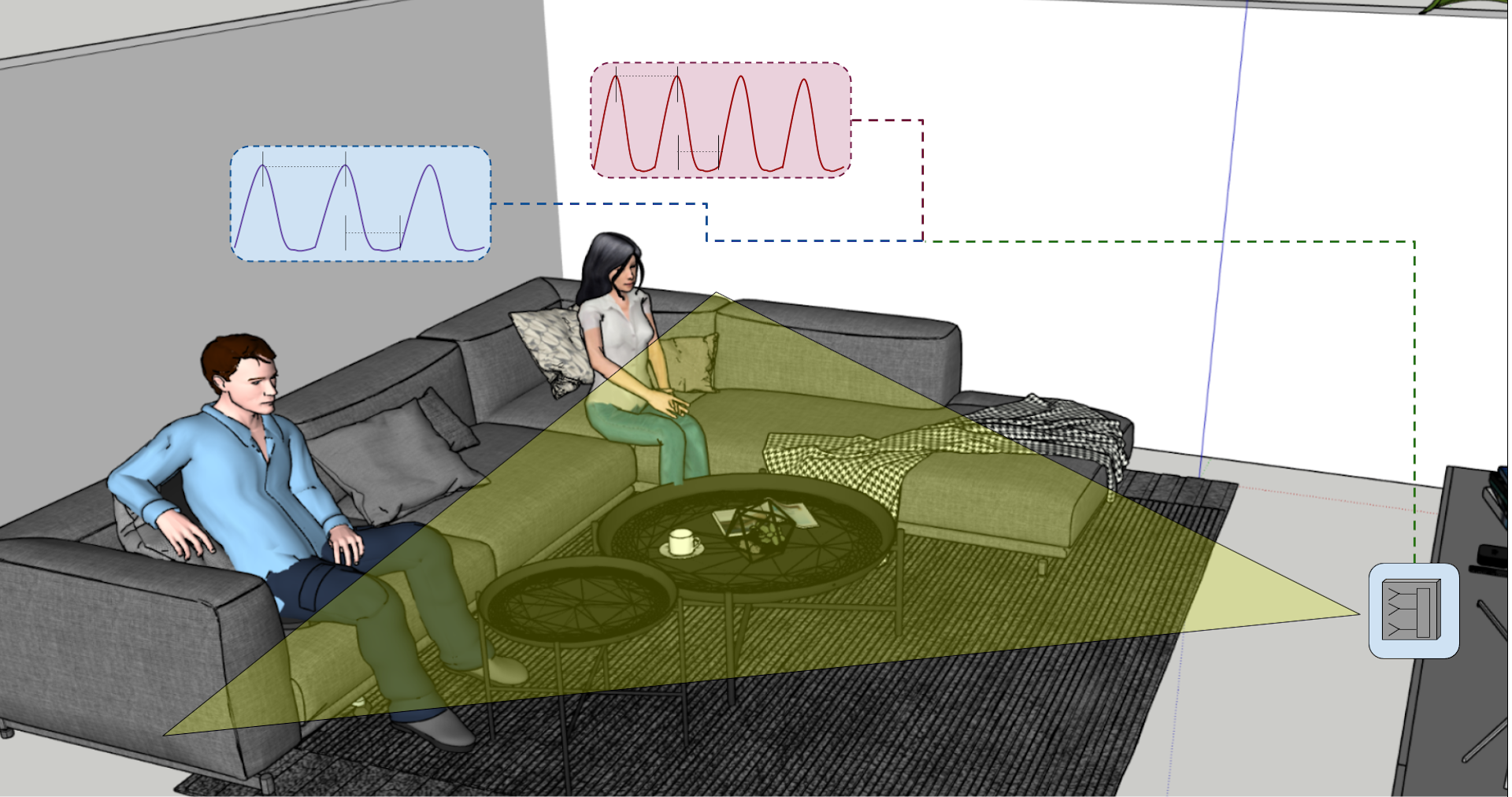


If you wanted to check someone’s pulse from across the room, for example to remotely monitor an elderly relative, how could you do it? You might think it’s impossible, because common health-monitoring devices such as fingertip pulse oximeters and smartwatches have to be in contact with the body.
However, researchers are developing technologies that can monitor a person’s vital signs at a distance. One of those technologies is radar.
We are electrical engineers who study radar systems. We have combined advances in radar technology and artificial intelligence to reliably monitor breathing and heart rate without contacting the body.
Noncontact health monitoring has the potential to be more comfortable and easier to use than traditional methods, particularly for people looking to monitor their vital signs at home.
How radar works
Radar is commonly known for measuring the speed of cars, making weather forecasts and detecting obstacles at sea and in the air. It works by sending out electromagnetic waves that travel at the speed of light, waiting for them to bounce off objects in their path, and sensing them when they return to the device.
Radar can tell how far away things are, how fast they’re moving, and even their shape by analyzing the properties of the reflected waves.
Radar can also be used to monitor vital signs such as breathing and heart rate. Each breath or heartbeat causes your chest to move ever so slightly – movement that’s hard for people to see or feel. However, today’s radars are sensitive enough to detect these tiny movements, even from across a room.
Advantages of radar
There are other technologies that can be used to measure health remotely. Camera-based techniques can use infrared light to monitor changes in the surface of the skin in the same manner as pulse oximeters, revealing information about your heart’s activity. Computer vision systems can also monitor breathing and other activities, such as sleep, and they can detect when someone falls.
However, cameras often fail in cases where the body is obstructed by blankets or clothes, or when lighting is inadequate. There are also concerns that different skin tones reflect infrared light differently, causing inaccurate readings for people with darker skin. Additionally, depending on high-resolution cameras for long-term health monitoring brings up serious concerns about patient privacy.

Radar sees the world in terms of how strongly objects in its view reflect the transmitted signals. The resolution of images it can generate are much lower than images cameras produce. Chandler Bauder
Radar, on the other hand, solves many of these problems. The wavelengths of the transmitted waves are much longer than those of visible or infrared light, allowing the waves to pass through blankets, clothing and even walls. The measurements aren’t affected by lighting or skin tone, making them more reliable in different conditions.
Radar imagery is also extremely low resolution – think old Game Boy graphics versus a modern 4K TV – so it doesn’t capture enough detail to be used to identify someone, but it can still monitor important activities. While it does project energy, the amount does not pose a health hazard. The health-monitoring radars operate at frequencies and power levels similar to the phone in your pocket.
Radar + AI
Radar is powerful, but it has a big challenge: It picks up everything that moves. Since it can detect tiny chest movements from the heart beating, it also picks up larger movements from the head, limbs or other people nearby. This makes it difficult for traditional processing techniques to extract vital signs clearly.
To address this problem we created a kind of “brain” to make the radar smarter. This brain, which we named mm-MuRe, is a neural network – a type of artificial intelligence – that learns directly from raw radar signals and estimates chest movements. This approach is called end-to-end learning. It means that, unlike other radar plus AI techniques, the network figures out on its own how to ignore the noise and focus only on the important signals.

In our study, we used AI to transform raw, unprocessed radar signals into vital signs waveforms of one or two people. Chandler Bauder
We found that this AI enhancement not only gives more accurate results, it also works faster than traditional methods. It handles multiple people at once, for example an elderly couple, and adapts to new situations, even those it didn’t see during training – such as when people are sitting at different heights, riding in a car or standing close together.
Implications for health care
Reliable remote health monitoring using radar and AI could be a major boon for health care. With no need to touch the patient’s skin, risks of rashes, contamination and discomfort could be greatly reduced. It’s especially helpful in long-term care, where reducing wires and devices can make life significantly easier for patients and caregivers.
Imagine a nursing home where radar quietly watches over residents, alerting caregivers immediately if someone has breathing trouble, falls or needs help. It can be implemented as a home system that checks your breathing while you sleep – no wearables required. Doctors could even use radar to remotely monitor patients recovering from surgery or illness.
This technology is moving quickly toward real-world use. In the future, checking your health could be as simple as walking into a room, with invisible waves and smart AI working silently to take your vital signs.







