


 SK Hynix’s $28B U.S. IPO Draws Strong Demand as AI Chip Boom Fuels Investor Interest
  SpaceX Stock Draws Bullish Wall Street Coverage Ahead of Nasdaq-100 Inclusion
  Bain Capital Exits Kioxia After AI-Fueled Valuation Surge
  Zhipu AI Raises HK$31.37 Billion in Discounted Share Sale to Accelerate AI Growth
  Nvidia Invests $500M in Firmus Technologies Ahead of Planned ASX IPO
  Nvidia Tightens AI Chip Sales in Asia With Stricter Customer Approval Process
  Samsung to Launch First Yongin Chip Plant by 2029 as South Korea Speeds Up Semiconductor Hub
  Elon Musk Says Anthropic Leads AI Race as Claude Models Challenge OpenAI
  SK Hynix Soars 13% in Nasdaq Debut After Record $26.5 Billion IPO
  SK Hynix Prices Record U.S. ADR Offering at $149 After $200 Billion Investor Demand
  TSMC Q2 Revenue Surges 36% as AI Chip Demand Powers Growth Ahead of Earnings
  Samsung Chairman Lee Jae-yong Expected to Meet Nvidia CEO Jensen Huang on AI and Chip Partnership
  Wolfspeed Sues Navitas Over GaN and SiC Patent Infringement
  LG Energy Solution Q2 Profit Plunges 77% Despite Revenue Growth on Weak EV Demand
  Australia Flags Child Safety Gaps at Apple, Meta, Google Over Online Sexual Extortion


Alibaba Group Holding Ltd, a China-based e-commerce giant, said on Tuesday it expected total value of its transactions in the second-quarter to be lower than originally estimated, as consumers restrict spending owing to China’s economic turmoil.
Speaking at Citigroup’s Global Tech Conference in New York, Jane Penner, Alibaba head of investor relations, said “I think given the stable trends in Chinese wage growth, job creation, and household net assets, we believe the consumers still have the willingness and ability to spend. That said, we are observing some negative impact of the spending. We think this is more due to psychology than to an ability to spend.”
"We are still seeing actually high engagement by buyers on our platforms...but lower average order values, for example," she said.
Alibaba now estimates GMV (total value of transactions made on Alibaba's platforms), or gross merchandise volume, to be "mid-single digits lower than its initial expectations” for the September quarter.
Penner added that the company has not changed its guidance for next year, as reported by Techcruch. The margin of its core operating business remains stable in the high 50s, with probable decreases mainly arising from discretionary investments.
“We reported a 52 percent non-GAAP EBITDA margin in June and that was lower than the 54 percent in the year-ago quarter and is very consistent with the message that we’ve given that we would be comfortable actually in fiscal 2016 potentially taking margin down even further. What we said is that we would be comfortable taking it down about 3 percent to 5 percent where we ended fiscal 2015, which was at 53 percent. So we reported 52 percent last quarter, but that guidance is really for the full year and it’s really still intact.”
The sales may improve in November, if Singles’ Day deals, China’s biggest online shopping event, become successful to attract cautious customers. Last year, Alibaba’s total sales on Singles’ Day reached a record $9.3 billion with its online payments service Alipay getting a boost as well.

- News

- Economy

- Central Banks
- Investing
- Research
- Roundups
- Digital Currency
- Insights
- Technical Analysis
- Technology
- Business
- Law
- Health
- Nature
- Fintech
- Science
- Topic
- Opinions
- ©Econometrics LLC . All Rights Reserved.
Alibaba feels the pinch of China's economic turmoil
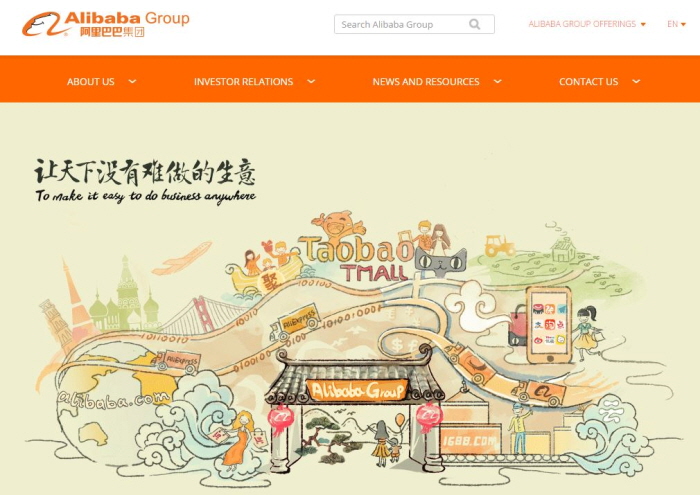
Alibabagroup.com Mainpage Screenshot
Friday, September 11, 2015 6:44 AM UTC
Editor's Picks



- Market Data
Most Popular




