


 CDC Vaccine Review Sparks Controversy Over Thimerosal Study Citation
  NASA Partners with Katalyst to Save Swift Observatory with Innovative Docking Mission
  Lost in space: MethaneSat failed just as NZ was to take over mission control – here’s what we need to know now
  NASA Astronauts Wilmore and Williams Recover After Boeing Starliner Delay
  Blue Origin’s New Glenn Achieves Breakthrough Success With First NASA Mission
  FDA Lifts REMS Requirement for CAR-T Cell Cancer Therapies
  Tabletop particle accelerator could transform medicine and materials science
  Is space worth the cost? Accounting experts say its value can’t be found in spreadsheets
  Neuren Pharmaceuticals Surges on U.S. Patent Win for Rare Disorder Drug
  Neuralink Plans High-Volume Brain Implant Production and Fully Automated Surgery by 2026
  SpaceX’s Starship Completes 11th Test Flight, Paving Way for Moon and Mars Missions
  Trump Administration to Launch Autism Initiatives Targeting Acetaminophen Use and New Treatment Options
  Trump Signs Executive Order to Boost AI Research in Childhood Cancer
  SpaceX Starship Test Flight Reaches New Heights but Ends in Setback


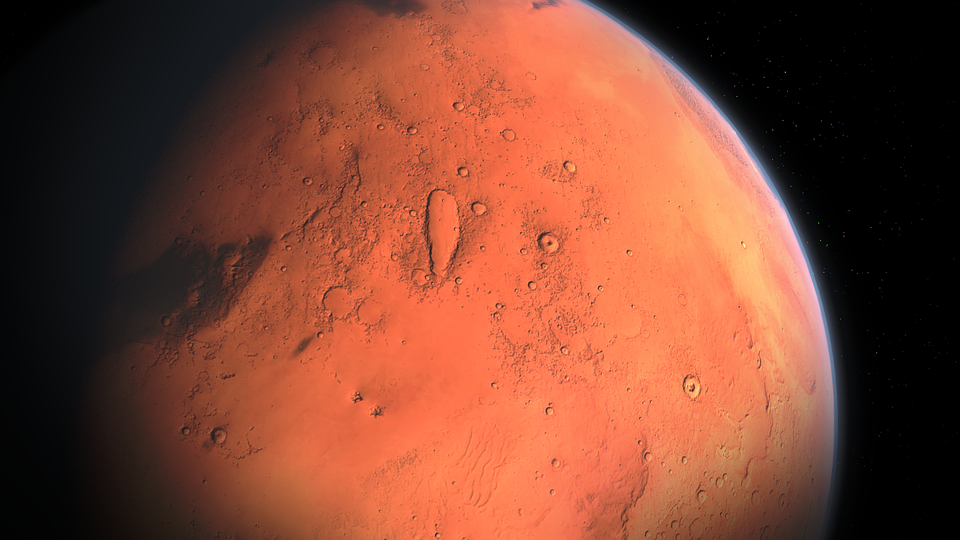
Over time, we continue to learn more and more about the planets beyond our own. Recently, the Mars Reconnaissance Orbiter took a very clear set of photos of a region of the red planet, revealing what else is there to see on Mars.
Express reports that the MRO took photos of a part of the Melas Chasma region of Mars. The photos were then exhibited at the University of Arizona. The photos, according to the scientists that showcased the photos, showed the sand dunes and ancient volcanic rocks that were present on the Red Planet. The photos were taken by the High-Resolution Science Experiment, also known as HIRISE.
A collaboration between the University of Arizona and NASA, HIRISE was designed with the objective of further studying Mars and its landscape in mind. The most recent photo showed the sand dunes located in what would seem to be one of the largest canyon systems of the neighboring planet. The Melas Chasma region is within the Valles Marineris canyon system.
What makes the planet’s sand dunes very striking is the color. The sand dunes were referred to as “velvety blue” in color and are an indicator of coarse-grained sands made up of basalt, which is a kind of volcanic rock that has a high iron and magnesium content. This would be formed from lava that has cooled millions of years ago, back when Mars was an active planet.
Another question that many have when it comes to Mars is how inhabitable it is. Express previously reports that NASA astronaut and physiologist Dr. James Pawelczyk revealed the big challenges he had to face while on the Mars mission. Pawelczyk explained that they were exposed to radiation at a bigger scale.
“We also have the solar wind galactic cosmic radiation, and those really wreak havoc on the biology… When a high energy event hits DNA it pretty much shatters, and we don’t have DNA repair mechanisms that can deal with that” Pawelczyk explained.
It also bears noting that the atmosphere on Mars is only one percent the density of Earth’s and is made up of 95 percent carbon dioxide. The Red Planet also lacks a magnetic field and thus it cannot deflect the radiation that the astronauts would be exposed to, which can be very dangerous.













