


 Yaskawa Electric Shares Slide as Weak Profit Overshadows Strong AI Demand
  SK Hynix’s $28 Billion U.S. Share Sale Draws Massive Demand Amid AI Chip Boom
  Morgan Stanley Says China’s Reusable Rocket Progress Poses Long-Term Challenge to SpaceX
  Samsung to Launch First Yongin Chip Plant by 2029 as South Korea Speeds Up Semiconductor Hub
  Bain Capital Exits Kioxia After AI-Fueled Valuation Surge
  Samsung Chairman Lee Jae-yong Expected to Meet Nvidia CEO Jensen Huang on AI and Chip Partnership
  Nvidia Tightens AI Chip Sales in Asia With Stricter Customer Approval Process
  ASML Raises 2026 Outlook as AI Chip Demand Lifts Q2 Earnings
  SoftBank Corp Partners With Sierra to Expand AI Customer Support Across Japan
  Australia Flags Child Safety Gaps at Apple, Meta, Google Over Online Sexual Extortion
  Elon Musk Says Anthropic Leads AI Race as Claude Models Challenge OpenAI
  Apple Sues OpenAI, Former Employees Over Alleged Trade Secret Theft
  TSMC Q2 Revenue Surges 36% as AI Chip Demand Powers Growth Ahead of Earnings
  EU to Propose New Rules Limiting Children's Access to Social Media
  SK Hynix’s $28B U.S. IPO Draws Strong Demand as AI Chip Boom Fuels Investor Interest


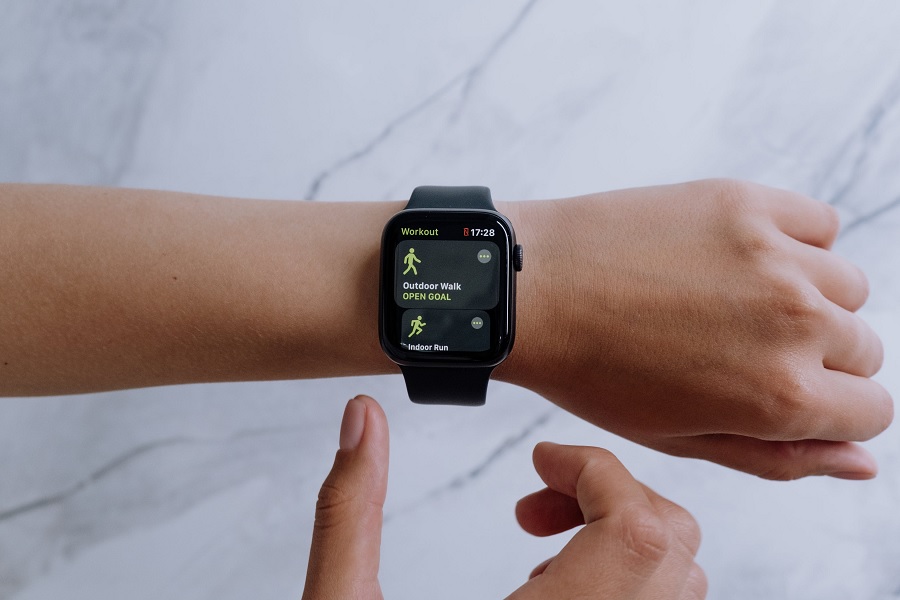
The Apple Watch Series 7 might ship with several under-the-hood changes in the coming months. While there is no new health sensor expected this year, Apple is recently rumored to use a smaller processing chip to give more space for a bigger battery.
Apple Watch Series 7 specs, design: What to expect
Apple Watch models have not been known for having a long battery life. Apple’s wearable devices last less than a day, unlike other smartwatches that promise to stay on for several days, on a single full charge. On the bright side, it appears that the Apple Watch Series 7 will be shipped with an improvement in this area.
The Taiwan-based publication Economic Daily News recently reported that the Apple Watch Series 7 would sport a bigger battery. However, the article does not mention a specific detail on its capacity, and it may also be safer not to expect drastic changes in the battery life than what Apple Watch 6 and Apple Watch SE currently offer.
The addition of a bigger battery is reportedly possible as Apple plans to use a system-in-package module for Apple Watch Series 7’s S7 chipset. This will make the processor smaller, thus, leaving more space for other components. But since there is no new health sensor planned to arrive this year, that space is expected to be used for a bigger battery.
Earlier reports have also claimed that the Apple Watch Series 7 will introduce visible changes. The device is expected to sport the first substantial redesign. Leaker Jon Prosser previously shared concept renders supposedly showing the image of the upcoming device that has a flat-screen and flat edges just like the iPhone 12 series.
Apple Watch Series 7 release date
The same report from Economic Daily News also suggested there will be an update to the ultra-wideband chip of the Apple Watch Series 7. Meanwhile, Apple is speculated to add a blood sugar level monitoring feature as early as 2022.
The Apple Watch Series 7 will be launched in the fall. More specifically, it is expected to be unveiled at the same time as iPhone 13 sometime in September.







