


 Goldman Sachs Says China Competition Weighs More on EU Growth Than Trade Deficit
  Asia Stocks Slip as Iran-Hormuz Tensions Lift Oil Prices, Dollar and Bond Yields
  Iraq PM Visits Washington as U.S. Oil, Gas Deals Take Center Stage
  US Inflation Expected to Ease in June, but Fed Rate Hike Risks Persist Amid Middle East Tensions
  BOJ May Raise Japan Growth Forecast While Keeping Focus on Inflation Risks
  Dollar Eases as Middle East Conflict, Fed Outlook and Japan Pension Policy Drive FX Markets
  Goldman AM Sees Strong Buyout Opportunities in Japan, South Korea and Australia
  South Korea’s KOSPI Triggers Trading Curb as AI Chip Stock Selloff Deepens
  Vietnam’s population hit the 100 million milestone. Where’s it headed?
  Bernstein Names IAG, Ryanair as Top European Airline Stocks Ahead of Earnings
  Gold Price Holds Near $4,000 as Middle East Tensions and Fed Rate Hike Bets Grow
  Goldman Sees Foreign Investors Driving India Stock Market Recovery


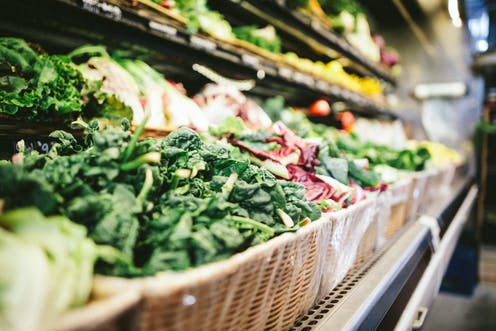

The Food Price Report 2019, released by Dalhousie University and the University of Guelph in December, suggested vegetable prices will go up by as much as six per cent this year. That’s significant because, unlike meat or fish, fewer alternatives exist when it comes to replacing vegetables.
Coming on the report’s heels was the new Canada’s Food Guide, which recommended Canadians consume more plants and less meat.
According to the Food Report, El Niño is to blame for rising vegetable prices, since Canada imports a great quantity of veggies from regions prone to drought during El Niño periods, including the western United States and northern Mexico. And 2019 is an El Niño year.
The six per cent increase is in addition to the 4.8 per cent hike in vegetable prices in 2018.
Given that we could experience another year of significant price increases, many wonder whether eating local produce is a better option.
Global supply chains have allowed us to become more efficient and given consumers more choices and a broader selection of affordable food products. But eating local has its advantages, too.
Reducing your carbon footprint
The environmental case for eating local is almost undisputed. You can significantly reduce your carbon footprint just by increasing your locally grown food consumption.
And local food is consistently priced, if generally higher. Price is much less volatile when short-circuit distribution systems are involved. The number of intermediaries is limited compared to global food chains, which are exposed to environmental fluctuations and differing economic conditions, and can all lead to greater cost variations.
Extensive, large-scale networks always give markets what they need at the right time, at the right place, at a decent price and with an acceptable level of quality — until something goes terribly wrong. A single failure can lead to huge disruptions that affect many people.
A case in point is the romaine lettuce crisis in November. Fresh lettuce grown in California and Arizona is delivered to Canadians at a decent price. But with the E. coli outbreak in romaine lettuce, not only did people get sick, but the prices of leafy greens in Canada skyrocketed.
The Canadian Food Inspection Agency prevented romaine lettuce from entering Canada. When that happens, importers must procure similar products elsewhere, likely at higher cost, to meet consumer expectations. Consumers want their leafy greens, even in winter, no matter what.
Eventually, the situation goes back to normal and most have forgotten about the romaine lettuce crisis. That’s the nature of market failures. Systems adapt and improve over time.
Local food systems more stable
But many people in the marketplace envy the stability and sustainability of local food systems. Unlike global supply chain systems, transparency is a non-issue since most producers know each other.
Buying locally grown vegetables can also give some peace of mind to shoppers. You’ll likely pay more, but the prices are mostly predictable. Simplicity has its virtues, but it also comes at a cost. Local food is typically more expensive than the cheapest imported varieties available in the same marketplace.
Research shows that city dwellers prefer locally grown or manufactured food products, for the simple fact that agriculture is often a distant concept to them. Some Canadians have never been to a farm. Buying local is the one way to feel a real connection with agriculture and farmers.
There’s also more wealth in cities than rural communities. So although price is still a consideration for urban dwellers, it’s more important to less wealthy consumers in rural areas.
That’s where global supply chains come in.
Given that Canadians have access to one of the most affordable food baskets in the world relative to household income, global supply chains appear to be serving them well.
Wintry climate leaves us with few options
And getting our vegetable fix from all over the world isn’t such a bad idea. Our nordic climate doesn’t give us many options. But global supply chains come with their fair share of risks, which in turn generate price volatility.
At the same time, buying local produce can be critical to our agri-food economy. In many parts of the country, local vegetable production is a priority, through vertical farms, greenhouses using novel technologies and other initiatives.
Access to more locally grown vegetables, while striking a balance between local and global, will be key.
But rising vegetable prices are a challenge for many, especially those with limited incomes. That means visiting the freezer aisle may not be a bad idea. It may not taste the same as fresh, but you’ll get the same nutritional value from frozen veggies.
Amid all this, there is one piece of good news: The Food Price Report 2019 suggests that the cost of meat and fish products will drop this year by up to three per cent.
That’s the first decline in fish and meat prices in the study’s nine-year history.
So meat lovers can do a happy dance around the barbecue next summer. Just don’t forget the veggies.







