


 Thailand Inflation Remains Negative for 10th Straight Month in January
  Nvidia, ByteDance, and the U.S.-China AI Chip Standoff Over H200 Exports
  Missouri Judge Dismisses Lawsuit Challenging Starbucks’ Diversity and Inclusion Policies
  TSMC Eyes 3nm Chip Production in Japan with $17 Billion Kumamoto Investment
  China Extends Gold Buying Streak as Reserves Surge Despite Volatile Prices
  Prudential Financial Reports Higher Q4 Profit on Strong Underwriting and Investment Gains
  Trump Endorses Japan’s Sanae Takaichi Ahead of Crucial Election Amid Market and China Tensions
  Fed Governor Lisa Cook Warns Inflation Risks Remain as Rates Stay Steady
  Gold and Silver Prices Slide as Dollar Strength and Easing Tensions Weigh on Metals
  Toyota’s Surprise CEO Change Signals Strategic Shift Amid Global Auto Turmoil
  Singapore Budget 2026 Set for Fiscal Prudence as Growth Remains Resilient
  South Africa Eyes ECB Repo Lines as Inflation Eases and Rate Cuts Loom
  South Korea’s Weak Won Struggles as Retail Investors Pour Money Into U.S. Stocks
  U.S.-India Trade Framework Signals Major Shift in Tariffs, Energy, and Supply Chains
  Baidu Approves $5 Billion Share Buyback and Plans First-Ever Dividend in 2026
  Once Upon a Farm Raises Nearly $198 Million in IPO, Valued at Over $724 Million
  Uber Ordered to Pay $8.5 Million in Bellwether Sexual Assault Lawsuit



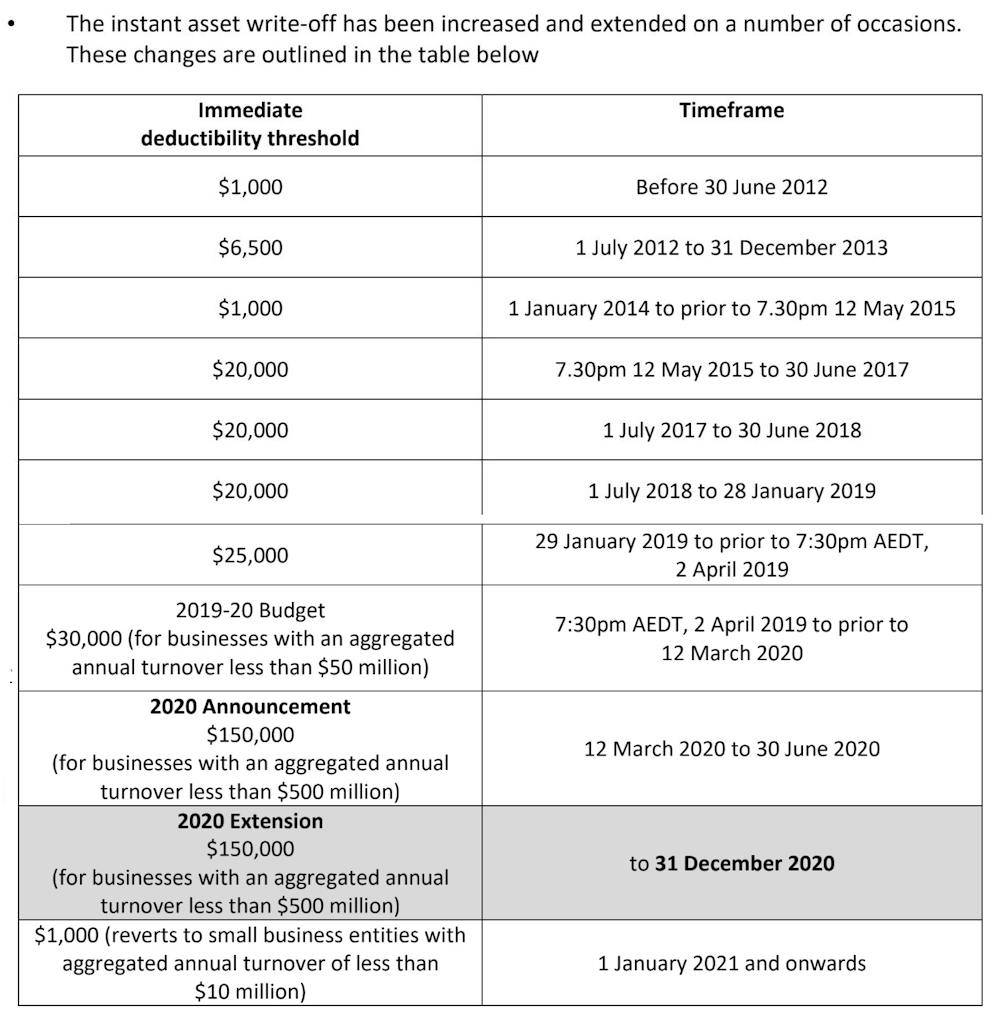
In its latest move to spur business investment, the government will extend its $150,000 instant assets write-off until the end of the year.
The six-months extension, which will be legislated, will cost $300 million in revenue over the forward estimates.
As part of the government’s pandemic emergency measures, in March it announced that until June 30 the write-off threshold would be $150,000 and the size of businesses eligible would be those with turnovers of under $500 million.
The government is battling a major investment slump. Bureau of Statistics capital expenditure figures show non-mining investment fell 23% in the March quarter and 9% over the year to March.
Spending on plant and equipment fell 21%, spending on buildings and equipment plunged 25%.
An extra six months
Apart from giving businesses generally more time to claim the write-off, the government says the extension will help those which have been hit by supply chain delays caused by the pandemic.
The write-off helps businesses’ cash flow by bringing forward tax deductions. The $150,000 applies to individual assets – new or secondhand - therefore a single enterprise can write off a number of assets under the concession.
With rain breaking the drought in many areas, farm businesses are getting back into production, so the government will hope the extension will encourage spending on agricultural equipment.
About 3.5 million businesses are eligible under the scheme.
The instant asset write-off has been extended a number of times over the years, and its (much more modest) thresholds altered.
On the government’s revised timetable, from January 1 the write-off is due to be scaled down dramatically, reducing to a threshold of $1000 and with eligibility being confined to small businesses – those with an annual turnover of below $10 million.
But there will be pressure to continue with more generous arrangements, to head off the danger of a fresh collapse in investment.
In a statement, treasurer Josh Frydenberg and small business minister Michaelia Cash said the government’s actions “are designed to support business sticking with investment they had planned, and encourage them to bring investment forward to support economic growth over the near term”.
Commonwealth Government













