


 U.S. Trade Rep Dismisses WTO's Future Role After Failed Cameroon Summit
  Japan's Business Confidence Rises Despite Iran War Uncertainty, BOJ Rate Hike Expected
  Canada's Economy Grows Modestly in January 2025, Driven by Energy and Construction
  Dollar Surges to Monthly High as Middle East Conflict Rattles Global Markets
  Oil Prices Surge to Record Monthly Highs as Middle East War Rattles Global Markets
  Asian Currencies Hold Steady Amid U.S.-Israel-Iran Tensions and BOJ Signals
  Bessent: Global Oil Market Well Supplied as U.S. Eyes Hormuz Navigation Control
  South Korea's $17.3 Billion Emergency Budget Targets Oil Price Surge
  Bank of Korea Nominee Shin Hyun-song Calls for Flexible Monetary Policy Amid Iran War Risks
  Dollar Surges to Nine-Month High as Middle East Tensions Drive Safe-Haven Demand
  U.S. Dollar Posts Strong Monthly Gain Amid Middle East Conflict Despite Late Dip
  Australia Bans Card Payment Surcharges Starting October 2025
  Oil Prices Dip as Trump Eyes Iran De-escalation, Hormuz Closure Persists
  U.S. Stock Futures Surge After WSJ Report on Trump's Iran War Exit Strategy
  Asian Stocks Surge on Trump's Iran War Comments and Dip-Buying
  Gold Prices Rebound in Asia Amid Iran War Ceasefire Hopes
  Aluminum Prices Surge Toward Four-Year Highs After Gulf Smelter Strikes


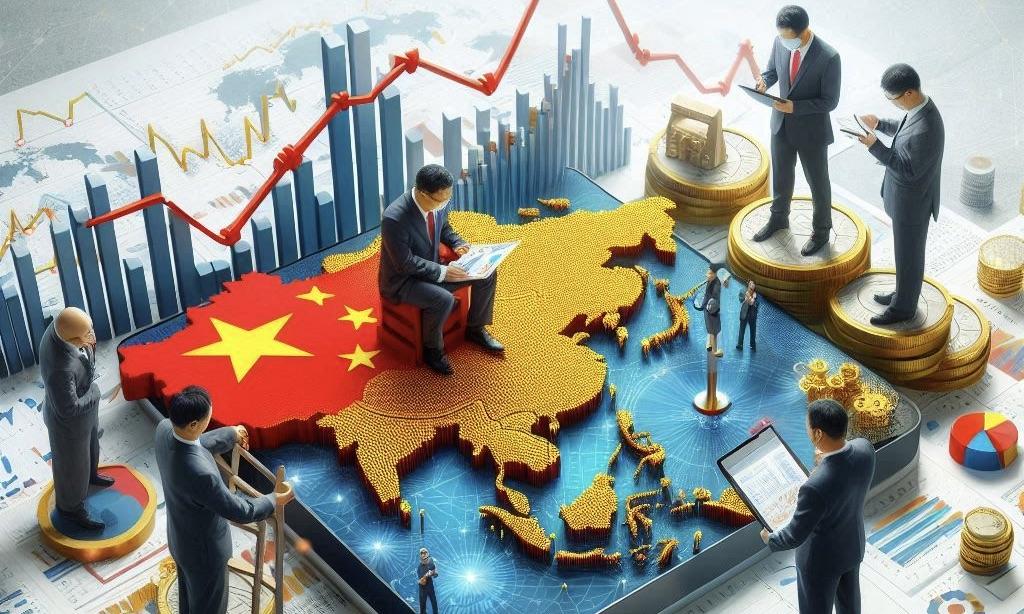
China's service sector expanded in July, driven by new orders, according to the Caixin/S&P Global services PMI. However, the momentum in overseas demand slowed to its lowest level in 11 months, highlighting ongoing economic challenges.
China's Service Sector Growth Driven by New Orders in July, but Overseas Demand Weakens
New orders contributed to the acceleration of growth in China's services activity in July, even though momentum in overseas demand slowed to its lowest level in 11 months, according to a private-sector survey released on August 5.
For the 19th consecutive month, the Caixin/S&P Global services purchasing managers' index (PMI) increased from 51.2 in June to 52.1, suggesting the economy is expanding. The index primarily encompasses private and export-oriented companies, and the 50-point threshold distinguishes between expansion and contraction every month.
In contrast, the official services PMI indicated that the sector had reached a plateau in July, following its growth in June. The retail sales, capital market services, and real estate service industries all experienced a decline.
In the second quarter, the world's second-largest economy experienced slower growth than anticipated and is currently grappling with deflationary pressures and a protracted property downturn. Retail sales growth in June reached its lowest level since early 2023.
China's Services Sector Sees New Orders Rise, Overseas Demand Weakens, and Costs Increase in July
The Caixin/S&P survey indicated that the new orders sub-index increased from 52.1 in June to 53.3 in July, while the gauge of overseas demand demonstrated the least significant expansion since August 2023, per Reuters.
Service providers faced increasing costs for basic materials, wages, and freight; however, employment increased fastest in 11 months.
The Caixin/S&P composite PMI, which monitors the services and manufacturing sectors, decreased from June, but it continued to be in expansionary territory.
"Prices at the composite level remained weak, on the sales front in particular, further squeezing the space for company profits," said Wang Zhe, senior economist at Caixin Insight Group.
Last week, the leaders of China announced that fiscal support for the remainder of the year will be concentrated on consumption to increase incomes and social welfare. Numerous economists have long advocated this change, contending that the country's economic model is overly dependent on investment.
"Without going beyond the reactive and incremental easing mode, however, confidence could still linger at low levels in coming months," said Citi economists in a research note.
"More significant domestic stimulus may only become plausible next year in the face of potentially stronger external headwinds," Citi said.







