


 Netanyahu to Meet Trump in Washington as Iran Nuclear Talks Intensify
  Trump Backs Nexstar–Tegna Merger Amid Shifting U.S. Media Landscape
  TrumpRx.gov Highlights GLP-1 Drug Discounts but Offers Limited Savings for Most Americans
  U.S. to Begin Paying UN Dues as Financial Crisis Spurs Push for Reforms
  Trump’s Inflation Claims Clash With Voters’ Cost-of-Living Reality
  Iran–U.S. Nuclear Talks in Oman Face Major Hurdles Amid Rising Regional Tensions
  Trump Lifts 25% Tariff on Indian Goods in Strategic U.S.–India Trade and Energy Deal
  Trump Signs Executive Order Threatening 25% Tariffs on Countries Trading With Iran
  Japan Election 2026: Sanae Takaichi Poised for Landslide Win Despite Record Snowfall
  China Warns US Arms Sales to Taiwan Could Disrupt Trump’s Planned Visit
  Trump Signs “America First Arms Transfer Strategy” to Prioritize U.S. Weapons Sales
  Missouri Judge Dismisses Lawsuit Challenging Starbucks’ Diversity and Inclusion Policies
  Trump Allows Commercial Fishing in Protected New England Waters
  Trump Endorses Japan’s Sanae Takaichi Ahead of Crucial Election Amid Market and China Tensions
  Jack Lang Resigns as Head of Arab World Institute Amid Epstein Controversy
  Federal Judge Restores Funding for Gateway Rail Tunnel Project
  US Pushes Ukraine-Russia Peace Talks Before Summer Amid Escalating Attacks


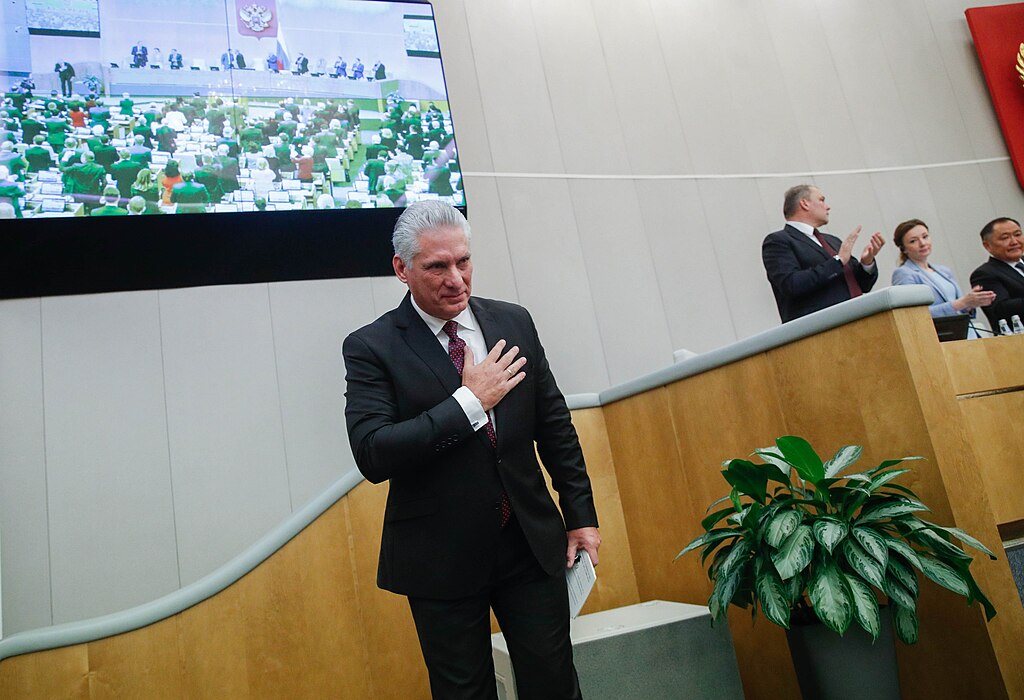
Cuban President Miguel Díaz-Canel has sharply criticized the United States over what he described as an attack on Venezuela and the capture of its president, escalating political tensions across Latin America. Speaking at a rally attended by thousands of Havana residents outside the U.S. Embassy in Cuba’s capital, Díaz-Canel accused Washington of committing “state terrorism” and violating international law.
According to Díaz-Canel, the alleged military aggression represents a serious breach of global norms, arguing that Venezuela poses no threat to the United States. His comments reflect Cuba’s longstanding support for Venezuela and its opposition to U.S. foreign policy in the region. The remarks came amid growing uncertainty over the political and economic fallout of the situation for Cuba.
Venezuela plays a critical role in Cuba’s fragile economy, supplying roughly 30% of the island’s already limited oil imports. In return, Cuba sends thousands of medical professionals to work in Venezuela, forming a key pillar of cooperation between the two allies. Analysts warn that any disruption to Venezuelan oil supplies would deal a severe blow to Cuba’s struggling power grid and worsen chronic energy shortages that have plagued the country for years.
Concerns are also mounting among Cuban families with relatives working in Venezuela. In response, Cuba’s health ministry stated on social media that Cuban medical personnel in Venezuela are “well protected,” seeking to ease public anxiety.
Meanwhile, U.S. President Donald Trump told the New York Post that he is not considering further military action against Cuba. Trump claimed that Cuba’s economic decline would continue without U.S. intervention, pointing to its dependence on Venezuela as a major vulnerability. He suggested that Cuba’s support for Venezuela had ultimately failed to deliver stability.
Cuba is currently enduring a prolonged economic crisis, now in its sixth year, marked by at least a 15% contraction in economic growth, according to official figures. The downturn has triggered shortages of basic goods, high inflation, deteriorating public services, and frequent power outages. Cuban authorities largely attribute the crisis to stricter U.S. sanctions imposed during Trump’s first term, combined with the long-standing U.S. trade embargo, which continues to shape the island’s economic challenges.













