


 SoftBank Corp Partners With Sierra to Expand AI Customer Support Across Japan
  Australia Flags Child Safety Gaps at Apple, Meta, Google Over Online Sexual Extortion
  Samsung to Launch First Yongin Chip Plant by 2029 as South Korea Speeds Up Semiconductor Hub
  Morgan Stanley Says China’s Reusable Rocket Progress Poses Long-Term Challenge to SpaceX
  Oppenheimer Sees CNH Industrial as Top 2026 Agriculture Stock Pick on Dealer Consolidation Strategy
  SK Hynix Prices Record U.S. ADR Offering at $149 After $200 Billion Investor Demand
  Zhipu AI Raises HK$31.37 Billion in Discounted Share Sale to Accelerate AI Growth
  OpenAI Executive Fidji Simo to Step Down Amid Health Challenges Ahead of IPO
  Paramount-Warner Bros. Discovery Merger Faces Lawsuit From 12 States
  Nvidia Invests $500M in Firmus Technologies Ahead of Planned ASX IPO
  TSMC Q2 Revenue Surges 36% as AI Chip Demand Powers Growth Ahead of Earnings
  AstraZeneca Shares Sink After Wainua Trial Misses Key Heart Disease Goal
  Bain Capital Exits Kioxia After AI-Fueled Valuation Surge
  SK Hynix Soars 13% in Nasdaq Debut After Record $26.5 Billion IPO
  Apple Tests China's CXMT Memory Chips as DRAM Maker Gains Global Market Share
  Morgan Stanley Names Marks & Spencer Top European Retail Pick, Sees Strong Upside
  Meta Says States Seek $1.4 Trillion in Penalties Over Teen Social Media Addiction Lawsuit


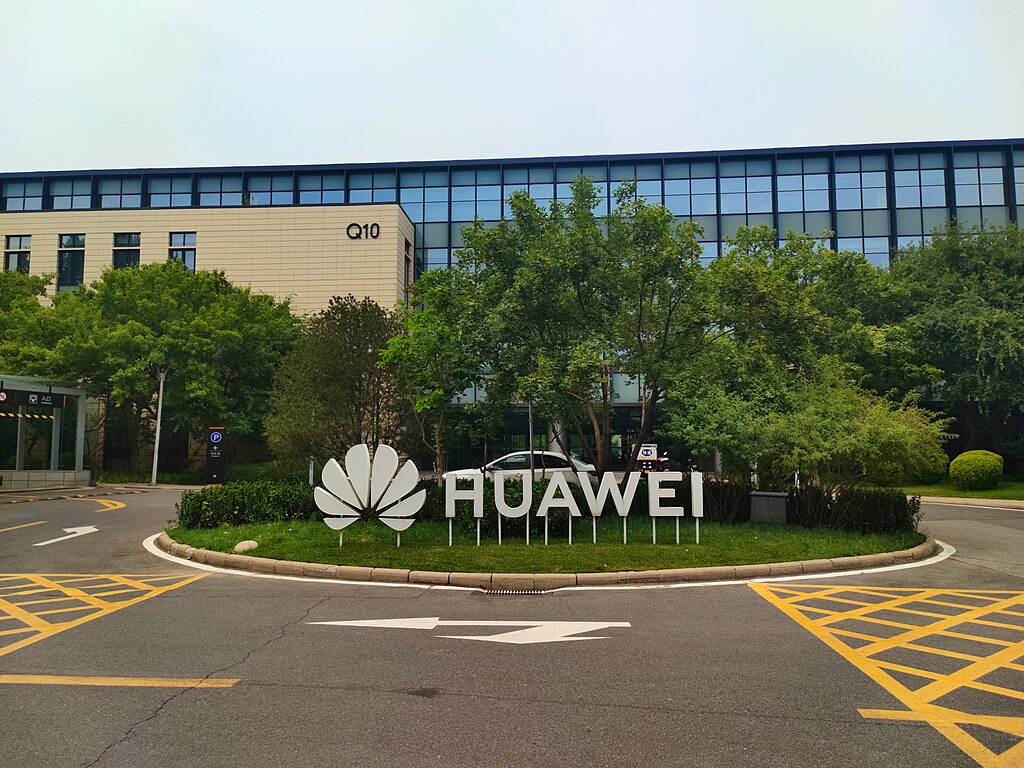
DeepSeek, a fast-rising Chinese AI startup, has unveiled a preview of its highly anticipated V4 model, marking a major step toward China’s technological independence. The new model, optimized for Huawei’s Ascend chips, highlights a strategic shift away from Nvidia hardware and reflects China’s push to build a self-sufficient artificial intelligence ecosystem.
According to DeepSeek, the Pro version of V4 performs exceptionally well in global knowledge benchmarks, ranking just behind Google’s Gemini-Pro-3.1 among leading models. This achievement positions DeepSeek as a serious contender in the global AI race, especially within the open-source community. The model has already gained rapid traction, topping trending charts on Hugging Face, a key platform for machine learning developers.
The collaboration between DeepSeek and Huawei is particularly significant. Huawei confirmed that its chips were used during parts of V4’s training process, reinforcing confidence in domestic semiconductor capabilities. Analysts note that Huawei’s Ascend chips are currently China’s strongest alternative to Nvidia, especially as U.S. export restrictions continue to limit access to advanced American hardware.
DeepSeek V4 stands out for its ability to process extremely long and complex text inputs, supporting over one million tokens—comparable to top-tier models like GPT-5.4 and Claude Opus 4.6. Despite this capability, it operates at a fraction of the computational cost, making it an attractive option for developers and enterprises. However, it currently lacks multimodal support, meaning it cannot process images or video.
The launch comes amid rising geopolitical tensions, with U.S. officials raising concerns over intellectual property and data security. Several Western governments have already restricted the use of DeepSeek’s technology. Meanwhile, competition within China is intensifying, with rivals such as Zhipu AI and MiniMax reacting strongly to the V4 release.
DeepSeek is positioning V4 for advanced AI agent applications, which require higher computational efficiency. While early benchmarks are promising, experts suggest waiting for broader real-world testing. As open-source models continue to close the gap with proprietary systems, DeepSeek’s latest innovation could reshape the global AI landscape.







