


 U.S. Stock Futures Slide as Tech Rout Deepens on Amazon Capex Shock
  Global Markets Slide as AI, Crypto, and Precious Metals Face Heightened Volatility
  Trump Lifts 25% Tariff on Indian Goods in Strategic U.S.–India Trade and Energy Deal
  South Africa Eyes ECB Repo Lines as Inflation Eases and Rate Cuts Loom
  Silver Prices Plunge in Asian Trade as Dollar Strength Triggers Fresh Precious Metals Sell-Off
  Asian Stocks Slip as Tech Rout Deepens, Japan Steadies Ahead of Election
  Trump Endorses Japan’s Sanae Takaichi Ahead of Crucial Election Amid Market and China Tensions
  Dollar Near Two-Week High as Stock Rout, AI Concerns and Global Events Drive Market Volatility
  Gold and Silver Prices Slide as Dollar Strength and Easing Tensions Weigh on Metals
  Japan Economy Poised for Q4 2025 Growth as Investment and Consumption Hold Firm
  India–U.S. Interim Trade Pact Cuts Auto Tariffs but Leaves Tesla Out
  Bank of Japan Signals Readiness for Near-Term Rate Hike as Inflation Nears Target
  Gold Prices Slide Below $5,000 as Strong Dollar and Central Bank Outlook Weigh on Metals
  RBI Holds Repo Rate at 5.25% as India’s Growth Outlook Strengthens After U.S. Trade Deal
  Vietnam’s Trade Surplus With US Jumps as Exports Surge and China Imports Hit Record
  U.S.-India Trade Framework Signals Major Shift in Tariffs, Energy, and Supply Chains
  Japanese Pharmaceutical Stocks Slide as TrumpRx.gov Launch Sparks Market Concerns


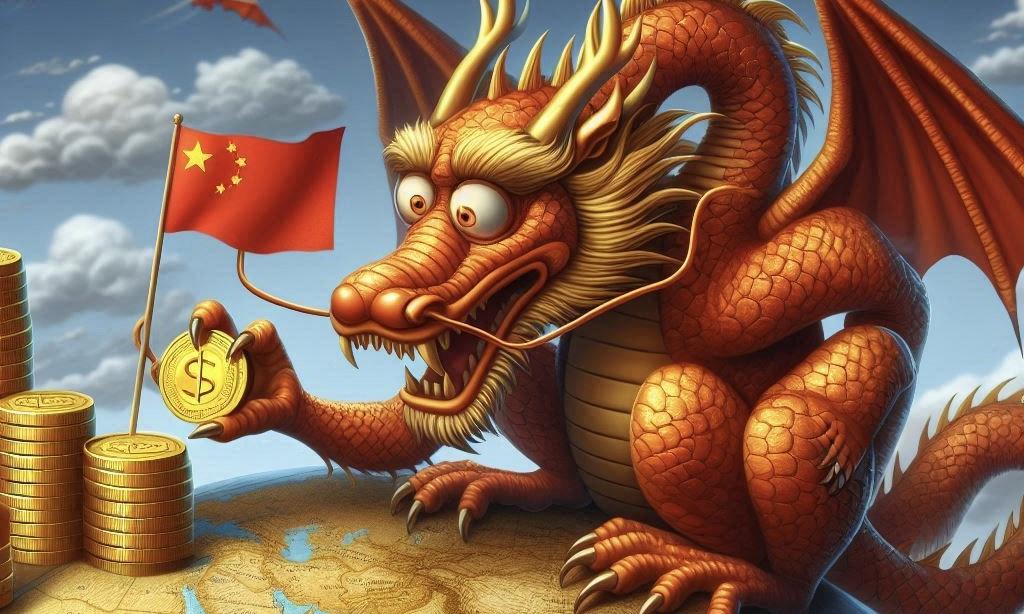
As former President Donald Trump eyes a second term, China's economy braces for potential turmoil with new, severe trade tariffs anticipated. Analysts predict significant GDP declines and a dramatic decoupling from the U.S. amid escalating tensions.
China Braces for Economic Turmoil as Trump’s Potential Second Term Signals New Trade War
The potential repercussions for the world's second-largest economy have prompted Chinese observers to contemplate the possibility of former President Donald Trump winning a second term, particularly if Trump and his team initiate another, more potent trade war.
Trump's selection of JD Vance, a far-right U.S. senator who has publicly expressed his disdain for China, as his running companion increased the probability of implementing new mercantilist measures. Sarah Bianchi, the chief strategist of international political affairs at Evercore ISI, predicts that tariff increases and other measures will be implemented "fast and furious" if Trump unseats President Joe Biden.
Goldman Sachs economists anticipate a two-percentage-point decline in China's GDP due to a 60% tariff imposed by the United States. In comparison, UBS economists anticipate a 2.5 percentage-point decline in growth over a year. Wells Fargo cautions that a full-scale tariff conflict could decrease the United States' gross domestic product (GDP) and increase inflation.
Trump's Tariff Plan Could Severely Decouple U.S. and China, Experts Warn
According to Da Wei (via Bloomberg), an expert on Sino-American relations at Beijing's Tsinghua University, Trump's draconian tariff announcement will likely result in a severe decoupling between the United States and China. As the International Monetary Fund recently cautioned, this would hasten the fragmentation of the world into blocs.
It is not merely campaign-trail rhetoric; many factors indicate that a substantial tariff increase on China is imminent under Trump. Yanmei Xie of Gavekal Research observes that the initial trade conflict initiated by Trump in 2018 was not perceived as having caused significant harm to the United States in Washington. Despite the negative warnings, there was no discernible increase in inflation or adverse effects on employment or financial markets. Consequently, there is minimal opposition to additional action.
Tobin Marcus and Chutong Zhu at Wolfe Research contend that Biden's preservation of current tariffs and implementation of his targeted measures encourage Trump to adopt a more hawkish stance. Republicans must take additional measures to project a more assertive stance toward China.
Furthermore, given Trump's commitment to additional tax reductions, Republicans would be compelled to pursue alternative revenue sources, including tariffs. Marcus and Zhu regard this as a genuine peril.
The specifics of the measures that Trump may implement are still uncertain. Although he proposed a tariff rate of 60%, he declined to endorse that figure in a recent interview with Bloomberg Businessweek, which perplexed analysts.
Trump's Tariff Proposal Could Push U.S. Average Rate to Highest Since 1930s
According to Bianchi, who previously worked at the U.S. Trade Representative's office during the Biden administration, the U.S. weighted average tariff rate would increase to nearly 17%, the highest since the Smoot-Hawley era of the 1930s, if a full 60% tariff on all Chinese imports and a proposed 10% universal baseline tariff on all other nations were implemented.
Trump asserts that tariffs provide Washington with negotiating leverage, potentially facilitating a deal, a skill he excels at. He has criticized the low exchange rates that China and Japan enjoy, which he attributes to their manufacturing competitiveness.
Certain observers do not entirely rule out a bargain on overhauling exchange rates to prevent tariff increases, similar to the 1985 Plaza Accord. Nevertheless, Goldman strategists, such as Isabella Rosenberg, acknowledge the operational challenges of such an agreement and contend that the United States would not substantially benefit from a lower dollar exchange rate due to its large, relatively insulated economy, which primarily trades in its currency.
Trump also stated that he would not object to Chinese companies establishing operations in the United States, a strategy Japan employed in the 1990s to circumvent tariff increases by relocating significant production to the United States.
Da Wei, director of Tsinghua's Center for International Security and Strategy, has stated that a tariff of even 30% on China would be highly detrimental. He foresees a steep decline in China-U.S. relations, with bilateral trade potentially dropping to $100 billion or less from $575 billion last year.













